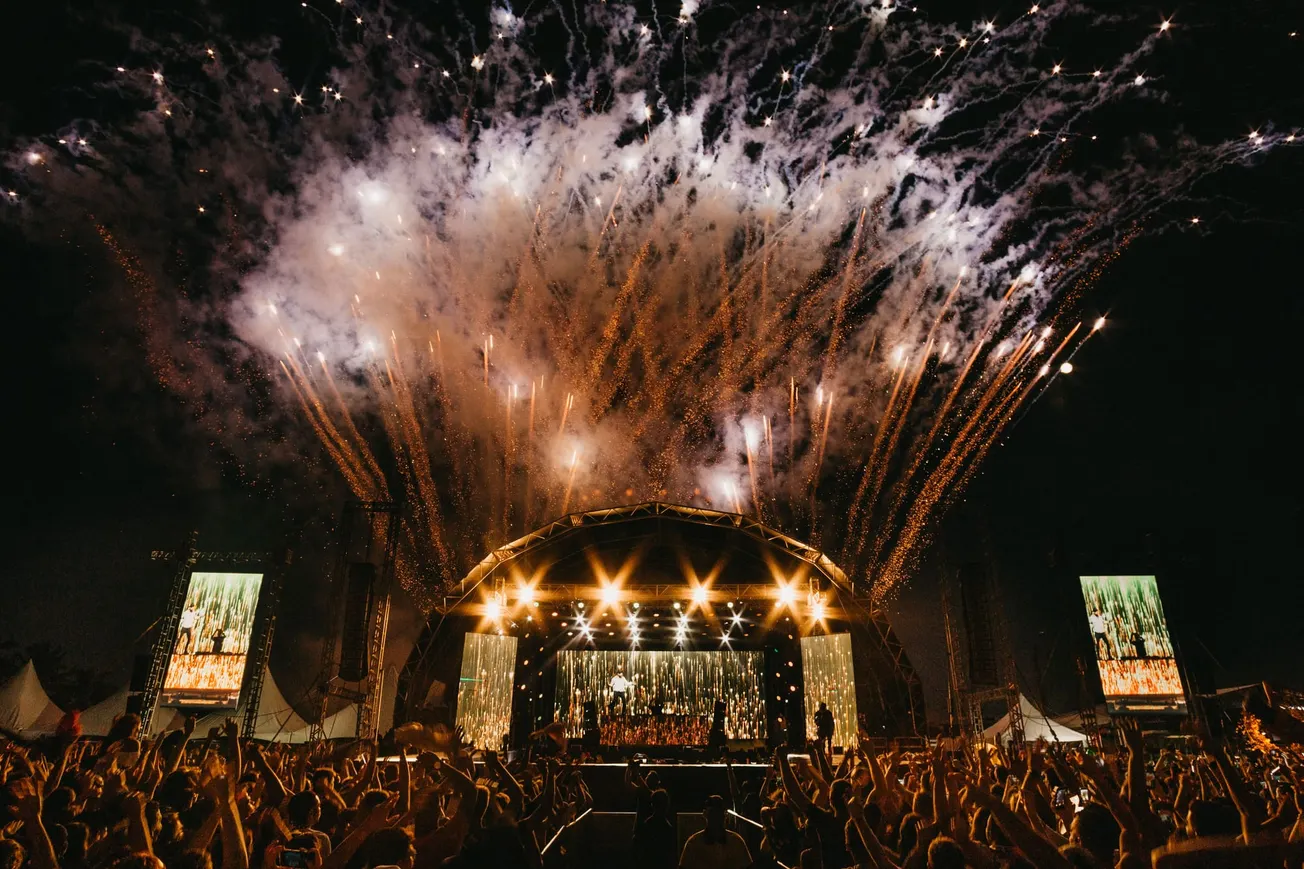


Sonic Temple’s 2027 Columbus lineup just landed with Iron Maiden, Blink-182, Korn, Faith No More, Alice in Chains, A Perfect Circle, GWAR, Ministry, Falling in Reverse, and Turnstile all on one bill.
At a glance, it reads like the standard rock/metal festival playbook: decades-old legacy acts up top, younger or more current bands filling out the undercard. Yeah yeah, "How To Sell Tickets 101," we get that... But that's not the full story here.
Firstly, where does this leave the next generation of headlining acts, and are we building a foundation there? (Slipknot has something to say about that...) And secondly, what’s actually drawing people to the legacy end of these lineups nowadays?
It's the Format, Not a Trend
Rock and metal package festivals have run on exactly this structure for over two decades.
Daytona Beach's Welcome to Rockville has paired legacy headliners with younger bands every year since its 2011 debut — Avenged Sevenfold and Korn in 2014, Korn and Slipknot in 2015, Disturbed and Rob Zombie in 2016, Soundgarden and Def Leppard in 2017, two Metallica sets for its 2020 anniversary, Slipknot, Avenged Sevenfold, Pantera and Tool in 2023, and Guns N’ Roses, Foo Fighters and My Chemical Romance for 2026.
The UK’s Download Festival has run the same model since 2003, as the direct successor to Monsters of Rock, which dates to 1980. So Sonic Temple’s bill isn’t a departure from anything — it’s a 40-plus-year-old operating model, and treating it as novel would be the wrong story to tell.
The Tensions Around "Lineup Succession"
What is current is a genuine anxiety from inside the genre about whether that model still has fuel left in it. And whether the future holds as bright an outlook as the past did for these particularly heavier genres.
Slipknot’s Shawn “Clown” Crahan recently said this:
"There are so many horrible bands who are going to be future headliners.”
Those “horrible bands” are currently positioned to become rock and metal’s next generation of torchbearers. His real underlying worry is about whether anything new has actually broken through at arena-and-up scale, and if innovation is moving forward enough to power that sustained interest that would keep the whole structure from falling apart.
That's "lineup succession" for you. We've written about how Vans Warped Tour acts as a development accelerator for next gen bands, it's built into its operating principle. The lineup is a forecast with regards to who organizers are looking to prop up in future iterations.
It's not just about selling tickets. The problem is...
For festivals in the metal space, where legacy acts are still out there, not fading away, there's always a question of whether curators and financiers can keep leaning on the same handful of household names. Because for some, the alternative doesn’t exist yet.
Folks looking at the (stacked) 2027 Sonic Temple lineup might then turn around and ask: “is there anyone left to hand the headline slot to when Iron Maiden and Korn eventually stop touring?”
The Data Suggests Otherwise
Here’s the twist: Audience data increasingly suggests legacy acts aren’t surviving on nostalgia from their original fanbases alone.
Catalog streams — tracks released more than roughly 18 months ago — grew 19% year-over-year even as streams of new releases declined, and Metallica’s “Master of Puppets” returned to the Billboard charts nearly 40 years after release, driven by a Stranger Things placement and a wave of TikTok virality that’s helped push the band’s TikTok following toward 4.4 million.
Separately, reporters covering Gen Z’s listening habits describe a generation building its own version of a “classic rock” canon through algorithmic discovery and film/TV placements rather than radio or inherited taste, with young fans turning up in real numbers at both tribute shows and original legacy-act performances.
All of that means that a chunk of whoever’s standing in front of Iron Maiden or Korn at Sonic Temple 2027 may not be there out of "inherited loyalty" or because the headliner slot demands deference — they may be there because they found the band themselves, two years ago, in a ten-second clip, and actually like the music on its own terms.
That dynamic suggests the undercard-to-headliner pipeline Clown is worried about might actually matter less than it used to, simply because the legacy acts aren’t aging out of relevance at the rate anyone assumed — they’re being replenished with new fans independent of any festival’s curation.
What’s worth tracking
Worth watching at Sonic Temple and similar 2027 bills: actual crowd composition at legacy-act sets versus newer-band sets, whether promoters start explicitly marketing legacy headliners toward younger audiences rather than assuming an older base will show up regardless.
And will Clown’s lineup succession worry get addressed by any specific new band actually crossing into headliner territory? Or will the industry’s answer ends up being that it doesn’t need to, because TikTok is quietly doing the headliner-replenishment job that new bands used to?
Only one way to find out... buy the ticket!
Follow Sonic Temple Festival 2027 and get passes on Bandsintown.
Sonic Temple 2027 runs May 13–16 at Historic Crew Stadium in Columbus, Ohio. Four-day General Admission, GA+, VIP, Rock Royalty, and Columbus Owners Club passes are on sale now, with early-bird rates and payment plans starting at $1 down. RV camping and hotel packages are available separately through the same site. Learn more here.