

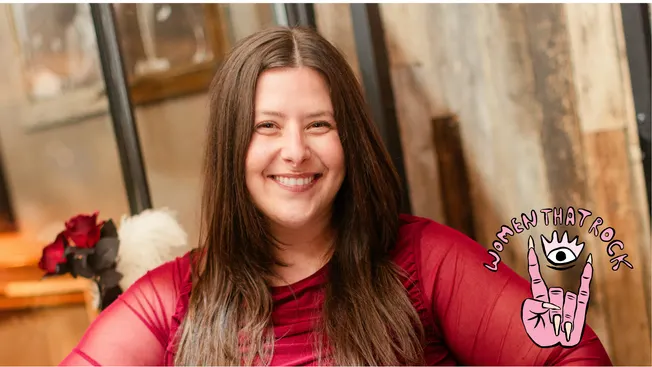
By Andie Aronow, Founder of Women That Rock
Every few months, someone in entertainment press declares that it is the “year of women” in music. Taylor Swift, Beyoncé, or Lady Gaga drops another enormous record. Chappell Roan and Sabrina Carpenter dominate summer festivals. Charli XCX owns music branding and reshapes pop culture.
The headlines suggest that "we’ve ‘made it" — that the industry has finally figured out how to support women. It’s a heartening narrative, but it’s also dreadfully incomplete.
Though a handful of women are filling stadiums, thousands of equally talented women are still fighting for something much more basic: an equal shot at getting recognized in the first place.
While the music industry has become great at loudly celebrating the very small percentage of top female artists, the systems around them are largely unchanged. There’s a cultural perception that women are "dominating music" right now, but if you zoom out from the handful of superstar success stories, a different picture emerges.
"Across thirteen years of popular music, more than 93% of charting songs were created without a single woman producer."
According to the USC Annenberg Inclusion Initiative, women accounted for just 37.7% of artists on Billboard’s year-end Hot 100 chart in 2024. Behind the scenes, the imbalance becomes even more striking: women represented only 18.9% of songwriters and 5.9% of producers on those same hits. Across thirteen years of popular music, more than 93% of charting songs were created without a single woman producer.
And while conversations about representation often focus on studios, charting, streaming, or awards recognition, some of the most consequential inequities happen on the road.
Studies show that women accounted for just 21.6% of headlining slots across nine major music festivals in 2025. Coachella’s 2025 lineup was roughly 75% men. Book More Women’s festivals audit showed that female and nonbinary representation at major US festivals actually declined in 2025. Progress actually reversed after several years of improvement.
+Read more: "Book More Women: The Data-Driven Initiative Pushing Music Festivals Toward Gender Equity"
The global Keychange initiative now has 750+ organizations committed to “achieving gender-balanced programming” because the imbalance remains so widespread and systemic.
Touring is where artists’ careers and longevity are built. It’s where they grow audiences, sell merchandise, connect with lifelong fans, and generate the income that allows them to keep making music. Every opening slot, every festival booking, every multi-city run compounds into future opportunities.
If women are consistently receiving fewer of those opportunities - or are expected to fight harder for each one — the gap widens.
Support isn’t just a single playlist during Women’s History Month or a social media graphic.
Real support looks like creating tangible opportunities — for women to perform, to sell their music and their merchandise, to release records, to grow their audiences. It’s developing events dedicated to femme lineups and consistent, day in, day out promotion and marketing efforts. It’s booking women, paying women, and facilitating tools and opportunities for women to connect with their fans and with each other.
"If women are consistently receiving fewer of those opportunities - or are expected to fight harder for each one — the gap widens."
Investing time and resources and support in women before they’re the obvious bets. Before they’re filling arenas and becoming the 1%.
This is why I started Women That Rock, which was built on a simple DIY concept: if the existing system isn’t creating enough opportunities for women and nonbinary artists, let’s build new ones ourselves. The organization is dedicated to advocating consistently for women and nonbinary artists, through marketing, outreach, and tangible revenue-generating performance opportunities.
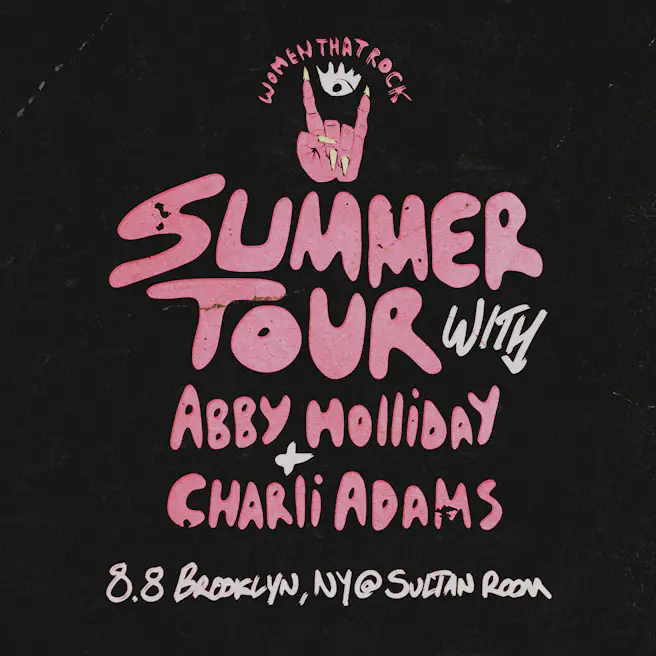
This August, this philosophy takes its next big step as Women That Rock presents a 5-city tour featuring Abby Holliday and Charli Adams; two extraordinary independent artists who represent exactly the kind of musicians that the industry should be investing in.
Kicking off August 7, 2026, the tour includes stops in New York City, Boston, D.C., Chicago and Nashville, and each show features a femme local opening artist that the co-headliners hand-selected through an open call for talent promoted on their social media.
One of indie music’s most compelling songwriters and performers, Abby Holliday has toured with artists including Men I Trust, The Japanese House, and James Bay, and built a devoted audience through her deeply honest and sonically creating songwriting. Prolific songwriter Charli Adams has become one of indie music’s most respected voices, earning praise from NPR, Billboard, and The FADER and building a catalog that has resonated with millions of listeners. Together, Holliday and Adams represent women artists building sustainable careers through authenticity, community, and artistic excellence.
Women That Rock's events alone won't solve the music industry's systemic gender imbalance. But they can help create a blueprint for what's possible, challenging the scarcity mindset that women and nonbinary artists have long been expected to accept.
The goal isn't to compete for one of a few token “female" slots. It's to create more: more opportunities, more visibility, more stages, and more equitable investment.
Women That Rock Summer 2026 Tour Dates
- August 7 — Washington, D.C. @ Songbyrd Music House
- August 8 — New York City, NY @ The Sultan Room
- August 9 — Boston, MA @ The Rockwell
- August 12 — Chicago, IL @ Schubas Tavern
- August 15 — Nashville, TN @ The Basement East