

By Sebastian Vidal, Founder of BookedKit
The music industry has changed in almost every possible way.
Songs are released instantly. Fans discover artists through algorithms. Promoters find acts on Instagram. DJs share mixes through links. Press kits live online. Calendars sync across platforms. A career can begin in a bedroom, move through a phone screen, and reach someone on the other side of the world before an artist ever plays their first live show.
It's a beautiful thing. Opportunity is everywhere.
And yet, still somehow, the most meaningful opportunities often begin the same old way:
That is still the most beautiful part of being a musician.
For all the technology around music, the industry is still powered by people. Not just platforms, metrics, or follower counts, but people paying attention to each other. People recommending each other. People opening doors. People remembering a conversation. People taking a chance because they felt something real.
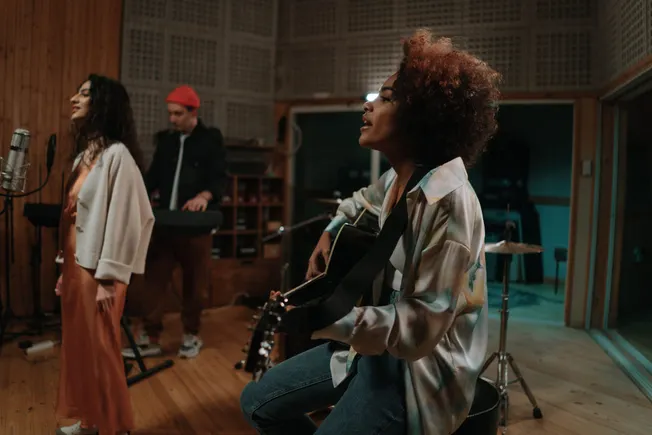
In music, networking rarely starts with a pitch. It starts by being in the room.
Not every artist has the same relationship with that room. Some are naturally social. Some are shy. Some live in cities with active scenes, while others are far from major music communities. Some have day jobs, families, limited time, or simply do not know where to begin.
For a lot of artists, “networking” can sound cold, transactional, even uncomfortable. But at its best, networking in music is not about collecting contacts. It is about participating.
It is going to the show even when you are not playing. It is supporting the organizer who is trying to build something. It is listening to the opening act. It is talking honestly with the person running the night. It is asking questions without immediately trying to sell yourself. It is recognizing that the shy person in the corner might be making the most interesting music in the room.
Open decks are a good example. They may not always lead directly to gigs. That is not necessarily the point. Their real value is often community. You meet other artists. You understand the local scene. You hear what people are working on. You become a familiar face. You support the people who are trying to create space for others.
Over time, that matters.
A friend of a friend might get you into the room. A small conversation might introduce you to a promoter. Supporting someone else’s event might lead to a new collaboration months later. None of it is guaranteed, and that is part of the truth too.
+Read more: "What the Concept of 'Guanxi' Has to Do With Music Networking"
A conversation can open a door. It does not guarantee what happens next.
That is not a reason to dismiss the human side of the industry. It is a reason to respect how fragile it is. Human connection is powerful, but it is not always scalable.
It is not always easy to remember, organize, or pass along. A promoter cannot always reconstruct who you are from a five-minute conversation outside a venue. A booker cannot always advocate for you if all they have is your Instagram handle. A new contact may genuinely want to help, but they still need something clear to send, save, revisit, or forward.
That is where artists need somewhere for the connection to land.
Not as a replacement for community. Not as a shortcut to getting booked. Not as a “tech solution” to the human messiness of music. Just as a continuation.
The real moment is often not the first conversation. It is what happens after.
That follow-up is where a casual interaction can become something more real. It is where someone can understand the full picture. It is where they can remember you, share you, book you, introduce you, or simply keep you in mind for later.
This is why a strong online presence still matters. Not because a press kit will magically create a career. Not because a link can replace a real relationship. Not because artists should spend more time optimizing their pages than participating in their scenes.
But because when the human moment happens, you should be ready.
Your online presence should not replace the room. It should help the room remember you.
For independent artists, that might mean a simple page with music, videos, photos, bio, upcoming shows, press assets, technical information, and contact details. It might mean keeping your dates current. It might mean making it easy for someone to understand what you sound like, where you fit, and how to reach you. It might mean having something more useful than a scattered collection of links when someone asks, “Can you send me your stuff?”
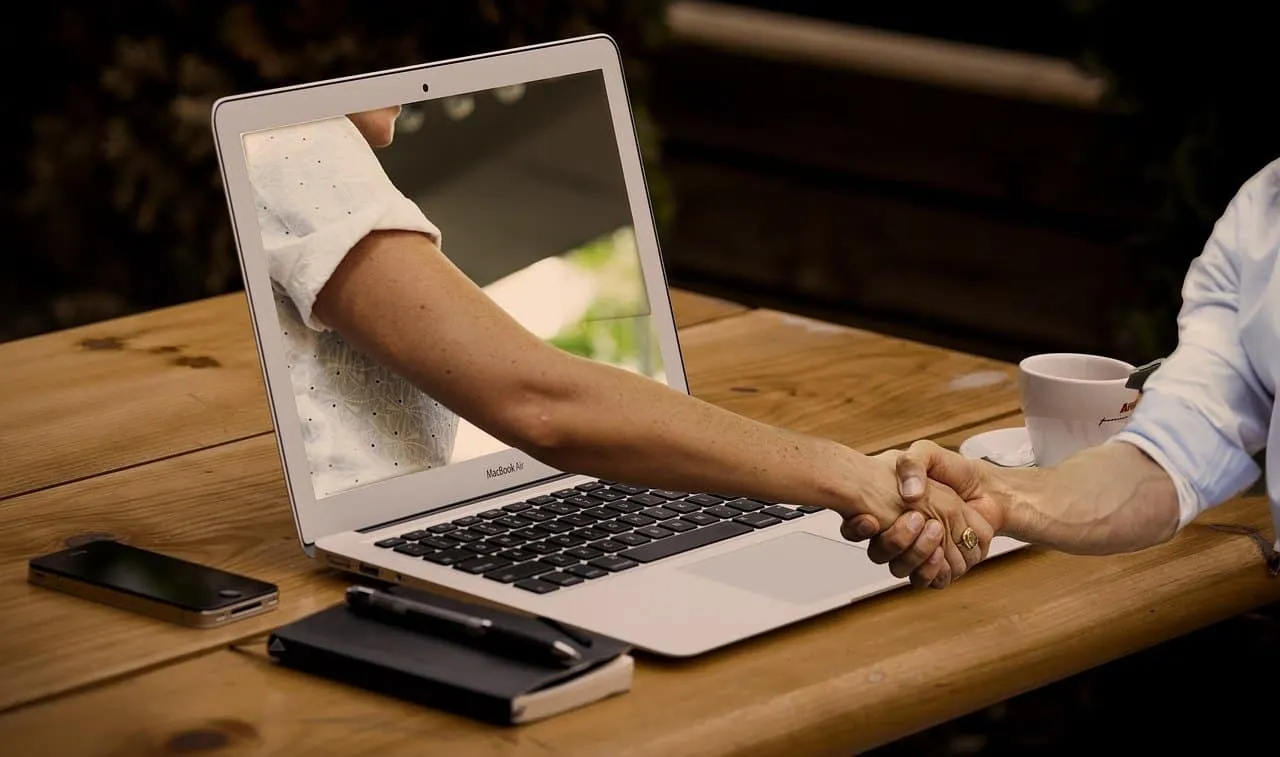
Because that question still matters. “Send me your stuff” is often the bridge between the human world and the professional one.
It can happen after a DJ set, outside a club, in a DM, at a rehearsal space, through a friend, after an open deck, or in the corner of a crowded room. It is casual, but it carries weight. It means someone is giving you a small opening. Not a guarantee. Not a contract. But a chance.
And chances are easier to honor when you are prepared.
There is a balance here that artists should not have to choose between. Go outside. Support your local scene. Talk to people. Be honest. Follow your gut. Let yourself be open to things happening. Meet the manager. Thank the organizer. Listen to the other artists. Follow up when the conversation feels real.
But also, have something ready to share.
+Read more: "Social Media in the Age of AI: The Internet’s Next Luxury Is Proof You’re Human"
Community creates the opportunity. Readiness helps the opportunity travel.
This is especially important because not every artist has equal access to community. Some artists live far from major scenes. Some are still finding their people. Some are introverted. Some are starting over in a new city. Some are building slowly online before they ever have a local audience. For them, a clear online presence is not vanity. It can be a way to be understood when they are not physically in every room.
At the same time, artists who are surrounded by community still need clarity. Being known locally is valuable, but being easy to remember and easy to share can extend that local trust beyond the room where it began. That is the space worth paying attention to: the space between the first human connection and the next real opportunity.
At BookedKit, this is the balance we keep coming back to. We believe artists need to be part of real communities, not just digital platforms. We also believe that when a connection happens, artists deserve a clear, professional place to continue the conversation.
That is why we are building tools to help artists present themselves in one place, and why we are also exploring ways to surface events, open decks, workshops, and community spaces where artists can meet people in real life.
Because the goal is not to network your way to fame. The goal is to be part of something real, and to be ready when something real opens a door.
Show up first. Share the link later.
The music industry still runs on human connection. That is the enduring humanity of it. Artists just need somewhere for that connection to land.
+Read more: "Backstage Pass: Sebastian Vidal of BookedKit Shares Booking Advice & Insights"
Sebastian Vidal is the founder of BookedKit, a platform that helps artists, DJs, and musicians create clean, booking-ready digital press kits and profile pages. He is also a musician focused on artist presentation, music marketing, and the gap between discovery and professional readiness.