By Jared Volpe, co-founder of Sleeve
A few months ago I was talking to an artist who had spent the better part of a year building up their audience. Real work: consistent releases, regional touring, showing up on socials almost every day.
She had followers. She had streams. She had a Linktree.
I asked her:
"If a fan genuinely wanted to find everything she was doing right now, where would they go?"
She thought about it longer than I expected.
"I don't know. My Instagram, I guess. Or Google me and hope for the best."
Harrison Songolo wrote about this on Hypebot recently... 650k TikTok followers, released what he thought would be his signature song. It got 1,000 views. A fraction of a percent of his own audience saw it. The platform had the relationship. He was just a tenant.
That's the answer most working artists would give. And it's a strange one, because it means that after years of building something, the answer to "where do I find you?" is essentially... nowhere specific. Nowhere owned. Nowhere that adds up to a full picture.
Here's what most artists actually have: a Spotify profile they don't control, a social account that shows your posts to a fraction of your followers and a different fraction every time, a Linktree that lists four things and gets updated when they remember to, a Bandcamp page they set up who knows how long ago, maybe a website built on Wix or Squarespace that they haven't touched since the last album cycle.
Each of those things exists. None of them is a home.
The distinction matters more than it sounds.
Having all of those things isn't the problem... artists should be on Spotify, should be posting, should have a Bandcamp. A profile on someone else's platform is a listing. It tells people what you have available right now, filtered through whatever that platform decides to surface. But a listing isn't a home.
"The fans who care most about you, the ones who'd buy a record or a shirt or a ticket, have no reliable way to stay close. They can follow you on six platforms and still miss every important thing you share."
+Read more: "OpEd: The Locked Room"
A home is where the full picture lives, where someone who wants to go deep actually can, where the relationship between artist and fan has somewhere to live that isn't owned by a third party with its own interests.
Social media figured out how to make artists feel at home without actually giving them one. You get the feeling of an audience, the feeling of reach. What you don't get is the list. You don't get the direct line. You don't get the ability to reach the people who care most about your work without paying for the privilege, or hoping the algorithm works in your favor.
That's the real cost of being distributed everywhere and having a home nowhere: The fans who care most about you, the ones who'd buy a record or a shirt or a ticket, have no reliable way to stay close. They can follow you on six platforms and still miss every important thing you share.
There's good practical advice circulating right now on how to handle this... build your email list, add a Bandcamp link to your nav, and make it easy for fans to support you. All of it’s right. But it assumes you already have somewhere for that list to live, something to point fans toward when you finally have something worth saying. The infrastructure question comes first.
The "superfan subscription" boom tried to solve this... build a committed inner circle, stop depending on the algorithm. It borrowed the wrong model. But the diagnosis underneath it was right: a direct fan relationship cannot be reduced to a monthly bill.
The moment this actually breaks is not a slow, gradual realization. It's a specific morning.
The festival slot lands. The sync placement goes live. The song gets picked up somewhere unexpected and starts moving at 2am. Suddenly there's real attention, and you need to move fast. You need the merch store live, the email capture working, and the announcement up somewhere that belongs to you. And what you have is four platforms that don't talk to each other, a website you haven't logged into in eight months, and a Mailchimp list you're not sure you exported after the last domain change.
The moment you needed the infrastructure to work is the moment you find out it doesn't.
The tools most artists are running aren't bad tools. Squarespace is fine. Mailchimp works. The problem is they're built for maintenance, not for moments. They're good enough for the steady state and fall apart exactly when you can't afford for them to.
What artists actually need is something built for the shape of a music career, which is not a content schedule. It's releases, shows, drops, archive moments, weird pivots, years of quiet followed by something that breaks through. It's irregular by nature, and the infrastructure should accommodate that rather than punish it.
The relationship between an artist and their fans doesn't belong to any platform. It belongs to the artist. The infrastructure should reflect that.
That's exactly what we built Sleeve to address.
+Read more: "How Musicians Leave Money on Their Own Websites"
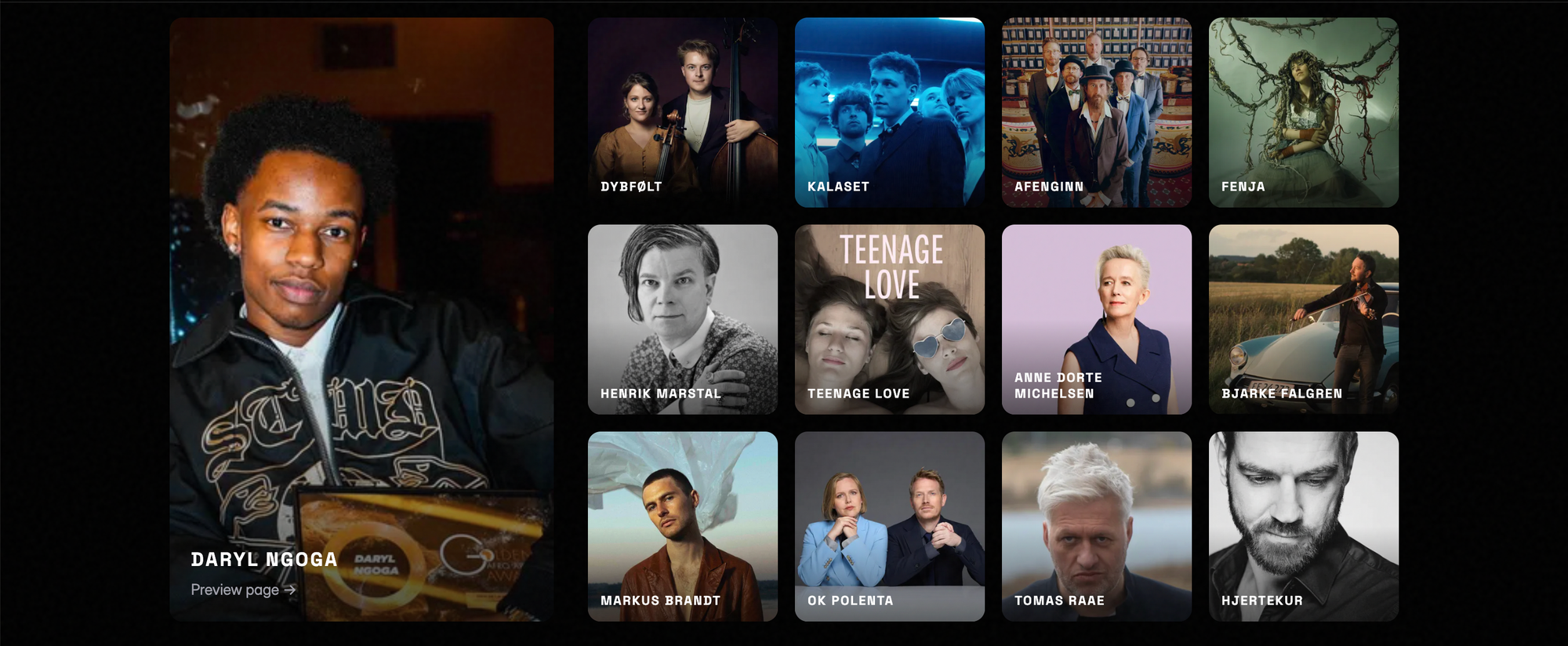
One home for an artist's online presence: website on their own domain, releases, posts, email list, fan management, direct payments... in one place, built to be ready for the moment. It’s free to start and there’s zero platform fee on anything artists sell. Not another platform to add to the stack. The place the stack collapses into.
The artist I mentioned at the start now has an answer to the question. It's a URL. It's hers. When something happens, she's ready. And her home is there to support her.
Most working artists don't have that yet. Not because they haven't thought about it. The address exists. It just needs to be theirs.
Jared Volpe is a co-founder of Sleeve. Artists spend years building a fanbase, but the relationship lives on someone else's platform. Sleeve is the place they actually own: Website, email list, releases, direct payments. Their domain, their data, their money.