

The shape of success: Analyzing the 2027 Grammy nominations
By Tatiana Cirisano of MIDiA Research Blog
Nominations for the 2027 Grammy Awards are officially out, and with them, the usual flurry of hot takes and analysis. The Grammys can’t capture everything, but the awards (and particularly the Big Four categories) are always an interesting lens for understanding the state of music consumption, culture, and fandom.
A major takeaway this year is that the relationship between these three measures of success is getting harder to parse.
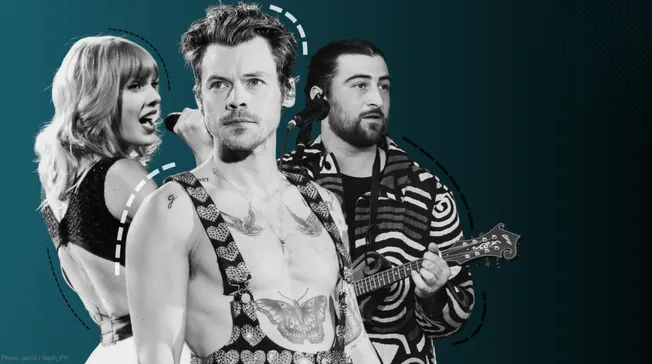
Within the major categories, there’s Ella Langley, an artist whose streaming and radio performance arguably exceeds her cultural visibility. There are artists whose impact on scenes and subcultures far surpass their streaming numbers and mainstream recognition, like Angine de Poitrine. There are albums perhaps recognised best (although certainly not only) by their showstopping live tours, like Olivia Rodrigo’s You Seem Pretty Sad For a Girl So In Love and Rosalia’s LUX. And then there’s Taylor Swift’s The Life of a Showgirl, which, despite a polarizing reception and arguably light cultural impact, was nonetheless a streaming juggernaut.
"Success has a shape, not just a size. The goal for artists and their teams is no longer necessarily to maximize every metric, but to understand what shape of success is most achievable, sustainable, and valuable for them."
The artists absent from or less recognized by the nominations are worth noting, too. There’s Harry Styles, whose fourth album was unquestionably a chart success, yet was eclipsed by his record-breaking Madison Square Garden residency – more a celebration of his career than of one album. There’s also Noah Kahan, whose exceptionally devoted fanbase has been among the loudest and angriest in the face of Kahan’s absence from the major categories.
So long as the Grammy Awards exist, there will always be snubs and surprises. But those aren’t the real story here, nor is the story simply that music listening is fragmenting. What’s new is that an artist can now be enormously successful in one dimension of music culture without reaching similar success in another.
+Read more: "Culture Shock: What 10,500 Labels Reveal About the Global South's Genre Story"
Music no longer has one hierarchy of success
It used to be easier to tell a relatively coherent story about artist success: radio airplay drove awareness, awareness drove sales, sales reinforced cultural relevance, and cultural relevance helped drive touring. The relationship was never completely linear, of course, and there have always been cult stars. But success in one dimension tended to reinforce success in another, in part because a smaller number of gatekeepers (e.g., radio programmers, retailers, major media outlets) helped concentrate attention.
Today, artists can achieve significant scale within one dimension without necessarily crossing into the others. An album can be a streaming blockbuster without being a major cultural conversation. It can dominate social media without translating into sustained listening. It can fuel enormous live demand without dominating the charts to the same degree. And it can be deeply influential within a particular scene or fanbase without having much external visibility at all.
The divergence between consumption and cultural connection is especially apparent among younger generations. As MIDiA has explored, today’s teens are streaming more music than ever, yet are less likely than previous generations to discuss music with friends or consider it central to their identities. Growing consumption doesn’t necessarily translate into a proportionate increase in music’s cultural significance.
In this environment, it means less to ask how successful an album or artist is. It’s more helpful to ask, what’s the shape of that success?
+Read more: "The Hidden Cost of Early Success"
The shape of success
As the Grammy nominations reflect, artists today can build careers through different combinations of consumption, fandom, live demand, and cultural relevance.
Two artists can generate the same number of streams while occupying entirely different positions in culture. One might have a large but relatively passive audience, while another might have a smaller, intensely committed fanbase that super-spends on live experiences and merchandise. Another might be shaping the sound of an entire generation of artists without commanding their own audience at scale.
As success increasingly takes multiple forms beyond streaming (and sometimes disconnected from it), streaming platforms are becoming less representative of the wider music economy. It’s not that streaming performance is any less valuable or valid as a measurement of success. It’s just no longer as clear a proxy for other forms of cultural or commercial impact. This distinction is another example of how music industry metrics are changing meaning, and it’s relevant for everyone:
- A&Rs deciding what artists to sign
- Promoters deciding who to put on stage
- Investors seeking to build brands around artist catalogues
- Artists building their own strategic roadmaps
Success has a shape, not just a size. The goal for artists and their teams is no longer necessarily to maximize every metric, but to understand what shape of success is most achievable, sustainable, and valuable for them. Grammy nomination day will always fuel debate. But the question is no longer whether the Grammys are getting the definition of success right, it’s whether there’s a single definition at all.
Want the latest entertainment research and insights directly to your inbox? Our newsletter has you covered, click here to subscribe.