

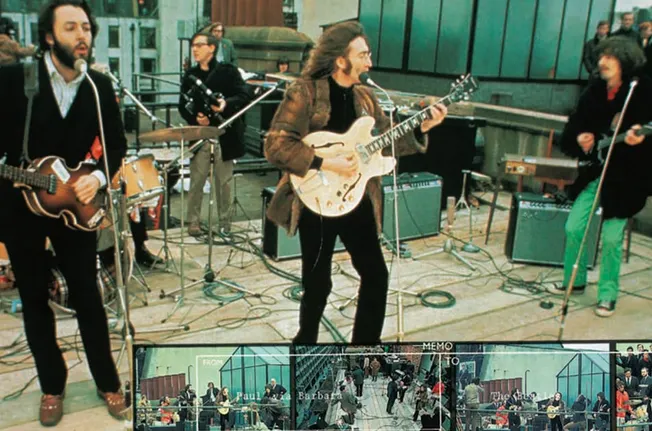
More than 55 years later, people still talk about “the rooftop concert” like it was folklore. Now, fans will soon be able to stand where it happened themselves.
Apple Corps has announced plans to open 3 Savile Row in London — the rooftop where The Beatles played their final public performance — as a ticketed museum and immersive fan experience in 2027. The building, long mythologized in music history, was home to Apple Records and the site of the band’s now-legendary lunchtime rooftop performance on January 30, 1969.
One remarkable thing about that concert was that nobody involved seemed to understand how historic it would become. At the time, it was barely even a proper event. There were no tickets, no posters, no announcement to fans gathering below. Yet it became one of the most enduring images in live music history.
The Beatles Were Barely Holding Together At That Point
The mythology surrounding the rooftop concert can sometimes obscure the reality of where The Beatles actually were as a band in early 1969. By the time the Get Back sessions began, the group was deeply strained. Years of nonstop cultural pressure, business complications, creative disagreements, and personal exhaustion had pushed the band into increasingly fragile territory.
The original idea behind the Get Back project was pretty simple: strip away the studio experimentation of albums like Sgt. Pepper’s Lonely Hearts Club Band and The White Album and return to the feeling of a live rock band playing together in a room.
Cameras rolled constantly as the band rehearsed new material, argued over arrangements, joked with one another, and occasionally looked like they were barely surviving the process.
At one point during rehearsals, George Harrison temporarily quit the band. Tensions between members were obvious. The atmosphere was often uncomfortable. Yet buried inside all of that dysfunction were flashes of chemistry that reminded everyone why and how The Beatles had transformed music in the first place.
Watching footage of the performance today feels almost impossible in hindsight: four musicians on the verge of collapse somehow locking back into joy for one final moment.
+Read more: "A Brief History of the Juke Joint — the Original American Live Music Venue"
The Comeback That Became a Goodbye
What makes the rooftop concert especially fascinating is that it was never originally intended to be the final Beatles performance.
If it had been, the very anti-climactic ending would've likely been reconfigured.
Throughout the Get Back sessions, the band debated multiple ideas for a proper live comeback. Suggestions reportedly ranged from an amphitheater performance to a concert aboard a ship. Some ideas were wildly ambitious, others deliberately absurd. But as deadlines approached and enthusiasm for a large-scale production faded, the simplest option eventually won out.
They would just go upstairs.
On the afternoon of January 30, 1969, John Lennon, Paul McCartney, George Harrison, and Ringo Starr climbed to the roof of Apple Corps headquarters at 3 Savile Row and began playing to the London skyline.
That simplicity is a huge part of why the moment still resonates today. In an era before livestream culture, “secret sets,” or surprise pop-ups became standard marketing tactics, The Beatles accidentally staged something that kind of feels like it could happen today. It was remarkably modern.
There was no rollout campaign, no social media teaser, no sponsored activation attached to it. For younger audiences especially, the rooftop concert almost resembles the blueprint for contemporary guerrilla live music culture: spontaneous, imperfect, immediate, and shared collectively in real time.
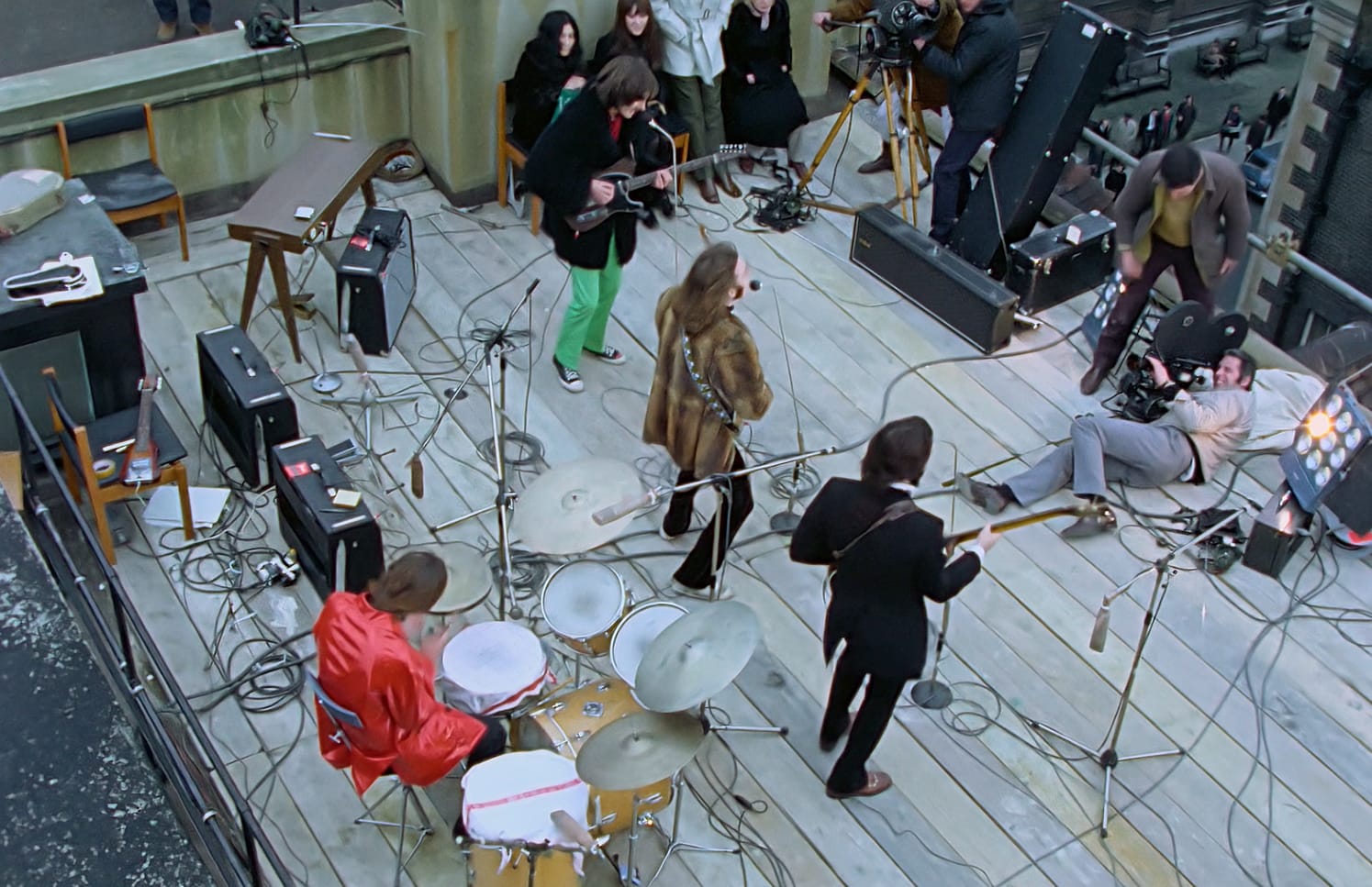
London Stopped What It Was Doing
As the band launched into songs like “Get Back,” “Don’t Let Me Down,” and “I’ve Got a Feeling,” confusion spread through the surrounding streets of weekday London.
Office workers leaned out of their windows trying to identify where the music was coming from. Secretaries and businessmen climbed onto neighboring rooftops for a better view. Pedestrians gathered below, staring upward into the winter sky as amplified rock music echoed through central London.
The footage captured during the performance remains strangely contemporary because of how unscripted it all feels. Nobody below had prepared to attend a Beatles concert that day. The city simply stumbled into one.
That dynamic — live music unexpectedly interrupting public space — has become increasingly valuable in modern music culture. Whether it’s surprise warehouse sets, underground rave announcements shared through encrypted group chats, or artists like Fred again.. building reputations around spontaneous pop-up performances, audiences continue chasing experiences that feel unmanufactured and genuinely communal.
The Beatles may not have intended to invent that model, but the rooftop concert helped establish the emotional blueprint for it.
+Read more: "Joni Mitchell's Lifetime Achievement Award Sparks a Look Back on Her Life on Stage"
The Police Intervention Made It Immortal
Of course, the mythology surrounding the rooftop concert likely would not exist in quite the same way without the police eventually arriving.
As crowds grew and complaints from neighboring businesses increased, officers from the Metropolitan Police were dispatched to Apple Corps headquarters to investigate the noise disturbance. The resulting footage — polite but visibly irritated officers attempting to navigate confused Apple employees while The Beatles continued playing upstairs — became one of the defining sequences in the Let It Be film.
The moment transformed the performance from a quirky publicity stunt into something more rebellious. The presence of authority figures trying to stop the music immediately raised the stakes. Suddenly, the rooftop concert felt dangerous, disruptive, and gloriously out of control.
Even the band leaned into the absurdity. During one performance of “Get Back,” Paul McCartney improvised lyrics referencing the police presence below. By then, everyone understood the situation had become bigger than a rehearsal.
And then, after roughly 42 minutes, it ended with one of the most famous closing lines in music history. As the instruments faded out, John Lennon stepped toward the microphone and delivered a closing remark that would become permanently attached to the mythology of the band itself:
“I’d like to say thank you on behalf of the group and ourselves, and I hope we passed the audition.”
Nobody on that rooftop fully understood it yet, but The Beatles would never publicly perform together again.
The concert itself lasted less than an hour. Its mythology has lasted generations.
You can still hear the wind blowing into those microphones.