



By Craig A. Meyer, Founder of GigLogic
I remember one show early in my career that looked like a success by every measure I knew. The audience was fantastic. The venue was packed. People stayed afterward to talk, buy merchandise, and tell me how much they loved the performance. I drove away thinking:
“This is what making it feels like.”
Then I started doing the math...
By the time I accounted for travel, lodging, fuel, meals, taxes, and everything else that comes with being a working musician, the night’s profit looked nothing like the paycheck I’d been celebrating. I hadn’t played a bad show. I had made a bad business decision... and I didn’t realize it until it was over.
Looking back, I don’t blame anyone for that. No one misled me. No one was trying to take advantage of me. Like so many artists, I simply didn’t have the tools or the business framework to evaluate the opportunity before I accepted it.
That’s a lesson I would learn more than once. It’s also the reason I’m convinced we need to change the way we prepare artists for professional careers.
For generations, we’ve accepted financial struggle as part of the artist’s story. We romanticize it. We call it paying dues. We call it passion. We tell young musicians to keep hustling, keep saying yes, keep grinding, and trust that eventually it will all work out.
But what if we’ve been telling artists the wrong story?
The music industry isn’t short on opportunity. According to the Recording Industry Association of America (RIAA), U.S. recorded music revenues reached a record $17.7 billion in 2024. Streaming continues to grow. Live music remains a powerful economic force. New technologies have made it easier than ever for artists to create, distribute, and promote their work.
Yet financial sustainability remains elusive for many working musicians. According to MusiCares’ 2025 Wellness in Music Survey, financial wellness and income stability remain among the most significant challenges facing music professionals.
This isn’t because artists lack talent. It isn’t because they aren’t willing to work. In my experience, musicians are among the hardest-working people you’ll ever meet. They’ll drive through the night, load their own gear, play three sets, sleep four hours, and do it all again the next day because they love what they do.
We’ve become remarkably good at teaching artists how to create, but remarkably inconsistent at teaching them how to build sustainable careers. We teach songwriting, performance, recording, branding, promotion, and social media. What we often don’t teach is how to evaluate an opportunity as a business decision.
A bigger guarantee doesn’t automatically mean a better gig. A full calendar doesn’t necessarily mean you’re building a successful business. A sold-out room can still lose money once travel, lodging, crew, commissions, taxes, meals, and all the hidden costs of live performance are taken into account. Being busy is not the same thing as being profitable.
My co-founder, Gary Arbuthnot, and I learned that lesson over decades of performing. Between us, we’ve worked on Broadway, in concert halls, aboard cruise ships, with orchestras, and in theaters around the world. We’ve watched talented artists say yes based on excitement or instinct because they simply didn’t have the information they needed beforehand.
That isn’t a character flaw. It’s an information problem. Artists shouldn’t have to become accountants to build sustainable careers. But they do deserve access to the same kind of business intelligence every other entrepreneur relies on.
Artists are entrepreneurs too. Every performance is an investment of time, money, reputation, and creative energy. Every opportunity deserves to be evaluated with the same care as any other business decision. Not every gig should be judged by profit alone. Some are worth doing for the audience, the relationships, or the doors they may open. But those should be intentional decisions and not expensive surprises.
Gary and I eventually built GigLogic because we were tired of learning those lessons after the fact. We wanted a better way to understand the economics of a performance before committing to it.
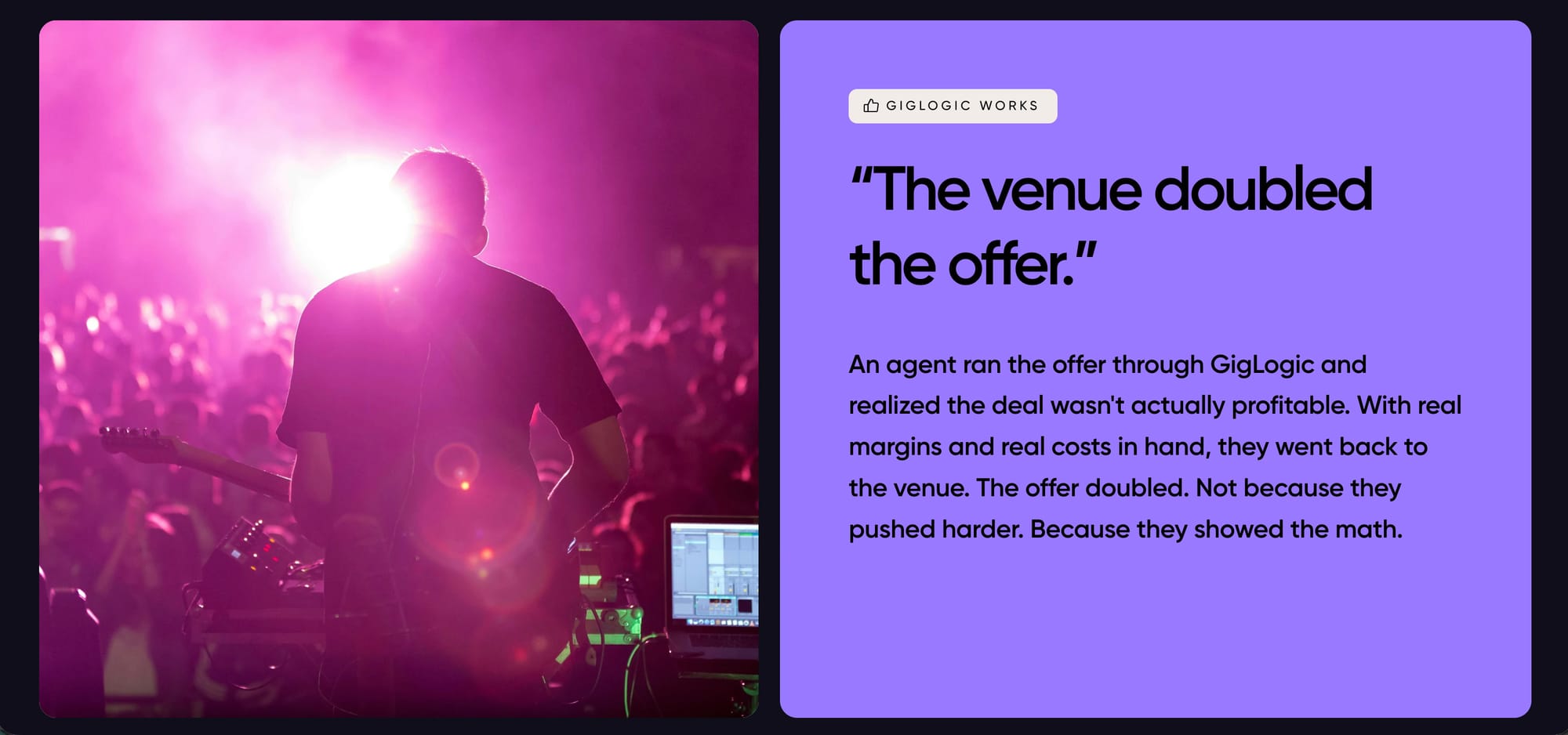
But this conversation is much bigger than one tool. It’s about changing the culture around creative careers. It’s about giving artists permission to think like entrepreneurs without asking them to stop thinking like artists. It’s about helping musicians understand that asking smart business questions doesn’t diminish creativity. It protects it.
We don’t expect architects to apologize for earning a living. We don’t romanticize struggling accountants or celebrate lawyers who consistently lose money on every client. We recognize that professionals deserve to understand the economics of their work. Artists deserve that same respect.
If we want healthier careers, healthier creative communities, and a healthier music industry, we have to stop treating financial uncertainty as an unavoidable part of making art.
Talent deserves sustainability. Passion deserves a plan. It’s time we stop teaching artists that financial struggle is part of the job and start giving them the knowledge to build careers that last.
It’s time to retire the idea that financial struggle is proof of artistic authenticity.
+Read more: "How to Choose the Right Indie Venue for Your Live Concert"
Craig A. Meyer is Founder of GigLogic, a veteran touring performer, and creator, producer, and star of the internationally touring production Remember When Rock Was Young – The Elton John Experience.