

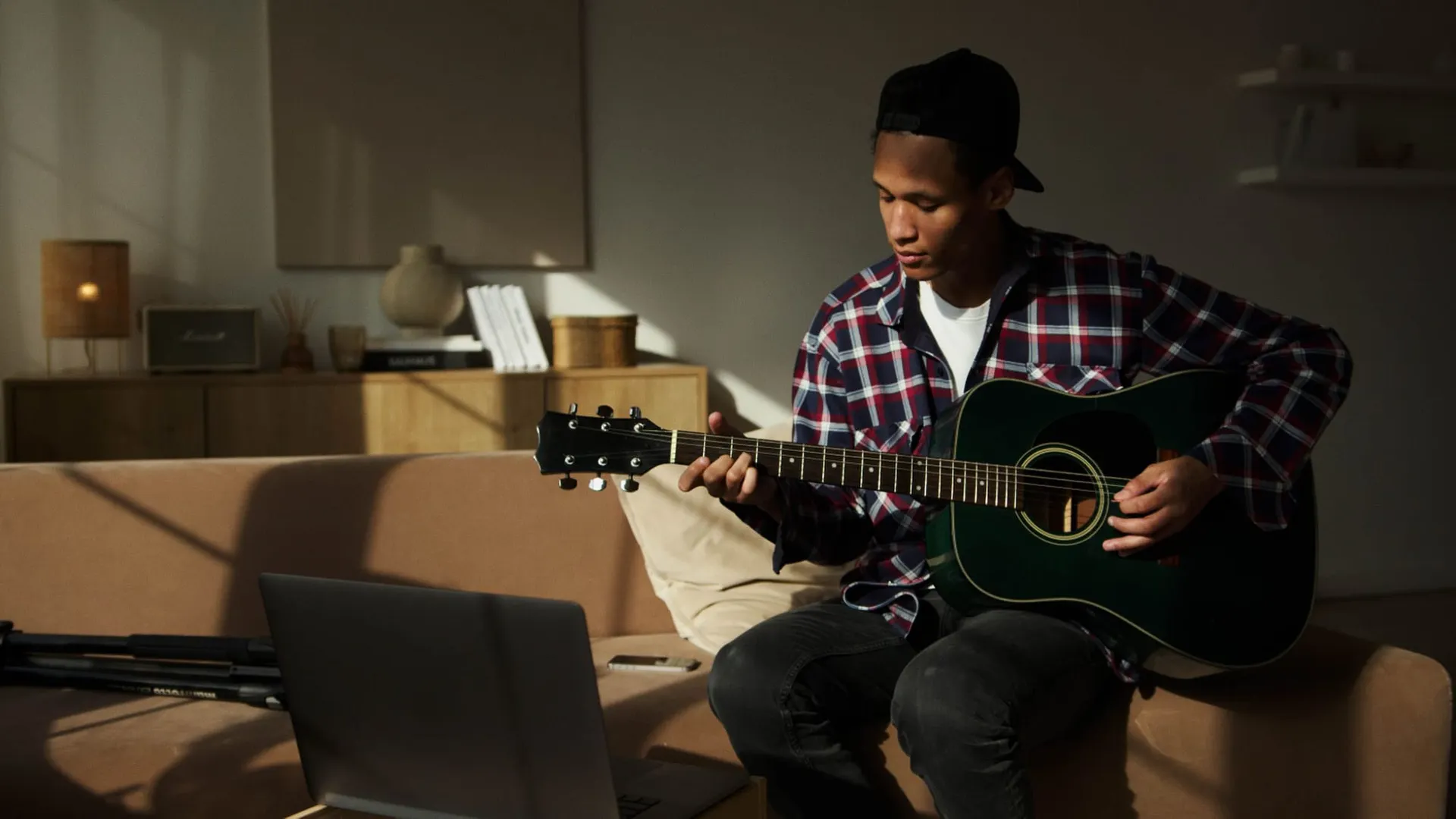
Here's an all-too familiar occurrence: An independent artist opens their royalty dashboard and sees just about enough money to buy themselves a cup of coffee.
That same week, another company built around independent artists gets acquired, funded, consolidated, or folded into a larger corporate structure.
The artist made around $3.12. The company earned around $2 billion. Somewhere in that math is the story of the modern music industry.
There's no doubt there is a lot of money in music. The question is where that money collects. Increasingly, it does not seem to collect with the person making the music. It collects around them, in the pipes, platforms, dashboards, subscription tools, promotional services, marketplaces, and distribution systems that now surround the independent artist.
DistroKid is not only selling distribution to artists with careers. It is selling possibility to anyone with a song. They want the song to be real. They want a shot. DistroKid does not need every upload to become a hit. It does not even need every upload to find an audience. It needs more people to believe they should upload.
The old label system placed selective bets on artists. The modern artist-services economy can make money from scale, volume, recurring fees, add-ons, tools, dashboards, and the emotional gravity of possibility. It is not only betting on successful artists. It is betting on the massive number of artists trying to become successful.
Spotify Has Listeners. DistroKid Has Uploaders.
As much as it may seem like it, Spotify and DistroKid are not playing the same game. Spotify has a listener problem. It needs enough music to keep people inside the platform forever, but not so much junk, spam, duplication, fake-artist sludge, and low-effort inventory that the listening experience turns into a landfill with a shuffle button.
DistroKid has a different incentive. It does not need every upload to improve the listening experience. It needs more uploaders.
Spotify says about 13 million people have uploaded at least one song to the platform, while estimating that about 250,000 artists globally are “professional or aspiring professional.” Spotify’s point is not ridiculous. Uploading one song does not automatically make someone a career artist.
But for DistroKid, the bigger number is where the future starts to glow. If the cost of making music keeps falling, that customer base does not shrink. It explodes.
+Read more: "How Money Actually Flows Through the Music Industry in 2026"
The Attempt Is the Product
The modern music industry has figured out how to monetize the independent artist’s attempt. Not failure. That is too cruel, and often not accurate. These artists are not failures. But the attempt itself has become a market.
An artist pays to distribute the song, master it, promote it, press it, ship it, and stare at the dashboard like it might eventually confess, only to earn less from streaming than it cost to stay in the game. Meanwhile, the businesses around that artist can become acquisition targets.
That does not mean those businesses provide no value. Distribution matters. Access matters. The ability to put music into the world without begging a label executive for permission absolutely matters. But access is not the same thing as sustainability.
The independent artist is no longer only a creator in this system. The independent artist is also a customer. Maybe that is the real shift. The old industry tried to sell music to fans. The new industry sells tools, access, and hope to artists. And hope, it turns out, they renew annually.
DistroKid is not the only sign. Bandcamp, once treated as the warmer alternative to the streaming machine, was bought by Epic Games and later sold to Songtradr. CD Baby now sits inside Downtown Music Holdings, which was acquired by Universal’s Virgin Music Group. Different deals, same signal: the independent artist may still be independent, but the roads they travel are being bought.
To make matters worse...
AI Just Turned the Faucet Into a Fire Hose
Now add AI. Deezer says it receives almost 90,000 AI-generated tracks per day, which is above 50% of their daily uploads. That is not a future problem. That is a right-now problem wearing tomorrow’s jacket.
If I can pay a monthly AI subscription, generate twenty songs, pick ten, run the artwork through another tool, write a fake bio, create a new artist name, and upload an album in a week, the cost of production collapses. The remaining cost is participation. Distribution. Promotion. Visibility. Metadata. Playlist pitching. Analytics. More tools. More attempts.
For artists, the flood is terrifying. For companies selling boats, it is a growth market. And AI songs are not going to politely wait outside while the humans finish soundcheck. They are already here. They are zombies. They do not need to be great. Zombies rarely are. They just need to keep coming.
They do not eat brains; they eat attention.
+Read more: "The Music Industry Didn’t Get Flooded by Accident"
The Audience Does Not Want to Be Bamboozled
Audiences matter here too. Do listeners care whether music is made by AI? I suspect most listeners care about being told the truth more than they care about purity. They may not reject AI music automatically. If something sounds good in the background while they are making dinner, they may not care how the sausage got emotionally processed.
But nobody wants to be bamboozled.
That is where the industry may have to go next. Not a moral panic. Not a purity test. A songwriter using AI to brainstorm an arrangement is not the same as someone generating 500 fake artists and dumping them into the streaming economy before breakfast.
Listeners should know what they are hearing. Human-made. AI-assisted. Fully AI-generated. Unknown. Let people choose.
Is There a Solution?
I do not have a clean solution. Maybe the answer is labeling, human curation, or artist-owned infrastructure. Maybe listeners start to care whether the music came from a person, a prompt, or some blurry mix of both. Maybe artists decide that if they cannot beat AI, they have to use it.
DistroKid’s sale looks less like a random transaction and more like the canary in the coal mine. Big money sees the signal. Music is getting cheaper and easier. More people are going to make it, release it, and try to get noticed.
More songs mean more uploads. More noise means more demand for distribution, dashboards, promotion, and analytics. For artists, that flood may be terrifying. For companies selling access to it, the flood may be the opportunity.
The old gatekeepers kept too many artists out. The new system lets almost everyone in, then charges rent in the hallway.
+Read more: "5 Signs a Spotify Playlist Is Fake (and How Playlist Bot Checkers Actually Work)"