

Ariana Grande is smack dab in the middle of an intriguing tour.
Three nights in Oakland, five nights in LA, three nights in Austin, Sunrise, and Atlanta, six nights in Brooklyn, five nights in Boston, three nights in Montreal and Chicago, then a straight ten nights in London.
We've talked about touring residencies before here on Hypebot. Venues, fans, and cities have all become amenable to this type of entertainment booking because it boosts tourism, it simplifies ticketing infrastructure, and it lightens the mental and physical toll of the road on the artist and their crew.
But watching Ariana's performance from last week in Austin, Texas, has me curious about something else that's going on here. Something I think Ariana has uniquely brought to this equation.
Curtis Vadnais reviewed the performance in Austin for Music Connection, and made a note to reflect on the depth and density of the environmental vibe planning:
"As the lights dimmed for Act I, a massive kabuki curtain concealed the main stage, building the room's palpable excitement to a fever pitch. The white fabric was suddenly ripped away to reveal Grande and her dancers as she launched into the house-infused beat of the opening number, 'yes, and?' which slid smoothly into red-lit performances of 'positions' and 'dandelion.' Grande wasted no time acknowledging the thundering arena. 'It's good to see us, isn't it, Austin? Welcome to the eternal sunshine tour,'"
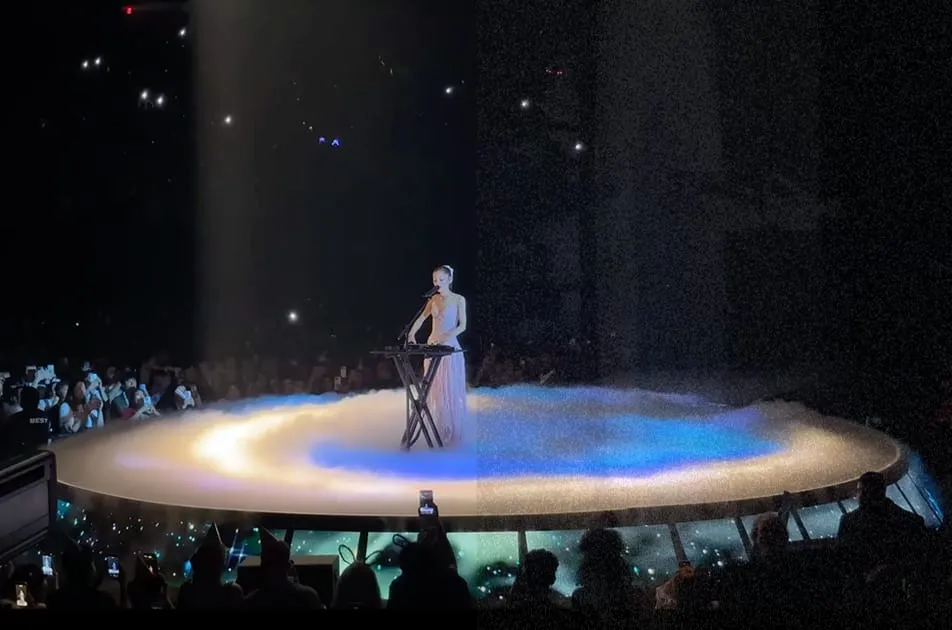
While it's clear that Ariana's new show bears all the hallmarks of the modern arena pop: towering visuals, intricate choreography, cinematic transitions, and enough lighting technology to power a small city, what it also brings (via both set/lighting design and Grande's undeniable talent) is a sense of intimacy, a dreamlike atmosphere, and site-specific customization.
This tour feels like an installation, because, well, it is.
+Read more: "How We Built a Tour Identity for Fred again.. That Fans Made Their Own"
That's an interesting distinction at a time when more artists are spending multiple nights in the same city rather than racing through dozens of one-night arena stops. We've mostly talked about that trend in practical terms. Fewer travel days mean lower costs, smaller carbon footprints, more flexibility for crews, and more opportunities for fans who couldn't get tickets the first night.
What we haven't spent much time talking about is what that extra time might mean creatively.
Because of this extra time in each arena, the crew has been able to projection-map giant swaths of light, shadow, and screen to parts of the space that would normally feel faraway for audiences in the "cheap" seats (we all know those don't exist anymore, except relatively). This in turn shrinks the space, and provides the right environment for Ariana to get quiet, vulnerable, subtle.
What stays is the consistent high level of quality, what changes from city to city is the way the team is able to utilize the unique interior architecture of each arena to build that intimacy into the set planning. I've never seen anything like it.
For decades, arena tours have been designed around portability. Every stage, screen, truss, and lighting cue has to fit into trucks, load in overnight, and work in buildings that all have slightly different dimensions. The goal has always been consistency, but it's more about economy and grandiosity.
Ariana's tour suggests another possibility. Rather than treating each arena as a blank box that simply houses the show, the production often gives the impression that it's in conversation with the room itself. This tour is about feeling.
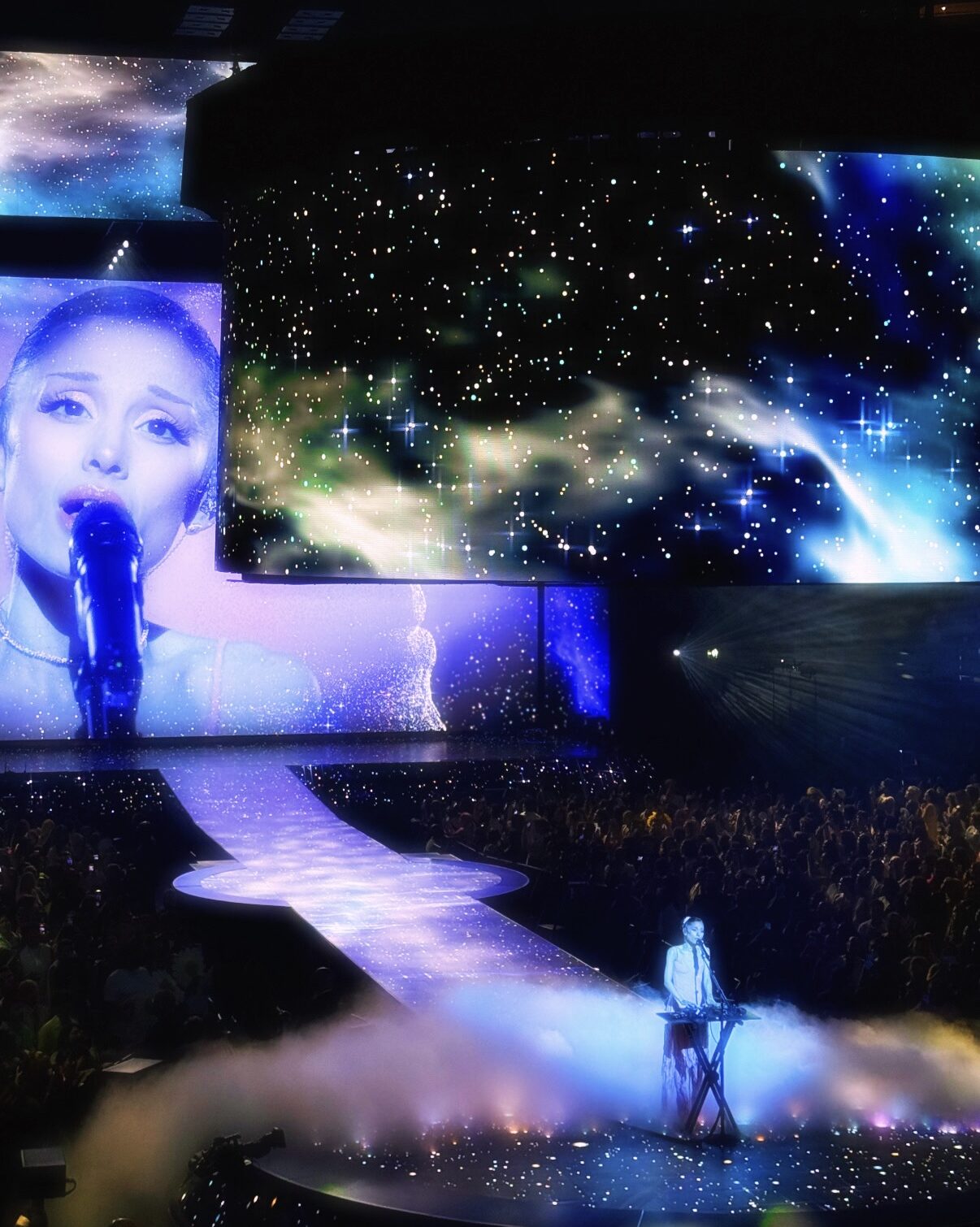
The lighting stretches into the architecture. Massive projections mapped to reshape the space around the stage. Choreography, scenic design, and visual storytelling blur together until it's difficult to tell where the venue ends and the performance begins. It's inspired by contemporary installation art and kabuki theatre, and it's starting to inspire a potential evolution of the large-scale touring apparatus.
As live music has grown significantly and expanded into further globalized markets, some of the top performers and their teams have shown they're less interested in bigger stages, brighter LED walls and walks. Rather, we might be seeing a push to shrink the space in creative ways.
Perhaps instead of asking, "How do we fit this show into another arena?" production designers might increasingly ask, "What can this particular arena contribute to the performance?"
+Read more: "Ethel Cain's 4-Night Run in Melbourne Taught Me About Deep Fan Connection"