


By James Plimmer, Managing Director of Now Listen PR
An artist finishes a release campaign. The stream count looks strong. The team celebrates. Then a few weeks later, nothing much has changed. Follower numbers barely moved. The next post gets the same reach as before. Ticket sales for the upcoming show are slow.
This is not a streaming problem. It is a measurement problem. At Now Listen, we work across digital promotion, DSP strategy and fan acquisition with independent artists and labels. One of the most common questions we hear from artists who have previously invested in promotion is:
“The streams looked good, so why does nothing feel different?”
More often than not, the answer comes down to what those numbers actually represent. Stream counts confirm that the music was played. On their own, they do not confirm that those listeners became fans.
The number at the top of the dashboard is the least informative one on the page. I'll explain why.
TL;DR Takeaways:
- Stream counts measure passive consumption, not fan development or commercial value
- Monthly listener figures can rise sharply while audience quality stays flat or declines
- 75% of a release's first-year streams happen after its first month, so release week is not the verdict
- Save rate, repeat listening and follower growth are the signals that predict long-term career momentum
- The green and red signals in this piece give you a practical scorecard to run after every release
The Monthly Listener Trap
Monthly listener count is the figure artists check almost as obsessively as streams and it carries the same flaw. A rising monthly listener figure looks like growth. It can just as easily reflect a wave of low-intent, algorithmically driven discovery that produces no saves, no follows and no repeat listening.
Spotify separates listener behaviour into two categories inside its for Artists dashboard: active listeners (people who sought the artist out intentionally from their profile, library or own playlists) and programmed listeners (people who heard the artist passively through editorial or algorithmic sources).
Hypebot's guide to Spotify audience segments covers the distinction in detail. A campaign that inflates monthly listeners almost entirely through programmed sources has not grown an audience. It has borrowed one temporarily.
The useful question after any campaign is not how many monthly listeners the artist has. It is what proportion of them chose to be there.
A monthly listener figure that rises during a campaign and then drops sharply once paid activity ends is telling you something specific: the campaign created exposure without converting it into genuine interest. That is worth knowing before the next campaign brief is written.
A healthy campaign will typically show programmed listeners outweighing active listeners during the release window, which is normal. The signal to watch is what happens in the four to six weeks after paid activity ends. If active listeners hold steady or grow while programmed listeners fall away, the campaign converted passive exposure into genuine interest. If both drop together, it did not.
A ratio of active to programmed listeners above 30% in the weeks following a campaign is a reasonable benchmark for independent releases. Below that, the targeting or creative needs revisiting.
Why save rate matters more
When a listener saves a track, they are making an active decision to return to it. That is qualitatively different from a passive stream generated by a playlist they never curated and will never revisit.
The number to watch is not total saves in isolation. It is saves relative to listeners. A save rate above 5% is a strong signal for most independent releases. Below 2% warrants a direct conversation with whoever ran the campaign.
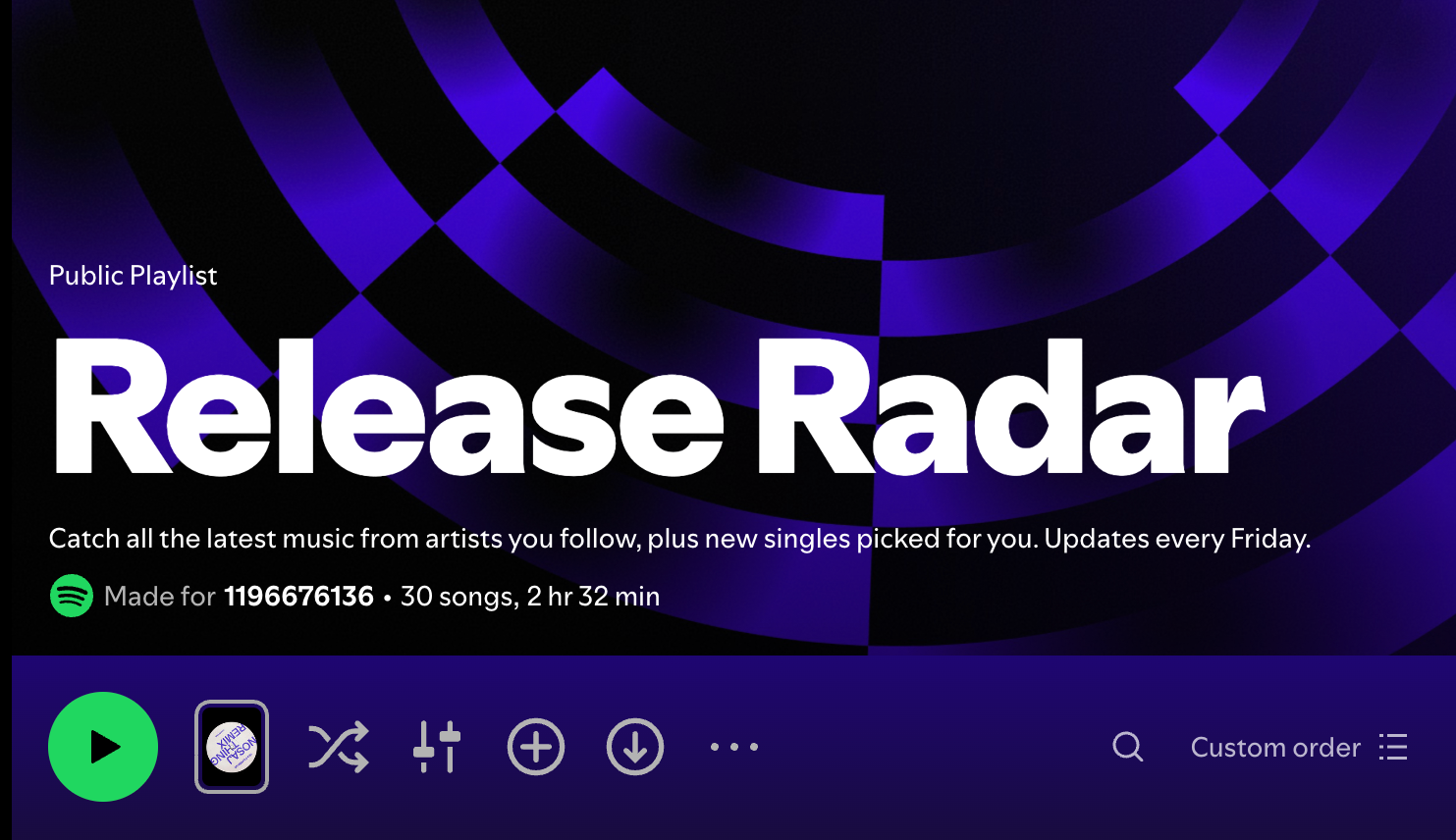
Those thresholds matter because save rate is one of the primary signals that triggers algorithmic playlist placement. Discover Weekly and Release Radar respond to engagement quality, not stream volume. A track with a high save rate and modest streams will outperform a high-stream, low-save track in algorithmic reach over time, because the platform reads saves as evidence that real listeners want to return.
The table below shows how the same campaign reads differently depending on which lens you apply:
| Signal | Streams-only read | Scorecard read |
|---|---|---|
| 38,000 streams | Strong result | Starting point only |
| 34,000 unique listeners | Not reported | Low repeat listening, ratio of 1.1 |
| 1.8% save rate | Not reported | Red signal: below the 2% threshold |
| Artist follows: +12 | Not reported | Red signal: minimal profile conversion |
| Monthly listeners: +4,200 then -3,800 | Not reported | Borrowed audience, not retained |
| Algorithmic playlist triggers | Not reported | None: engagement signals too weak |
The streams-only read produces a press release. The scorecard read produces a better next campaign.
Listener-to-stream ratio tells a similar story. If a release generates 40,000 streams from 10,000 listeners, each listener averaged four plays. If those same streams came from 35,000 listeners, the average drops to just over one. Repeat listening is a signal that the music is genuinely connecting, not just being encountered.
+Read more: "If Viral Content Doesn't Drive Streams, Then What Does?"
Release Week Is Not the Verdict
Spotify's own data shows that 75% of a release's first-year streams happen after its first month. The opening week, which most campaign reports treat as the primary performance window, accounts for a fraction of the total listening a track will generate over its life.
That has a direct implication for how campaigns should be built and how their results should be read. A release that shows modest first-week numbers but strong save activity, healthy repeat listening and growing artist follows is in a better position than one that peaks on day three and drops sharply by day ten.
The first campaign is building conditions for sustained algorithmic discovery. The second has already told the algorithm what it needs to know.
Saves and follows are the signals that feed Release Radar, Discover Weekly and Radio. A campaign that prioritizes generating those signals is investing in the 75% of listening that happens after the initial push ends.
The artists who build durable streaming careers are not always the ones with the strongest release weeks. They are the ones whose releases keep finding new listeners for months afterwards, because the engagement signals from the first campaign gave the algorithm enough confidence to keep recommending the track.
The practical implication is this: the actions that matter most in release week are not the ones that drive the highest stream count on day one. They are the ones that generate saves, follows and complete listens, because those signals are what the algorithm carries forward. A pre-save campaign that converts into release-day library adds, a social content sequence that drives profile visits rather than just track plays, and playlist pitching timed to land in week two rather than day one are all strategies that invest in the 75% rather than the 25%.
Release week is the foundation. What you build on it determines everything after.
What the Headline Stream Count Doesn’t Tell You
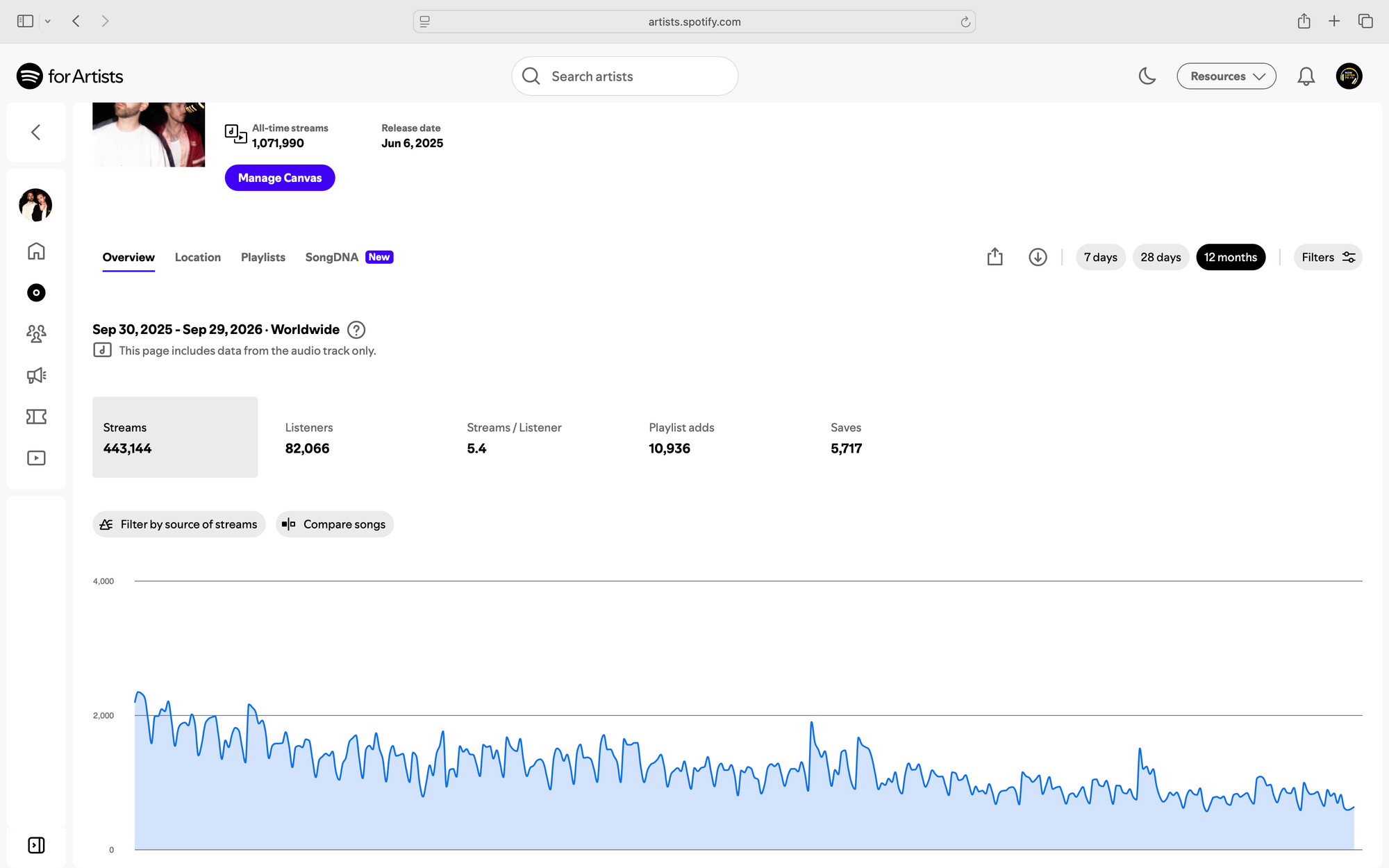
One anonymized campaign from our own work provides a useful example. When the active campaign ended, the track had generated approximately 350,000 streams. But the headline stream count only tells part of the story.
Over the 12-month period shown below, the track generated an additional 443,144 streams from 82,066 listeners, averaging 5.4 streams per listener, alongside 5,717 saves and 10,936 playlist adds. These additional signals provide important context. Rather than simply recording exposure, they indicate repeat listening and active audience behaviour: listeners returning to the track, saving it to their libraries and adding it to their own playlists.
The trajectory after the campaign is equally significant. Instead of a short-lived spike followed by a sharp decline, the track maintained a consistent streaming baseline and continued to accumulate listening after active promotion had ended. It has since surpassed one million all-time streams.
That milestone is certainly notable for an independent release, but the number itself isn't the main point. The more useful insight is what happened between 350,000 and one million: the track continued to generate meaningful activity after the active campaign had concluded.
This is why evaluating a campaign solely on its stream count at the point of reporting can give an incomplete picture. Repeat listening, saves, playlist adds, follower growth, catalogue engagement and the post-campaign baseline all help determine whether attention is translating into longer-term audience development.
The active campaign ended at around 350,000 streams. The audience behaviour that followed is the more important measure of what was built.
+Read more: "How to Save Time and Be Everywhere: A Guide to Bandsintown’s Artist Marketplace"
The Post-Campaign Scorecard
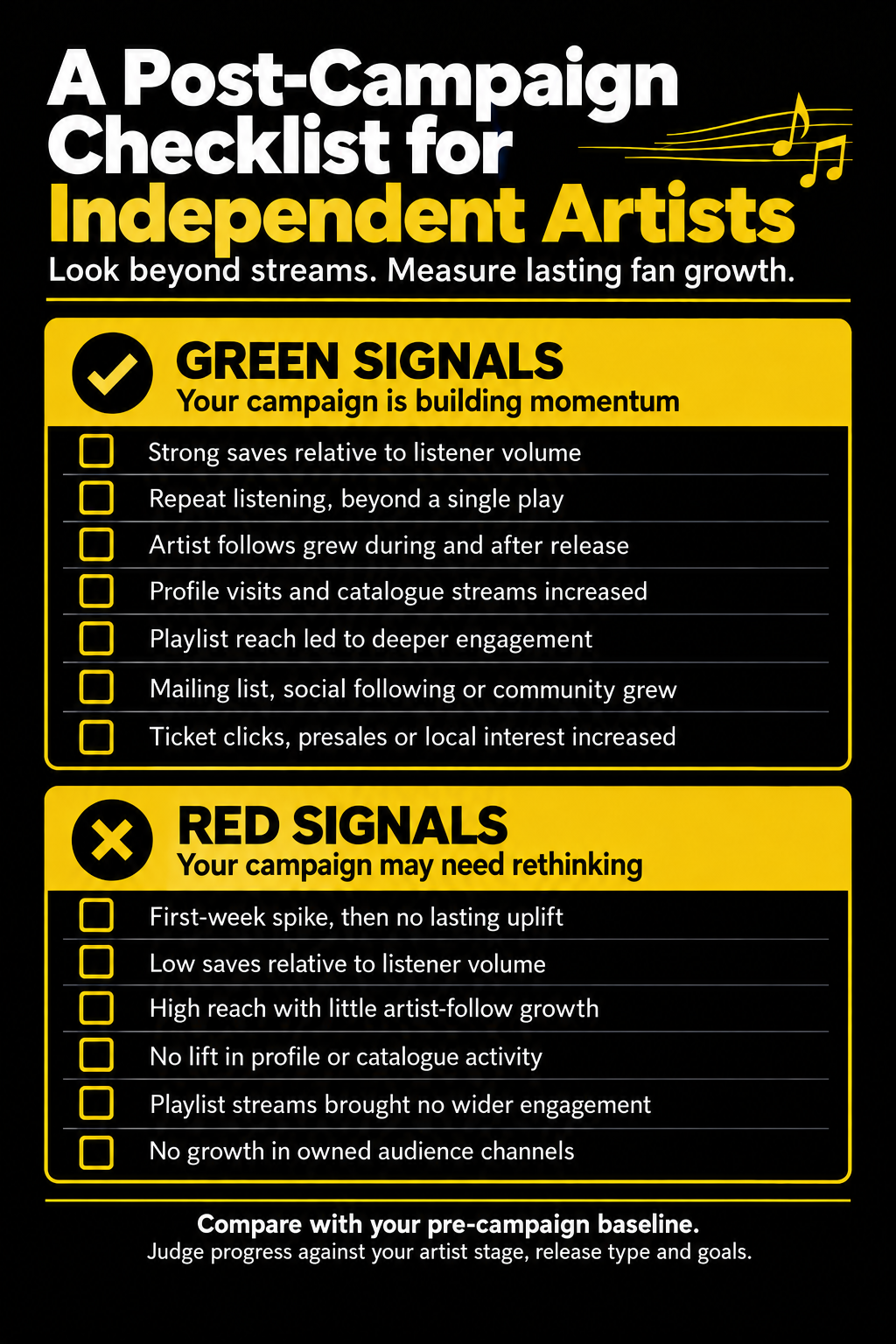
Most of this data is already available to you. Spotify for Artists, your social dashboards and any smart link platform you use contain everything below. After every release, run through these signals before drawing any conclusions from the stream total alone. It takes ten minutes and it will change what you ask for from your next campaign.
Green signals: the campaign is building real momentum
- Save rate is strong relative to listener volume (above 5% is a meaningful benchmark for most independent releases)
- Listener-to-stream ratio suggests repeat plays rather than one-and-done exposure
- Artist follows grew during and after the campaign, not just during paid activity
- Profile visits and catalogue streams rose alongside the new release
- Active listener proportion held up or grew relative to programmed listeners
- Algorithmic playlists (Discover Weekly, Release Radar, Radio) activated after the initial campaign push
- Owned audience grew: mailing list, social following or fan community
- Ticket link clicks, presale registrations or local audience concentration increased
Red signals: the campaign may need rethinking
- Strong first-week streams with a sharp drop-off and no baseline uplift afterwards
- Low saves relative to listener volume; below 2% warrants a direct conversation with your campaign team
- Monthly listeners rose sharply during paid activity then fell immediately after it stopped
- Minimal artist-follow growth despite high reach
- No movement on catalogue or profile activity
- Playlist streams did not translate into engagement elsewhere
- No growth in owned audience channels
What to do with the data
The right benchmark varies by artist stage, release type and objective. A debut single and an established artist's album campaign should not be assessed by the same criteria.
What matters is the direction of travel. Ask these questions after every release:
- Did this campaign move the baseline, or did streaming return to where it was before?
- Did new listeners explore the catalogue, or did they hear one track and leave?
- Did any of this translate into owned audience growth: follows, mailing list or ticket interest?
- What proportion of monthly listeners are active versus programmed?
If the answers are consistently pointing towards red signals, here is what to do with each one:
- Low save rate: Review the playlist sources. If most streams came from algorithmic or editorial placements with no genre specificity, the track reached the wrong listeners. Next campaign, tighten targeting to audiences with demonstrated affinity for the sound.
- No artist follow growth: The track found listeners but the artist profile did not. Add a content layer in the next campaign that drives profile visits directly: artist story content, catalogue highlights and behind-the-scenes material that gives new listeners a reason to follow rather than just stream.
- Monthly listeners dropped sharply post-campaign: The audience was borrowed, not built. Reduce reliance on broad playlist pitching and paid reach. Invest more in owned channels: pre-save lists, mailing list growth and fan community building before the next release.
- No catalogue discovery: New listeners heard the release and stopped there. Consider a catalogue-focused content sequence running two to three weeks after release, surfacing older tracks via re-marketing to the new audience while engagement is still warm.
- No baseline uplift: Streaming returned to pre-campaign levels. This is the clearest signal that the campaign created a moment rather than momentum. The next brief needs different objectives, not a bigger budget.
Stream counts are part of the picture. They have never been the whole one. The artists building durable careers right now are the ones asking better questions after every campaign, not just checking the number at the top of the page.
James Plimmer is Managing Director of Now Listen PR, a UK music marketing agency specializing in bespoke digital promotion, DSP strategy and fan acquisition for independent artists and labels. He has worked in music marketing since founding Now Listen PR in 2019, helping artists develop sustainable audiences across streaming and digital platforms.