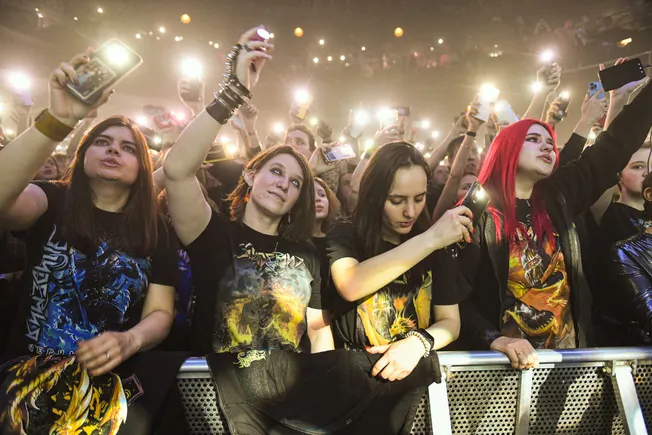
Every friend group has one. They wake up early for the presale; they create the Ticketmaster account; they memorize the access code, survive the queue and keep an eye on their screen for hours; and then somehow magically find six seats together before the little blue dots disappear.
But then reality sets in. They've just put everyone else’s tickets on their credit card.
According to new research published by Zelle, that familiar act of group-chat heroism is increasingly leaving young consumers with debt, anxiety, and a collection of increasingly desperate payment requests.
Zelle’s new Avoidance Economy Report found that 76% of Gen Z consumers who have fronted money for a group expense said they were not fully repaid. More than half said the experience created tension or negatively affected a relationship, while 47% reported going into debt to cover group expenses.
Let's dig in.
One Friend Has Become the Group’s Bank
Live entertainment is built around shared experiences, but buying tickets together rarely means sharing the financial risk equally. Because of the way ticketing platforms have gamified and funnelized the purchase moment, when a concert goes on sale, there is generally no time to collect money from five friends, confirm everyone’s budget and patiently discuss whether Section 112 is worth another $40.
Tickets are disappearing in milliseconds. Prices are always fluctuating. The group needs someone to make a decision, fast.
But the problem is, with everything being so pricey right now, the person who hit "Purchase" is no longer simply a friend. For the next several weeks, they are a ticket broker, travel coordinator, accounts-receivable department and interest-free lender. And that has consequences.
A friend who once fronted $150 for three club tickets may now be carrying hundreds (or thousands) of dollars in tickets, fees, hotel rooms and transportation costs.
Zelle’s research found that Gen Z was the highest-spending generation surveyed for major travel and event experiences. 37% reported spending at least $2,501 per person on average for events such as Coachella, the World Cup, the US Open and the Super Bowl. Those figures are obviously not limited to concerts, but they capture something increasingly familiar across live entertainment: participating in a major cultural moment can require vacation-sized spending.
Payment Requests Now Offer a Crucial Data Window Into Group Social Activity
In 2026, nobody needs to walk for blocks just to find an ATM anymore, or write a check, or leave an "IOU" on the fridge. Payment requests for digital money transfers can be made in seconds.
Zelle's data tracks the time it takes between the request and the transfer, and their recent study found that some Gen Z consumers take months to settle shared expenses. 18% said repayment could take up to one month, 10% said it could take between two and six months, and 11% said it could take longer than six months.
The delay also creates a distinctly modern form of social discomfort. Zelle calls it “Payment Avoidance” — delaying, ignoring or withdrawing from conversations about money. 20% of Gen Z respondents said they had canceled plans or muted or ignored group chats to avoid repayment, while one-third said settling shared expenses caused stress or anxiety.
That means the digital payment request is doing more than moving money. It is becoming part of the social record surrounding the event.

+Read more: "Luminate Live Music Report: The Who & How of Concert-Going Are Changing"
Rising Prices Raise the Emotional Stakes
Owing a friend $20 can feel casual. Owing them $400 changes the temperature of a conversation. The higher the cost of live entertainment climbs, the more financially exposed the group’s designated buyer becomes. That person may be carrying the balance on a credit card, absorbing interest or temporarily losing access to money needed for rent, groceries and other expenses.
Meanwhile, asking to be repaid can feel strangely impolite — even when it is completely reasonable. This is where a simple transaction becomes a friendship problem. The person who owes money may be experiencing genuine financial anxiety. The person who fronted the money may feel taken advantage of. Both may avoid discussing it because neither wants a concert, dinner or weekend trip to become an argument.
According to the report, 25% of Gen Z respondents said repayment problems had damaged a relationship over the long term. Fourteen percent said they had ended a friendship or relationship over a repayment dispute.
Digital Payments Don’t Fix the Entire System
Unsurprisingly, Zelle’s most frequent users reported that digital payments make these transactions easier. Among the 1,000 “super-users” surveyed, 80% said Zelle helped them get paid faster, 68% said it made splitting costs more equitable and half said it reduced the awkwardness of settling shared expenses.
Those findings come from frequent Zelle users and should be understood as product-oriented research. Still, the broader behavior is difficult to dismiss. Payment apps reduce the effort required to transfer money, but they cannot make an unaffordable outing affordable. They also cannot eliminate a ticketing structure that often forces one person to assume the entire group’s financial risk.
Ticketing platforms could potentially do more, too. Split-payment options, short group reservation windows and individual payment links could allow friends to secure adjacent tickets without requiring one attendee to finance the outing.
Until then, the friend who successfully gets through the queue remains the group’s unofficial bank. So celebrate them. Buy them a drink at the show. Forgive them for selecting seats slightly farther from the stage than everyone wanted.
And, for God’s sake, pay them back.
+Read more: "Exposing How the Live Music Industry Lies About Its Massive Carbon Footprint"
Read Zelle's Zelle’s full Avoidance Economy Report.