

By Scott Cohen, Co-Founder of The Orchard
When Richard Gottehrer and I launched The Orchard in the mid-90s, we set out to solve the biggest obstacle facing the independent music community: Market Access.
Recognizing the emerging possibilities of the World Wide Web, we pooled our experience to build a company that became the catalyst for structural change in the music industry, giving independent artists global access to fans in ways never seen before.
Fast forward 30 years and that access is now taken for granted. The ability of independent artists to reach listeners globally is now a fundamental part of the modern music industry. Today, a new battleground demands our attention: the mistaken belief that a royalty payment is sufficient compensation.
The Battle for Compensation
I used to believe that copyrights ensured artists, composers and rightsholders were fairly paid; but the copyright system was designed to compensate them for the usage of their work, not the underlying value they create for the industry.
The value of music has exploded. Yet artists, composers and rightsholders remain shut out of the wealth their work creates. Their compensation stops at royalties, when it should in fact reflect the full economic value they generate. Songs are building empires that are being sold for billions without sharing any of the proceeds.
This disparity isn’t an accident. It is the system working exactly as designed — an industry built to treat the royalty as the ceiling, not the floor, by those with an interest in keeping it that way. But it has been dramatically exacerbated by the financial, technological and structural shifts of recent years. It has grown too big to ignore.
If I learned one thing from my Orchard journey, it is that challenging the established industry to create structural change is hard but well worth the fight. My thinking has evolved over the years. I want to see a model that compensates the artists, composers and rightsholders whose work powers the industry beyond the royalty.
There is no roadmap, but we can take the first step. Here’s how.

+Read more: "Your Music Is Earning While You Sleep..."
Disrupting the Establishment
Every industry has its norms and established ways of doing things; that is until something new — something better — arrives to upend the status quo. In the ’90s, of course independent artists and labels could record music relatively cheaply and manufacture CDs to sell to fans; but distribution was controlled by powerful gatekeepers, so a critical obstacle stood in their way.
Simply put, if those CDs couldn’t reach the shelves of record stores, they couldn’t be sold. And access was closed off to most indie artists and labels, who didn’t have the means to break through that distribution barrier.
Richard and I had been running online campaigns as far back as 1995 to promote albums from our own small independent record company on Orchard Street in Manhattan’s Lower East Side, which led us to stumble upon a new type of record store: online CD stores.
These online stores had something traditional record stores didn’t — unlimited shelf space and the ability to ship to fans anywhere in the world. This was online music version 1.0. The step before digital downloads. We saw the opportunity and we started making deals.
Within a year, The Orchard became the exclusive supplier of independent music to all major online music stores. Soon, those online CD stores transformed into download stores, and later into streaming services. The flood gates opened, and the tsunami hit. And it has only grown more powerful. Today, virtually everyone, everywhere, has access.
At The Orchard, we learned that we had the power to disrupt the status quo. We learned that change doesn’t come overnight, that it can be slow, and frustrating, and you need to be scrappy and relentless. But we also learned that if enough people believe in what you are doing — if enough people share in your conviction for change — you can move mountains.
This momentous shift wasn’t immediately celebrated by everyone. It came with a lot of resistance from those in power — either dismissed as a ‘fad’ or a dangerous form of piracy that the ‘real’ music industry should steer clear of — often from those who had a vested interest in keeping things the way they were.
Back then, the gatekeepers controlled shelf space. Today, they control something bigger: enterprise value. They decide who gets to own the businesses built on artists’ work, and who merely gets paid, once, for the right to use it.
+Read more: "Charge More to Cover Your Costs or Charge Less to Help Out Fans?"
Timing Is Everything
The Orchard could only have been built in the mid-’90s, when the rise of the internet created the conditions for a new model of music distribution. I firmly believe we are at a similar inflection point today: technology and industry dynamics are creating fertile soil for another revolution.
We cannot claim ignorance. The numbers of music companies being acquired for vast sums – totalling more than $12 billion in the first half of 2026 alone - isn’t the problem. It’s the symptom — proof of an industry that has learned how to turn creators’ work into enterprise value, while still telling creators a royalty is all they’re owed.
It is undeniable: the time for change is upon us.
And maybe, 30 years from now, it will be embedded in the fabric of the industry — even taken for granted — that artist, composers and rightsholders share in the true financial value they generate.
But first, the gatekeepers will ignore this. They will see this as a fad. Not something the “real” industry does. I intend to be part of the fight — and I’d rather not do it alone. The next revolution needs people willing to bet against the establishment one more time. Who is willing to join me?
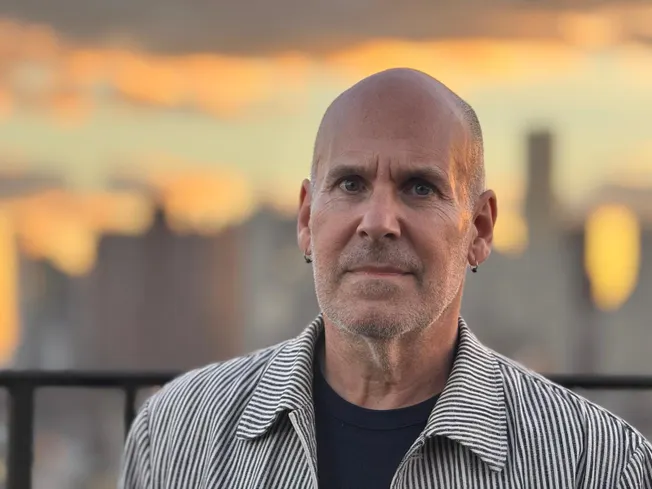
Scott Cohen is one of the music industry’s most notable pioneers. In 1997, Cohen co-founded The Orchard; the world’s first digital distributor of music. The Orchard, now owned by Sony Music, provides independent artists and labels a platform to sell their music to mainstream audiences. In 2019 Cohen retired from The Orchard and joined Warner Music Group as its first-ever Chief Innovation Officer, a role uniquely tailored to Cohen's expertise in both music and technology. More recently, Cohen Co-founded Jukebox (JKBX), a platform that converted income streams from hit songs into SEC regulated securities.