By Josh Solomon of The Empty Pockets
For a long time, my band played an almost entirely industry-focused game. We tried to attract the right manager, booking agent, record label, publisher, radio programmer, festival buyer, journalist, and streaming-platform editor.
Our hope was that one of the right people would hear something in us, open the right door and start the chain reaction that turns a working band into a successful one. I understand why artists chase that story. It is sexy. It is also the plot of my favorite movie, That Thing You Do!
That kind of Cinderella story still happens. But eventually I had to confront an uncomfortable reality: artists have almost no control over whether it happens to them. Most people in the music industry are not trying to be cruel. They do not want to crush somebody’s dream or burn a bridge with an artist who might explode on TikTok six months later.
So almost nobody gives you a definitive answer. You get encouraging meetings, polite passes, vague promises, unanswered emails and variations of “keep us posted.”
Over time, all of this began to grate on me.
Validation is not the same as success
I have made a full-time living as a musician for roughly 20 years. The Empty Pockets have toured around the world and played remarkable venues in London, Tel Aviv, Dublin, Amsterdam, New York and Chicago. We have worked with artists including Kenny Loggins, Simon Kirke, Richie Furay and Gary Wright, and eventually became the backing band and support act for Al Stewart.
Strictly speaking, many of my childhood dreams have come true. I remind myself of that because my brain still searches for some additional form of “real” validation: a major record deal, a giant festival, a tastemaker deciding that we matter or a streaming platform placing one of our songs in front of millions of people.
I suspect a lot of artists get lost in that same search. But validation does not equal success, and success does not automatically create a feeling of validation. A career can be financially sustainable, creatively satisfying and deeply meaningful without ever receiving the particular stamp of approval you imagined when you were 15.
It took me a long time to understand that.
The course that changed our direction
Our original breakthrough came years ago when we bought John Oszajca’s Music Marketing Manifesto course. Until then, we had mostly been playing the gatekeeper game. The course introduced us to a different way of thinking: What could we build ourselves? What could we measure and improve? What relationship could we create directly with listeners?
I eventually paid for a one-on-one strategy session with John. After that conversation, we began putting some basic e-commerce building blocks into practice.
At the time, even the vocabulary felt new. What is a landing page? Why is an email list so valuable? How do you turn a casual listener into a genuine member of your community?
I started studying marketers outside the music business, bought ClickFunnels and spent a year or two experimenting with pages, offers and email sequences. We borrowed a concept already common in e-commerce and book marketing, and one the music business had used in earlier eras...
"Free plus shipping."
That simple idea completely changed the reality of our band. The free CD became our introduction. We created a CD specifically for the offer called Maybe Next Time.
It is a collection of songs from across The Empty Pockets catalog. When I was a kid, bands called these albums “greatest hits,” but we have never had any hits, so “best of” felt more honest.
The system is straightforward. We advertise to people on Facebook who might enjoy our music. The ad sends them to a focused landing page where we offer the CD for free. The listener covers shipping and handling.
From there, they may be offered additional albums or merchandise. They enter an email sequence that introduces the band, tells our story and helps them explore more of the catalog. They can buy concert tickets or eventually join EPIC, the Empty Pockets Insiders Club, our recurring fan membership.
The free CD is not merely a giveaway. It introduces a real person to the music, creates a verified customer relationship, gives us permission to communicate and moves the relationship into an ecosystem we own.
A Spotify listener is valuable, but we usually do not know who that person is. We cannot contact them directly or tell them when we are playing in their town unless an algorithm happens to show them. When somebody orders a CD directly from us, the relationship is fundamentally different.
+Read more: "A Day in the Life of a Working Musician on Gig Day"
We learned slowly
None of this happened overnight. Between tours and backing-band work, we learned about landing-page conversion rates, Facebook advertising, checkout design, email automation, customer service and fulfillment.
We tinkered constantly. We changed the music on the collection, revised the landing page, tested advertisements, improved follow-up emails, changed the offers customers saw after ordering and examined where people abandoned the process.
Eventually, we converted our entire website to Shopify.
Many artists effectively operate two websites: a band website and a separate online store. We decided to make the store the website and the website the store. That gave us cleaner data, fewer subscriptions and a more coherent customer journey. Someone can discover the band, hear the music, order an album, read our story, find a concert and join our membership without being bounced between unrelated platforms.
Over time, we mailed more than 100,000 CDs directly to listeners around the United States. Those CDs formed the foundation of a growing direct-to-fan system.
What changed when the audience grew
Playing a headline show to a mostly empty room sucks. Releasing music that hardly anybody hears is disheartening. Making very little money from an album also makes creating the next one harder.
As our mailing list grew and more CDs traveled around the country, tangible things began to change. Rooms started filling up. Album launches became more meaningful. We could reach listeners ourselves instead of hoping an algorithm would reach them.
Six of our albums appeared on Billboard charts, and Outside Spectrum in 2022 and Gotta Find the Moon in 2023 both debuted at No. 1 on the Billboard Blues Albums chart. But those chart positions were not created by a major-label campaign or viral moment. They were the result of thousands of individual relationships developed over time.
A person saw an advertisement. They ordered a CD. They opened an email. They listened to another album. They came to a concert. They told a friend. Some joined EPIC. Some bought every record. Some disappeared for a while and returned years later.
That is less cinematic than being discovered in a smoky club by a record executive. It is also much more controllable.
The wrong question about advertising
Other artists frequently ask me: “How large does my advertising budget need to be?”
I think that is the wrong question. The goal is not to save an enormous pile of money, select an arbitrary monthly budget and hope advertising creates a career. You need enough money to test. Run some ads, pay for your website and learn whether your offer works. Then the sales generated by the system should help determine how much you can continue spending.
Marketers sometimes call this liquidating the ad spend. In simple terms, you spend $100 on advertising and attempt to generate enough immediate revenue from the offer and related sales to recover that $100, or perhaps generate $150 or $200.
That does not mean the entire amount is profit. There are manufacturing costs, postage, payment-processing fees, software, labor and customer service. Getting a physical CD from our studio in Chicago to somebody’s mailbox requires real work. But if the system recovers enough of the acquisition cost, you can continue advertising.
That is how we have spent far more on ads than we ever could have saved in advance. The ads helped generate the money used to buy more ads. Better conversion, checkout offers and long-term customer value all increase what we can sustainably spend. The “budget” is not merely an amount we choose. It is an output of the economics of the system.
Awareness is expensive; conversion is powerful
The basic major-label strategy often begins with massive awareness. Put the artist everywhere. Generate radio plays, press, playlist exposure, social content, influencer activity and touring visibility. From all that attention, some percentage of people may eventually stream the music, purchase a ticket or become a long-term fan.
That strategy can work. It is also brutally expensive. Most independent artists do not have hundreds of thousands, or millions, of dollars available for a speculative global awareness campaign.
The Empty Pockets do not have much financial wiggle room. Hence our band name. We have to be more efficient. Instead of trying to make everybody vaguely aware of us, we try to find one potentially interested person and give that person a clear reason to begin a relationship with the band. Then we work to deepen that relationship.
The important metric is not simply how many people saw an advertisement or streamed 30 seconds of a song. It is how many meaningful listener relationships we can create and how well we serve those people over time.
This is not an argument against the industry
We still pitch Spotify. We still contact press, radio programmers, podcast hosts, festival buyers and other gatekeepers. We would happily accept the right record, publishing or distribution opportunity. Industry relationships can accelerate a career enormously, and great agents, managers, journalists and radio programmers provide real value.
But those opportunities no longer have to be the foundation underneath everything else. We can pursue outside validation while continuing to build something we control.
A gatekeeper saying no, or saying nothing at all, does not require the entire operation to stop. We can run another advertisement, mail another CD, write another email, release another record and invite another listener into the community.
There are still vastly more people who have never heard of The Empty Pockets than people who have. To me, that is not discouraging anymore. It means there is enormous room left to grow.
I wish I could say learning all of this permanently cured me of wanting validation. But I still feel disappointed when a major opportunity does not materialize. I still wonder why one artist is embraced by the industry while another is ignored. I still have moments when 20 years of professional work feels less real because the particular gatekeeper I hoped would respond did not respond.
Then I look at the system we have built. More than 100,000 CDs have traveled from us to listeners. People who originally found us through an advertisement now attend concerts, buy albums, send emails, bring friends and support our membership.
That is real. It is also cumulative. Every new listener does not have to produce an immediate miracle. The relationships, customer data, catalog, email automations, advertising knowledge and direct-sales infrastructure all compound.
We spent years hoping somebody in the music industry would choose us. Today, we are still open to being chosen. But we are no longer waiting.
The Empty Pockets Tour Dates
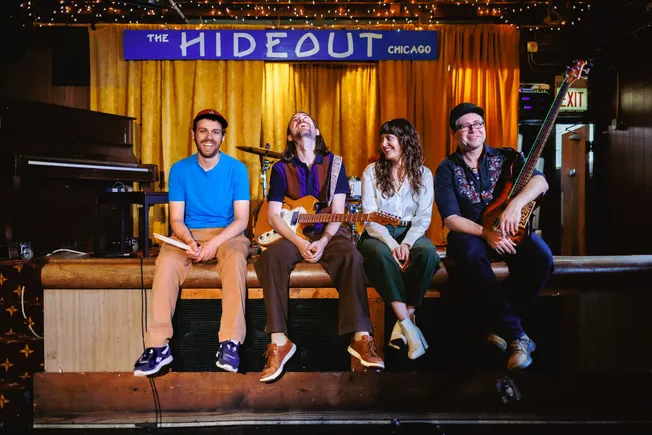
Josh Solomon is a singer, guitarist and cofounder of Chicago roots rock band The Empty Pockets. Their new album, Dear Billionaires, recorded live in Abbey Road Studio 2, arrives October 23, 2026. Learn more at theemptypockets.com.