



By John Ball, Creative Director at MiresBall
Walk into any live music venue in the world and there's a fair chance you'll find one, a ball-topped microphone with a tapered black handle and steel mesh head, set up center stage and perhaps looking slightly battered.
It is the Shure SM58, and it has been in continuous production since 1966, used by presidents, popes, and rock stars from Mick Jagger, Tina Turner, and Paul McCartney all the way through to Olivia Dean at this year's Grammys.
The SM58 has stood the test of time for two reasons.
First and foremost, it is an outstanding product known far and wide for its durability and roadworthiness. But its success would have been far less certain if Shure had stopped at creating a great product, rather than also building it into the well-loved brand we know today, often referred to as simply "the 58."
Together, both product and brand have been vital in maintaining relevance amid increasing competition and evolving technology.
Having worked with Shure on how it presents the SM58 to the world for over twenty years, I've seen first-hand how a microphone became an icon — and the lessons the music industry can learn.
Start with a shape you can draw from memory
The first one might sound obvious: the product itself has to be distinctive enough to recognize at a glance. Think of the Coke bottle, the Weber kettle grill, Converse Chuck Taylors, Ray-Ban Wayfarers. The SM58 belongs in that company. Its silhouette, that rounded mesh head on a tapered body, is so familiar that Shure extended the product design language to other vocal mics in its portfolio, reinforcing its ubiquity over decades.
When a product's form becomes shorthand for the category itself, the brand has won something no amount of advertising can buy.
And yet, a distinctive shape is only valuable if it can carry meaning beyond the object. The SM58 has been in the hands of generations of performers, from local venues to the world's biggest stages. Its distinctive silhouette is omnipresent in live-performance photography and broadcast imagery, cementing its place in our minds.
A product that looks the part earns itself a place in the picture, and every time it appears in a defining cultural moment, a bit of that moment attaches back to the product.
In fact, even the microphone emoji 🎤 looks remarkably like an SM58. Whether intentional or not, it's become the visual shorthand most people reach for when they think "microphone."
+Read more: "What Is a Sonic Identity and Why Every Brand Needs One"
Keep refreshing the context, not the product
The second lesson is about restraint combined with reinvention. Shure doesn't tinker with the SM58's fundamental design, but it never stops finding new contexts to put it in.
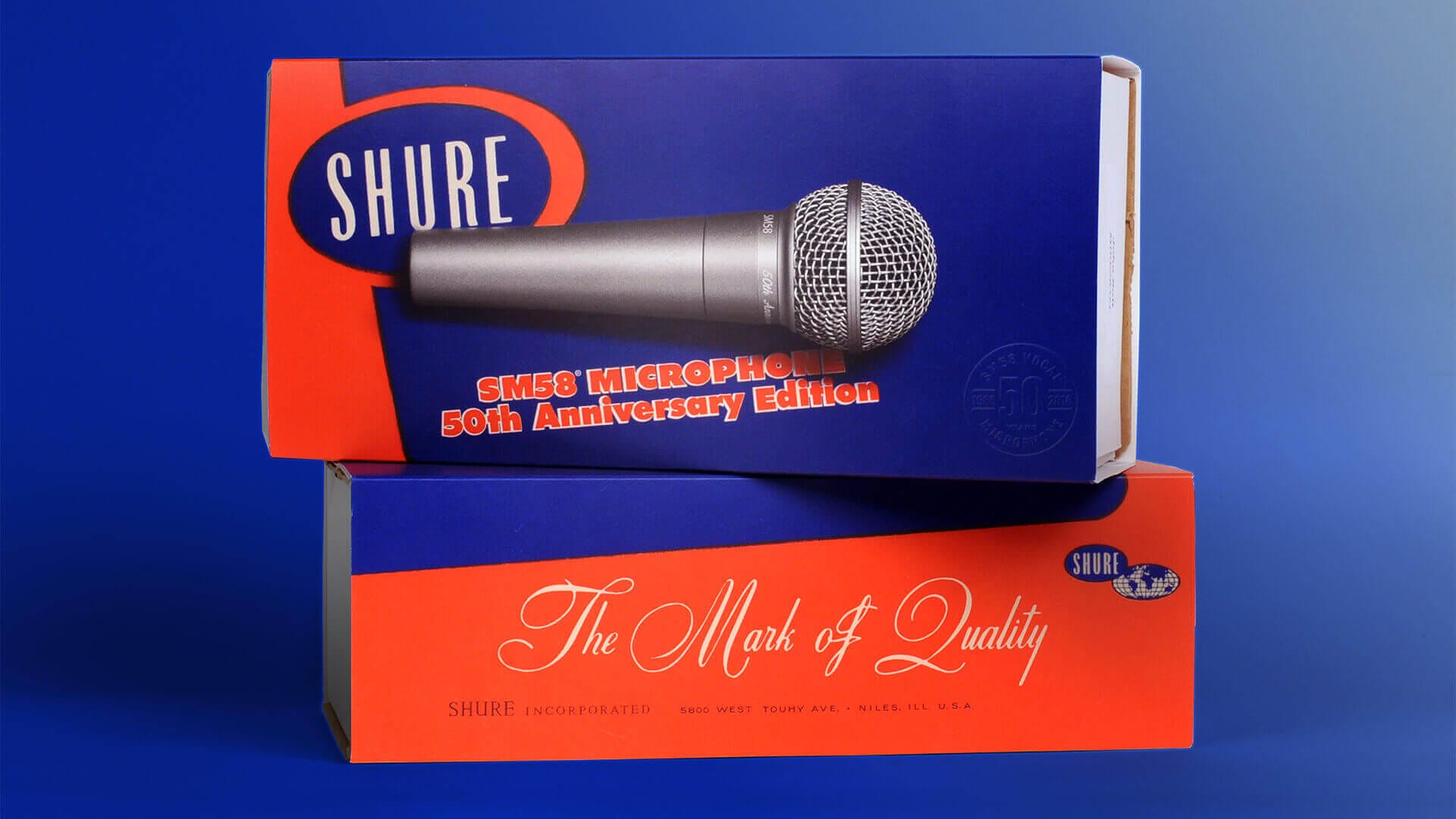
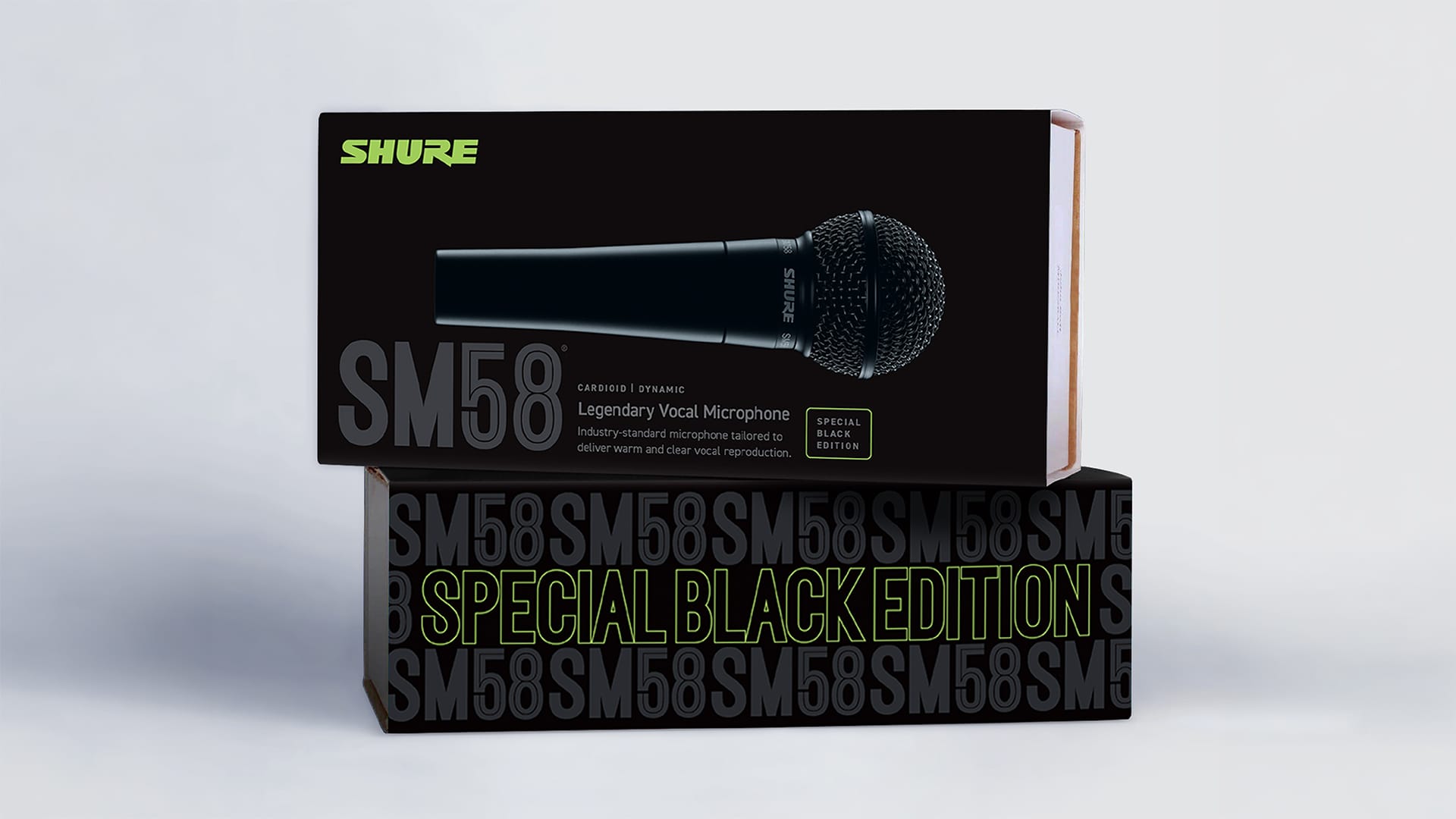
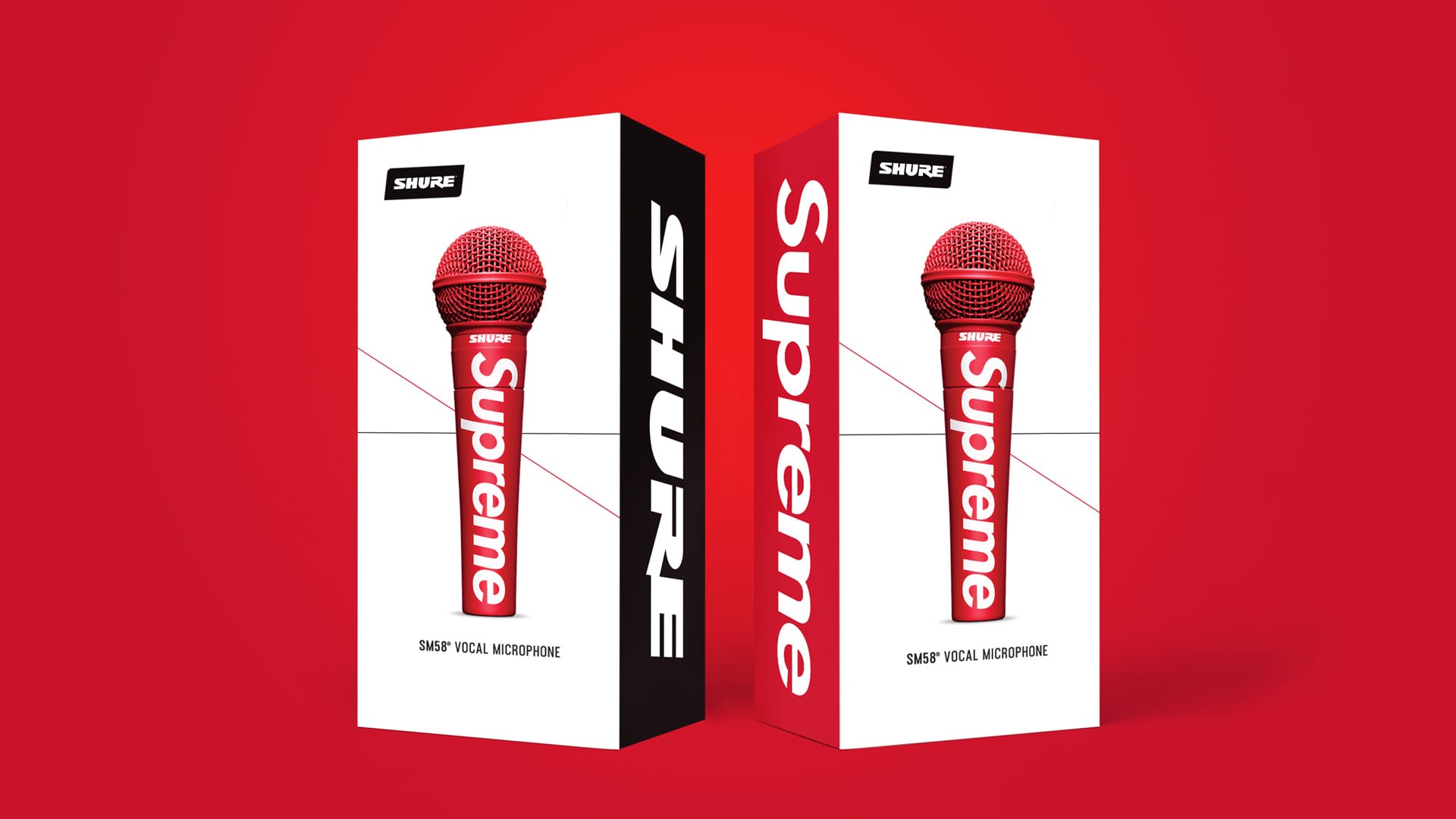
Commemorative versions, limited colorways, and collaborations have kept the product feeling alive without ever changing its essential character. From the silver 50th Anniversary edition to a Supreme co-brand, an all-black model, and special artist issues for The Who and Paul McCartney, each one refreshes the story for both new audiences and long-time fans.
Compare that with Lego, which has expanded into theme parks and blockbuster films while the humble brick remains central to everything it does, and the lesson is universal: celebrate the product by continually refreshing what surrounds it, not the product itself.
"The SM58 shows what happens when you...treat the product like a character, give it life beyond the stage, and continually refresh its storytelling, without ever losing what made it recognizable in the first place."
Let the family grow, but keep the lineage visible
Shure built a good bit of its reputation on the SM58, but it doesn't stop there. Starting with the ubiquitous Super 55 "Elvis mic," the company has a long history of products achieving widespread recognition. More recently, the studio-legend SM7B, the microphone behind most of the podcasts you've watched this year, whether you noticed the logo or not, inspired the look of the MV7 family of mics geared for a new audience of content creators.
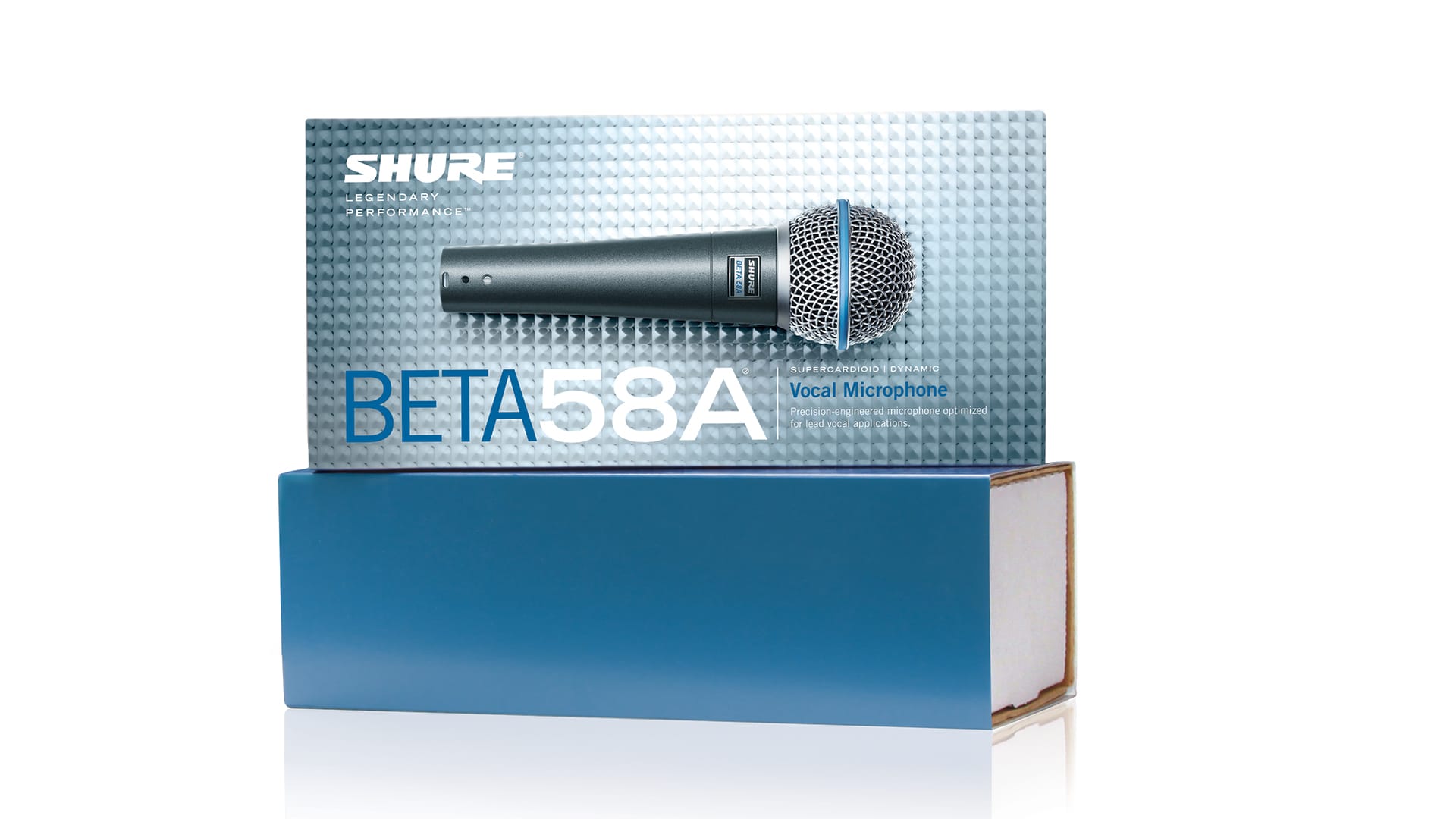
Even when a next-generation product like the Nexadyne™ vocal microphone — built on entirely reinvented acoustic technology — departs from the classic SM58 contour, it's still shown on the packaging in a similar orientation. The family tree is always evident in some form.
Build on fandom
What's remarkable about the SM58 is that much of its reputation was created by its fans rather than any paid advertising. Long before social media existed, stories of the 58 surviving drops, falls, and even being run over by a tour bus circulated. Shure encouraged this folklore with its own videos showing the mic still working after being used as a hockey puck, tossed in the ocean, and even barbecued — all to prove it was ready for the rigors of the road.
We embraced that narrative with the product's packaging, photographing the SM58 lying on the worn floor of a gritty club stage. Our 50th anniversary campaign added another layer, showcasing the battle scars and dented grilles in a museum-like setting. Rather than polishing away its history, Shure celebrates the stories that have made the microphone legendary.
+Read more: "Amyl & The Sniffers: How a F*ing Good Concert Film Helps You Grow"
Never let the product outgrow the parent
Finally, and perhaps most importantly, the parent brand should always stay visible and relevant.
It's tempting to let a hit product own the spotlight, but that can become limiting when launching adjacent efforts. Shure has resisted this by investing in an overarching brand message, "Sound Extraordinary," that speaks broadly to the needs of today's customers. Tied to this strategy, campaigns, packaging, and even new products can do double duty, celebrating the classic icons while reinforcing the name above the door.
The music industry, like most industries built around physical tools, often treats its products as features and specs rather than as objects with a soul and a story. The SM58 shows what happens when you do the opposite, treat the product like a character, give it life beyond the stage, and continually refresh its storytelling, without ever losing what made it recognizable in the first place.

John Ball is Principal and Creative Director at award-winning agency MiresBall. With over thirty-five years of design and business experience, John is known for the clarity and simplicity of his work. Combining strategic, practical thinking with meticulously executed creative, he’s built long-term relationships with global brands, including legendary audio icon Shure.