

By Ian Temple of Soundfly Weekly
*Follow Ian Temple's Substack, Soundfly Weekly for more essays on creativity.
I'm writing today in defense of waste.
On the surface, that sounds bonkers. After all, the modern world is practically swimming in waste, and not in a good way. There are giant garbage patches swimming around the ocean, and I think they may be becoming sentient. On trash day here in Brooklyn, the sidewalk is literally piled high with waste — the daily trappings of modern American life, shown in stark relief by what we throw away. At least the rats love it.
I call the little plastic toys and tchotchkes that seem to magnetically attach themselves to my kids "CPJ" (cheap plastic junk). CPJ appears in our house with the ominous inevitability of a natural disaster.
"Waste not, want not," that's the famous proverb, the idea being that if you don't waste anything, then you'll have all that you need. A dollar saved is a dollar earned.
In this way, waste can take on a moral dimension, a vice of the highest order with thrift as its virtuous cousin. I feel this sometimes. There’s a very specific type of joy achieved upon receiving a hard-won deal or discount, even when the cost of obtaining it was obviously higher than the amount saved (at least in terms of time spent). As a parent, there are moments when I subconsciously don the persona of someone who lived through The War (doesn’t matter which one) — my kids not eating the entirety of their dinner becomes a high crime, while letting the shower run too long is a troubling decadence.
And then there’s time, its teasing scarcity a constant pressure. On a daily basis, it never seems like there’s enough of it. What if I’m not using it wisely? What if I’m wasting it? I will say that collectively, the amount of time we spend on screens or phones as a society these days can feel like a tragic loss. That’s because wasting time can feel like the worst crime of all — the discarding of a miraculous and sacred gift, the careless jettisoning of some beautiful ambition, the passing moments in my kids’ lives that we’ll never get back.
The thought alone is enough to ground you.
But now comes the flipside: Waste is an absolutely essential part of many processes, including the creative process. There are many, many situations where waste is not the problem, it's the solution.
Think of the process behind drug discovery and development. Researchers start with thousands of possible molecular compounds that they throw at various targets in a lab. Most of them go nowhere, but some show promise and enter a grueling path of clinical trials that can take a decade to run. Even then many don't succeed. Basically, you test 10,000 compounds to develop 20 hopefuls over the course of a decade to produce a single drug that might benefit someone. Waste is a requirement for success.
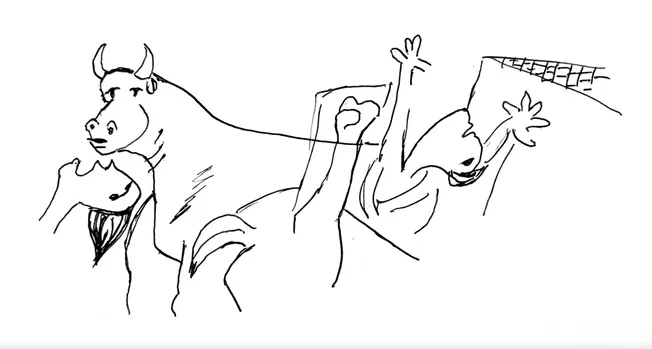
As artists, we may need to embrace the waste. Take Pablo Picasso, one of the art world's most notorious wasters. Throughout his life, he produced a voluminous amount of drawings, sketches, and throw-aways on anything he could find: a scribble on a menu, a sketch on top of a magazine photo, a crumbled up notecard, a doodle on a napkin, etc. He was always drawing, and many of these sketches ended up being transformed through time and practice into some of his most famous works (Guernica being the most celebrated).
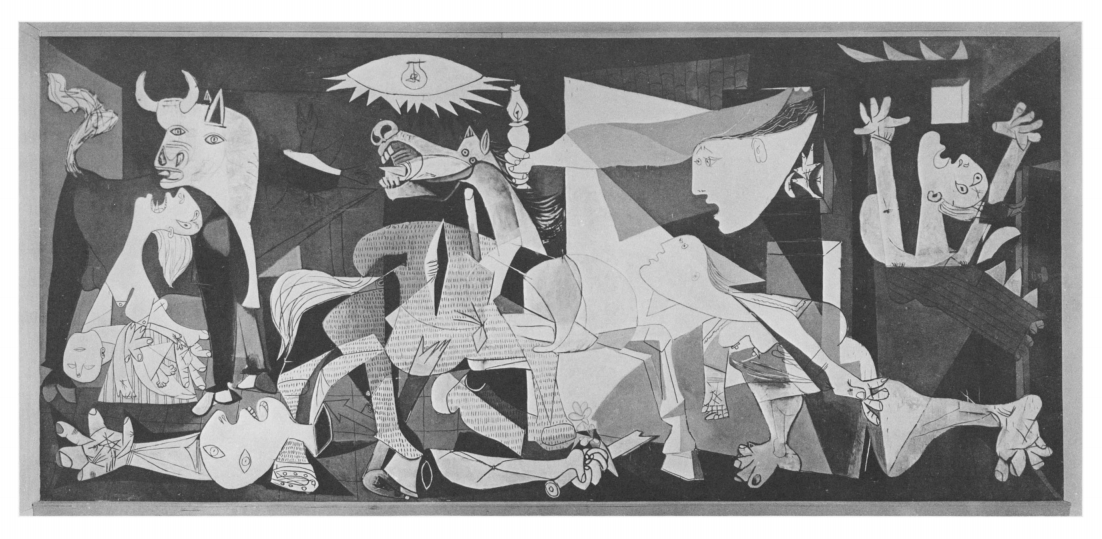
I actually just scrolled through an online auction site, and discovered you can buy a Picasso sketch for like $300. So not quite a dime a dozen, but surprisingly accessible.
Maybe my favorite example of waste is evolution. We organisms get to experience gajillions of mutations, most of which are useless and disappear — wasteful byproducts of nature's birthing cauldron. But some aren't. Some are brilliant, and help spawn new species with a better chance of survival. Our flourishing arises on the backs of a billion failed experiments.
Our brains work in a somewhat similar way, according to neuroscientists. When we do new things, our brains generate new neural pathways. Over time, the neural connections we use a lot are strengthened, while the ones we don't fade away. According to some research, the most creative people are always forging new pathways and connections, which helps their brains be more flexible and adaptable. In other words, creative people waste a lot of time doing things that might not seem immediately productive — but allow for greater creativity in the long run.
This is one of the big risks of AI. Because chatbots are so smart these days, they get us answers without allowing us to engage in the wasteful process of trying to find them ourselves. There are times when that can be helpful — but there are costs, particularly to our mental agility and cognitive development. Learning and growth require waste and inefficiency. A machine that bulldozes all that will accidentally take out our growth with it, unnecessary bycatch endangered by its hyper-efficient trawling.
So what are the takeaways? And what are the conditions in which wastefulness can be important?
Well, first of all, it's a process thing, more than a material thing. As artists, we need to be unafraid to engage in a process that leads to lots of dead-ends. That's the cost of producing something highly creative and meaningful. Don't put too much pressure on yourself.
Second, it's a mindset. We live in a culture that elevates efficiency — but as artists, it's our job to reclaim our time for, well, f#$^ing about a bit. Follow hunches. Develop ideas you're unsure of. Try some new techniques. Take a course. And do all this unapologetically.
Third, even when we're super-busy or focused, we need to find time for playful exploration, for sticking our grubby little hands into opaque boxes and feeling around to see what's inside. Consider curiosity the training program for a creative mind, because that's literally what's happening in your brain.
Fourth, there are moments when waste may be more valuable than others — like the start of something. If you're not sure exactly what you're doing yet, you may need to waste some time figuring it out. Once you know, you can engage your efficiency systems more. Adjust your expectations accordingly.
One final example of beautiful waste: Conversations. When we talk to each other, we duck and swerve, we alternately follow and lead, we bat and parry, often with no real idea of where things are going to go. We waste energy, words, and time.
And yet, as I've written about before, the best ideas often emerge through conversation. And so does human connection. And long memorable nights spent plumbing the soul. And falling in love. And getting to discover the person your child is becoming. And so many of the things that give life its magic.
So that's where I'll wrap. Waste can suck. CPJ is terrible. Don't waste your life — but do let some waste into your life. Your creativity will reward you for it.
Yours, in pensive reflection,
Ian
Ian Temple is the Founder and CEO of Soundfly. Follow his Substack, Soundfly Weekly for essays on the creative process, or join the growing community of musicians and educators on Soundfly for free today.