

By Iuliia Sozontova
Five years ago, releasing music digitally meant distributing a track, writing a bio, maybe pitching a playlist.
That was kind of it. The platform was a delivery channel.
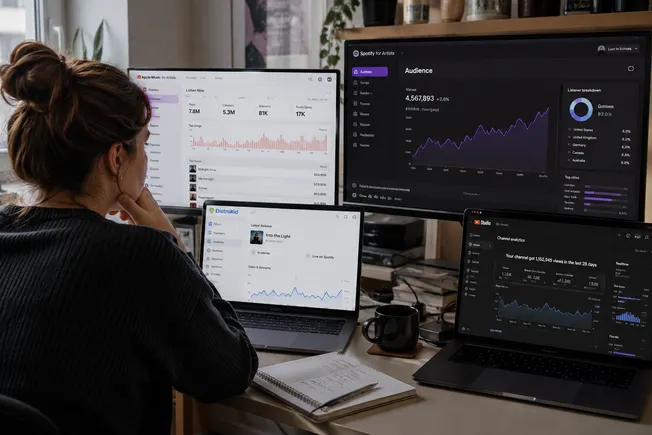
Now? On Spotify alone there's Canvas, Clips, full-length video and more. Apple Music has its own editorial criteria, analytics dashboards, custom artist pages. YouTube wants Shorts and long-form. TikTok is a whole separate game. And then there's whatever distributor dashboard you're logging into this week.
Every platform keeps shipping new features, each one promising better engagement, more discovery, higher conversion. That's great in theory. In practice, every single one of those features takes time away from actually making music.
And we haven't even talked about video yet. Artists are now expected to produce music videos and vertical content across multiple platforms. It costs real money and real time, and every platform has its own content guidelines for what flies and what doesn't.
Features get shipped. Not all of them stick.
That's just how tech works. To stay competitive, platforms roll out new stuff fast. Some of it lands. Some gets quietly killed off.
Remember Spotify Greenroom? Spotify spent $50 million acquiring Betty Labs in 2021, launched a whole live audio platform with its own Creator Fund, built it to compete with Clubhouse. By April 2023 the entire thing was shut down. The live audio moment passed, and the product went with it.
Or take Apple Music's Spatial Audio bonus. In January 2024, they introduced a 10% royalty uplift for tracks available in Spatial Audio. Sounds great, except listeners don't actually have to play the Spatial version for the artist to get the bonus. It's based on availability, not usage. Reports suggested the real driver was encouraging people to buy Apple hardware that supports Dolby Atmos. Smart business move. But not exactly something artists were asking for.
None of these are failures, really. It's just how the industry works. Platforms build things at a pace set by competition with each other, not necessarily by what creators need right now. Some features stick around, some don't. The artists are the ones left figuring it out in real time.
When something breaks, it goes deeper than you'd think.
For most listeners, a streaming profile is just a page with songs on it. For an artist, it's their storefront, their brand, their main touchpoint with their audience. When something goes wrong there, it's not a minor thing. It can directly mess with how people find and hear their music.
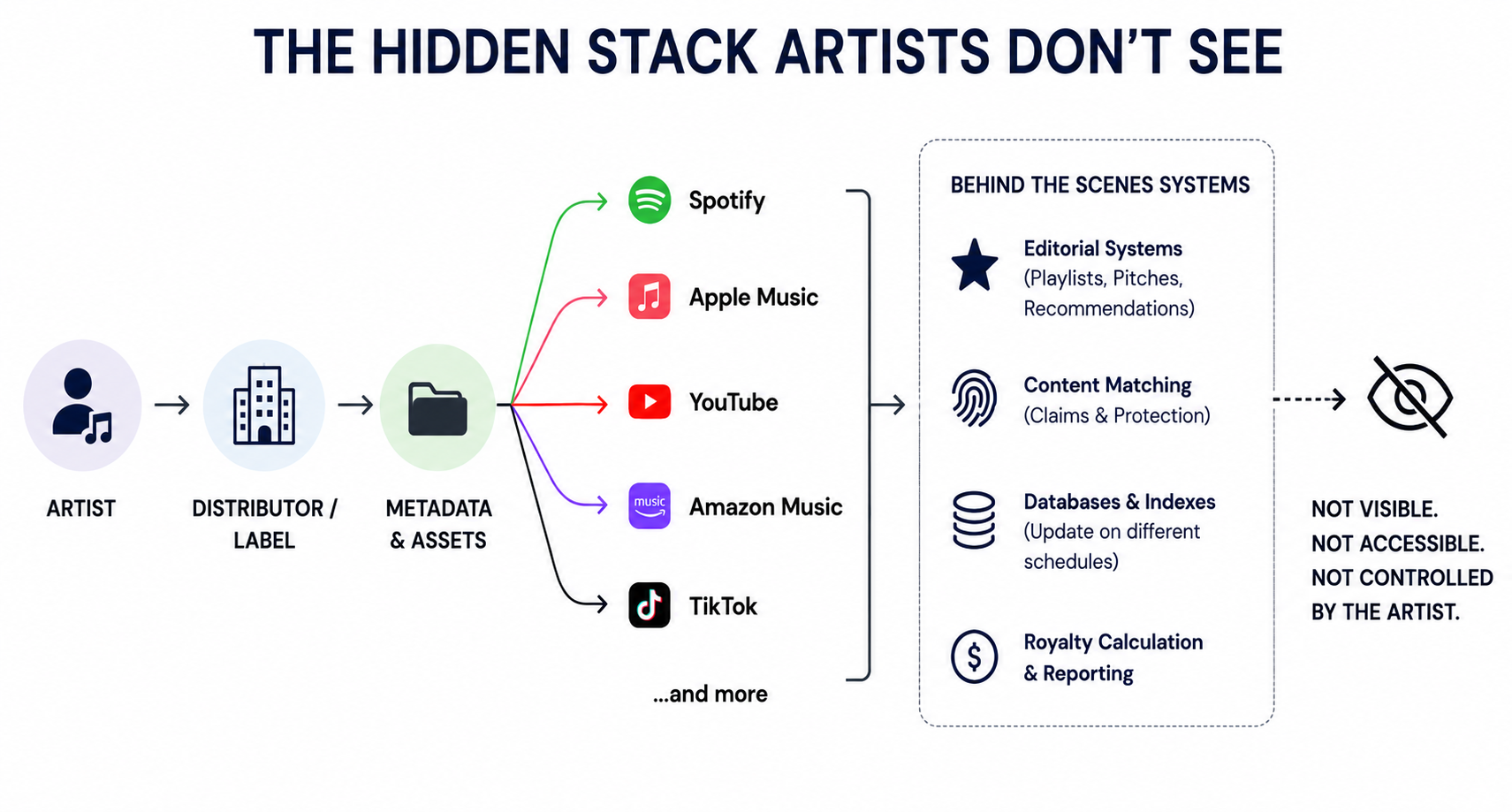
What most people don't realize is that behind that clean interface there's a pretty gnarly technical stack. Metadata pipelines, distribution systems, content matching algorithms, multiple databases updating on different schedules. A release showing up under the wrong name, analytics not reflecting right, a new track just not appearing on time.
+Read more: "Social Media in the Age of AI: The Internet’s Next Luxury Is Proof You’re Human"
These aren't simple bugs you can just report and get fixed in an hour. They can involve several technical layers that the artist never sees and definitely can't access directly.
More features mean more moving parts. More moving parts means more stuff that can break. And look, platforms aren't doing a bad job here. They genuinely want artists using their tools and finding success. But the complexity is real and it's not getting any simpler.
What's the new barrier to entry?
Digital platforms were supposed to lower barriers to entry in the music industry. For a while, they absolutely did. Anyone could distribute a song and reach a global audience. It felt genuinely democratic.
But something else has crept in. The sheer complexity of managing a presence across streaming platforms, YouTube, TikTok has made it harder for artists doing this on their own. If you're not making video content alongside your audio, you're missing discovery surfaces that increasingly matter. If you don't understand how promotional tools work across platforms, you're leaving growth on the table.
An artist's career increasingly depends on digital platforms they don't own or control, making them vulnerable to technical issues, algorithm changes, and platform decisions.
Labels have had people handling this stuff for years. Dedicated teams dealing with analytics, metadata, promotional workflows, distributor relationships across whole rosters. That's the key bit though: entire rosters. One person, dozens of artists. An independent artist has to do all of it solo, on top of writing, recording, performing, and promoting.
For anyone uploading music as a passion project or a side thing, the gap between what platforms expect and what one person can realistically manage keeps growing. Every new feature, every new format adds another layer that favours artists who can treat platform management as a full-time commitment.
Now, the uncomfortable question...
Platforms are not going to simplify. They're competing by building more.
The real question is: What happens to the artists who can't keep up, and whether the democratization that digital distribution once promised is slowly being undone by the very tools that were supposed to make it possible?
+Read more: "What Are Music Curators Actually Looking For? Insights From 100K Submissions"
Iuliia Sozontova is a London-based creator service designer at Spotify and holds an MA in Music Business Management from the University of Westminster. Views are her own.