

This August, two concert announcements arrived on news desks like ours that appeared unrelated to begin with.
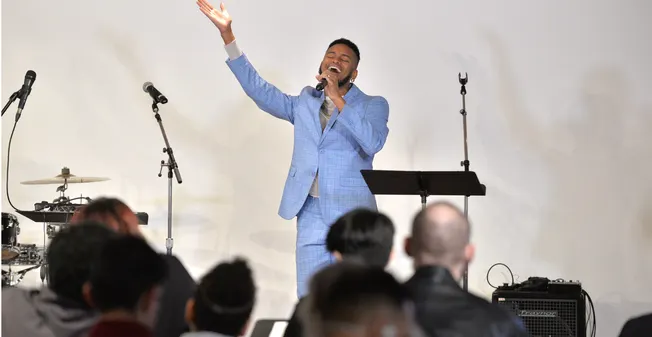
Big Ocean, the K-Pop trio whose members are hard of hearing, announced a fall U.S. run beginning September 13 in Katonah, New York. PJ, Chanyeon, and Jiseok all perform using hearing aids or cochlear implants, and incorporate sign languages (Korean, American, and International) into their live shows.
That same day, Toronto-based nonprofit Xenia Concerts unveiled a 2026–27 Adaptive Concert Season spanning Toronto, Mississauga, and Markham, Ontario. At those performances, audience members are explicitly welcome to get up, make noise, move, or stim. Flexible seating, sensory tools, visual schedules, captions, and separate break areas are part of the concert plan.
That same week, UK accessibility organization Attitude Is Everything launched a national State of Access survey examining how disabled audiences, artists and workers experience live music. This follows the UK’s new UnMute roster, which began representing disabled musicians while helping venues and promoters meet access needs earlier this year.
In the US, Philadelphia's Philly Music Link recently created a venue accessibility guide that covers more than a dozen spaces, highlighting information about strobe lighting, odors, temperature, A/C, seating and bathrooms — the kinds of details that can determine whether someone can attend a show at all. Hypebot recently interviewed blind artist Lachi on how venues and communities can make small changes toward more accessibility.
Whether it's about centering and amplifying disabled artists on a global stage, or transforming local audience experiences around the needs of disabled and neurodivergent concertgoers, accessibility is moving beyond a list of physical accommodations and toward a fuller examination of how live music works.
Let's take a closer look.
Access Can Be an Artistic Language

Big Ocean is not simply a conventional K-Pop act with accessibility services attached. The members’ lived experience shapes the group’s choreography, communication, visual storytelling, and the stories they tell through song.
Signing is not parked at the side of the stage as a translation of a performance happening somewhere else. It is integrated into the performance itself. Their new single, “Love Sign,” is due September 9, just before the tour begins, and turns a familiar flirtatious question into one about language and identity.
The trio’s tour opening show at Caramoor also shows how an artist’s approach and a presenter’s services can work together. The Katonah venue says the performance will include ASL interpretation for d/Deaf and hard-of-hearing audience members, even though signed expression is already part of Big Ocean’s work.
Creative inclusion does not eliminate the need for specific access services. But it can expand what a pop performance looks and feels like.
+Read more: "A Venue's $70 Million Renovation to Fit… Less People?"
Xenia Flips the Audience Contract
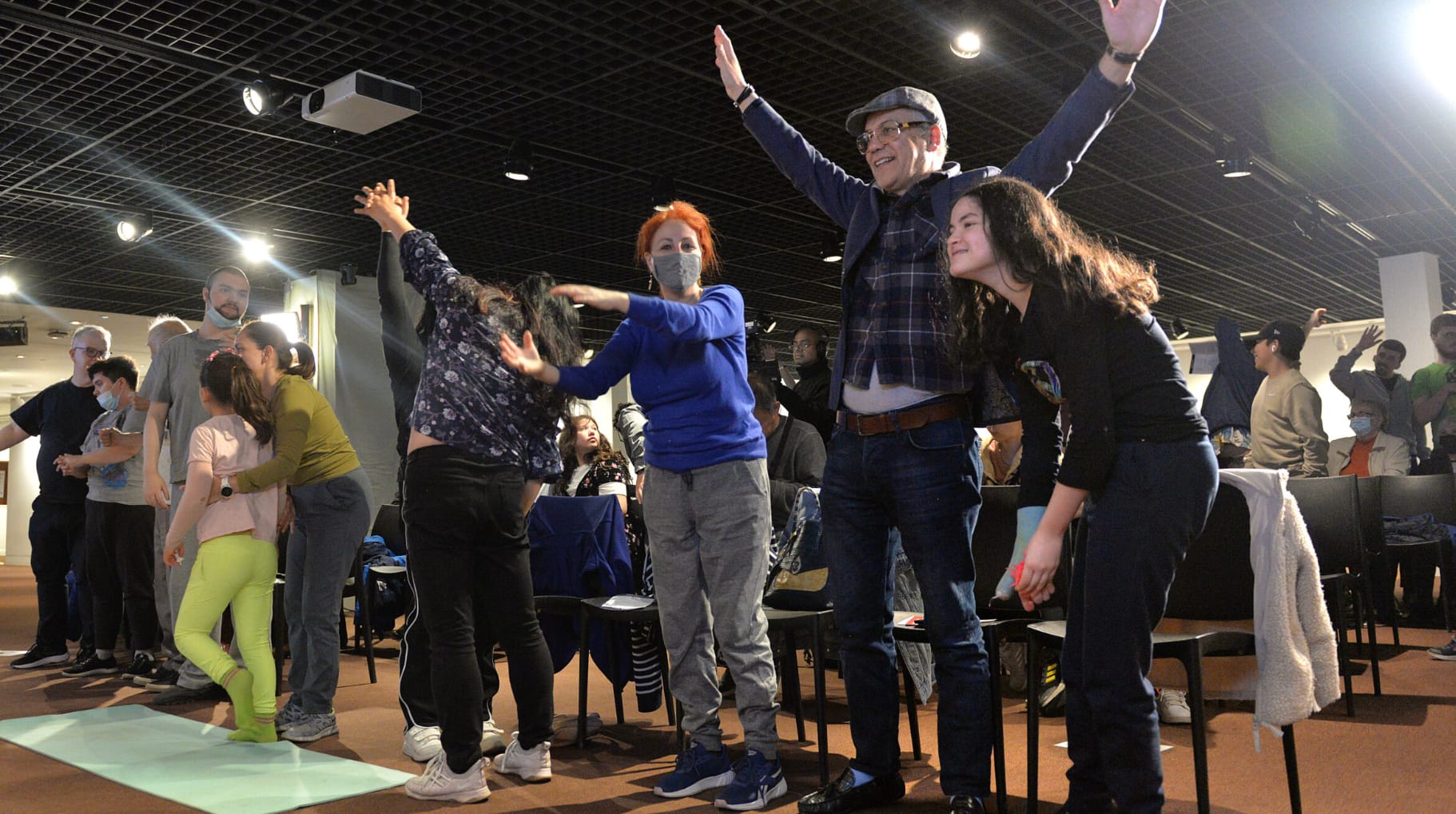
Xenia Concerts approaches the same idea from the other side of the stage. Most concert culture still relies on a surprisingly narrow set of behavioral expectations. Stand here. Sit there. Stay quiet during this kind of music. Do not leave your seat. Do not distract the people around you. If your body cannot comfortably follow those rules, the show may technically admit you without ever making you feel welcome.
Xenia changes that social contract before the first note is played. Its policy is simple:
“All expressions are welcome.”
The organization then backs that invitation with practical supports. Audiences receive venue guides and accessible digital programs in advance. Noise-cancelling earmuffs, weighted and balance pillows, and fidgets are available. A visual slide schedule explains what will happen. Seating is flexible. Breaks are expected. Movement is built into the experience rather than treated as a disruption.
The result is not a lesser version of a concert. It is a different and often more participatory one. Xenia’s season opens with Chris McKhool’s FiddleFire, a performance that invites the crowd to clap, sing, dance, and even join the musicians onstage. The same season stretches across classical music, jazz, folk, tango, Métis storytelling, baroque music, and more.
Making Concerts Better for Everyone (Full Stop.)
Better advance information helps a wheelchair user confirm a step-free route, but it also helps an anxious first-time attendee understand where to go.
Flexible seating is essential for some people with chronic pain and useful to someone recovering from an injury.
Clear captions serve d/Deaf and hard-of-hearing fans while also helping anyone follow unfamiliar lyrics.
A break space may support a neurodivergent guest, a fan managing a panic attack or a parent whose child has become overwhelmed.
Even the freedom to leave and return without being judged can make live music feel more humane. Disability access does not need to produce a "bonus" in order to be worthwhile. It simply is a net benefit, as it shows other spaces, promoters, and artists what's possible.
5 Things Artists and Venues Can Do NOW.
Not every club can immediately fund a major renovation, and low-cost changes cannot substitute for physical access. Still, small changes can make a huge impact.
1. Publish useful access information before the show. Explain entrances, stairs, seating, bathrooms, transportation, lighting effects, fog, temperature, re-entry rules, bag policies, and who to contact.
2. Ask artists and workers about access needs. A standard access rider can normalize that conversation for performers and crew instead of forcing someone to disclose a disability during a crisis.
3. Make more of the show legible beyond sound. Prepare accurate lyric captions, preserve sightlines for interpreters, use clear visual cues and think about how lighting or projection can communicate rhythm and transitions. Auto-captions may help, but they should be checked whenever accuracy matters.
4. Create options, not assumptions. If possible, offer places to sit and stand, a quieter break area, ear protection or simple sensory tools. Tell audiences whether movement, noise and re-entry are welcome instead of leaving them to guess.
5. Involve disabled people early — and pay them. Accessibility works best when the people affected help shape the event, not when organizers attempt to imagine every need on their behalf after the plan is finished.
We support a future in which accessible live music is not a special season, a separate section, or a box checked at the end of a production meeting. And while we're now seeing signs that concerts designed from the first decision to be experienced in more than one way are taking flight, we hope they'll have a chance to land in more venues and artist performance packages going forward.
+Read more: "Lachi on the Uplifting Work of Celebrating Self Joy in Music and Beyond"