Superfan Demographic Differences Prove Age Matters
By Lexi Chicles of Spotlight By Luminate
It’s been several years since the idea of “superfandom” became a staple of the Western music industry lexicon. Since then, we’ve seen an explosion of specialized, extra-premium products, from paid superfan apps to vinyl variants, for the most dedicated segments of an artist’s fanbase.
But superfans are far from a monolith. Luminate recently expanded its survey data to take a deeper look at fandom behaviors, which in turn revealed key nuances within different groups of superfans for artists and labels to consider.
The typical superfan is a younger, tech-savvy person who is just as likely to follow their favorite artist on the socials as they are to buy merch.
Our U.S. Music 360 data backs the notion that they tend to be on the younger side, with Gen Alpha (31%), Gen Z (24%) and Millennials (25%) having the highest percentages within the fan group. Still, it’s important to note there are double-digit percentages of superfans among both Gen X (19%) and Boomers (10%).
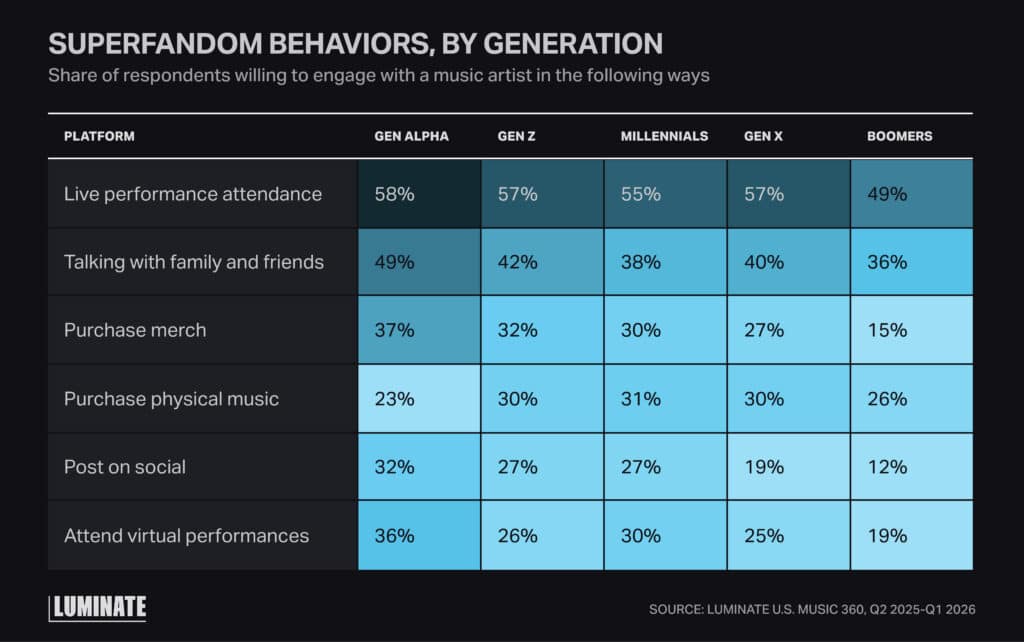
While being a superfan isn’t exclusive to any particular age group, the preferred ways in which they engage with artists does vary by generation. Unsurprisingly, activities such as going to concerts and buying physical music are popular superfan activities across the board.
And yet the generational divides widen when it comes to activities including posting about artists on social media or attending virtual concerts, in part due to Gen Xers and Boomers generally being less technologically inclined than the younger generations.
+Read more: "How Music Fans Are Becoming Parallel Creators (Sustainably)"
Given the buying power of these music lovers, industry discussions and strategies around superfandom naturally focus on creating monetary opportunities. But fandom isn’t limited to making financial transactions, as fans will engage with one another online, craft their own merch and create fan edits, to name just a few low-cost activities.
Understanding the habits and preferences of less financially driven superfans is also important for building and cultivating an artist’s overall fanbase.
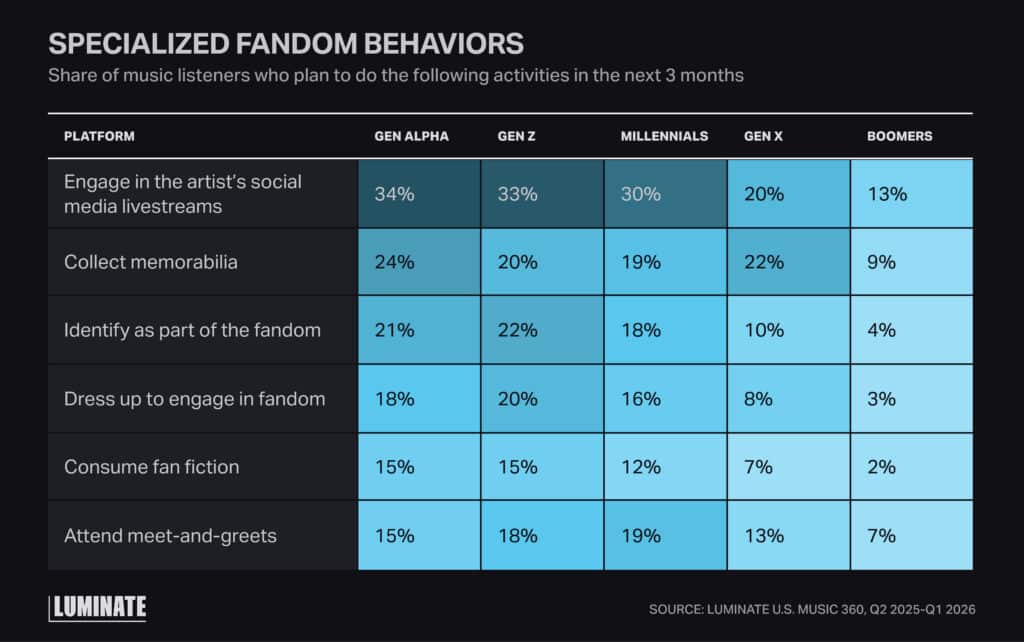
The generational gaps widen even more when looking at less financially motivated fan activities, with younger fans more likely to engage with one another as a community than older ones.
But while Gen Xers and Boomers are less likely to post about their favorite artists online, that doesn’t mean they’re fully offline: 20% of Gen Xer music listeners and 13% of Boomer music listeners said they intend to engage with their favorite artists via social media livestreams.
Additionally, 22% of Gen Xers are inclined to collect artist memorabilia, outpacing both Millennial and Gen Z listeners.
+Read more: "Streams Don’t Build Careers: Fans Do"
Artists with older fans may want to consider ways to reach them through offline means, although something like a meet-and-greet might go over better with Gen Xers than Boomers. Younger fans, meanwhile, are likely to connect with online activities, but in-person, community-driven events, such as fan meet-ups, may also be viable.
These nuances can help artists better understand the most effective ways to engage with not just superfans but their entire fanbase.
Spotlight is a publication by Luminate Data. Sign up for Luminate’s newsletter to get data-driven insights and case studies delivered to your inbox.