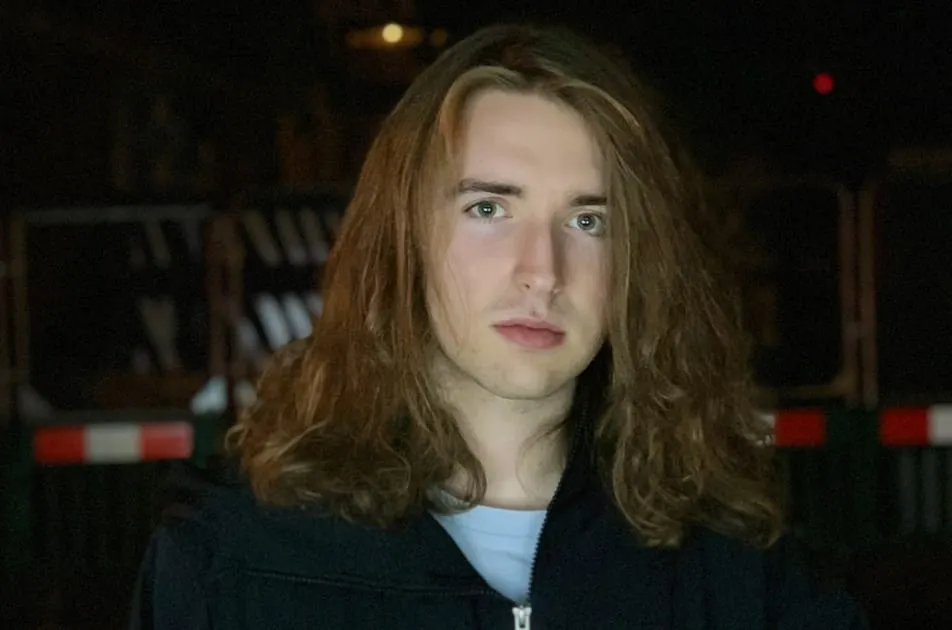


By Jeffrey Anthony, Director of the Musical Form Institute
In her recent Hypebot article, “‘Human-First’ Is a Promise Nobody Can Check Yet,” Cynthia Zhu makes a very important point that simply claiming that a recording is "human-first" without the requisite “machinery” behind it is just a hollow claim anyone can make. As Zhu writes:
"The claim is what you see; the enforcement is what makes the claim worth seeing."
Zhu takes us on a short historical jaunt through the history of open-source software and explains that what made open-source mean something significant was that its definition was maintained outside the companies that financially benefited from its social capital. It was a publicly legible claim that anyone could check against a publicly available definition.
All well and good, yet Zhu’s recommended solution to the current crisis of verifying human authorship is to add a checkbox to the upload forms used by DistroKid, CD Baby, TuneCore, et al. Zhu argues that this self-attestation carries legal weight because it becomes part of the contract between the artist and the distributor, while the resulting “enforcement layer” can be administered at “approximately zero marginal cost.”
This is where Zhu’s argument runs into the realities of enforcement. What happens when a distributor tells a customer that their claim to human authorship is a lie, removes their music from the streaming platforms, and bans them from using its service?
At this exact nexus, where the rubber meets the road, zero marginal cost turns into investigations, demands for evidence and transparency, public standards, an appeals process, and potentially expensive litigation. Nor does Zhu address the lack of industry-wide consensus or federal regulation. Other distributors can simply continue accepting the music, allowing rejected artists to move to another service and nullifying the enforcement mechanism altogether.
+Read more: "Being a Musician in 2026 Is a Full-Time (Platform) Job"
But even before we get to the enforcement phase we need to ask what, exactly, is being verified when someone claims that a sonic object is the product of a human-first process:
- Was it made wholly by a human, partly by a human, or through some combination of human and machine processes?
- Does using common mastering-chain plugins that have been on the market for over a decade and contain processes now marketed as AI mean that the recording was made with AI?
- Does the paltry solution floated by the RIAA, IFPI, and A2IM that says voluntarily putting an all AI or partial-AI sticker on your music will assure audiences the music they are listening to is in fact smoke from an originating fire?
- What about tools that begin with a human performance but replace the musicians’ timing and pitch with machine-determined values of “perfection?”
Human-first does not have to remain an undefined marketing claim, but it does have to be defined as something specific enough to be tested. This is the very problem we have been working on since launching the Musical Form Institute through the Certificate of Embodied Production (CEP).
The Certificate of Embodied Production is not a voluntary label or a checkbox. It is a certification mark, currently pending federal registration with the USPTO under Serial No. 99559776, that certifies that sound recordings were produced without grid correction, pitch correction, or generative AI.
In this sense, it belongs to the same family of standards-based certification systems as Certified Organic, Fair Trade, and LEED, examples Zhu invokes herself. A certifying organization publishes the standard, evaluates applicants against it, controls who may use the mark, and maintains procedures for enforcement, suspension, and revocation.
This does not mean that the USPTO certifies individual recordings or endorses the CEP standard. It means that the CEP is being built within the federal legal framework for certification marks rather than as another ungoverned industry label.
What connects the three processes in the CEP is that each moves authority over the final form of the recording away from the musicians whose performances initiated it. Grid correction replaces the musicians’ embodied expressions with idealized, machine-defined timing, pitch correction replaces the pitch actually expressed by the singer or performer with a machine-defined understanding of perfect pitch, and generative AI produces musical material without an embodied musical act occurring at all.
The CEP draws its line at this transfer of authority away from the human act, whether to a machine-defined ideal of time in which no human exists, a machine-defined ideal of pitch no human expresses, or a machine that produces musical material outside the historical unfolding of a situated human act. A human performance comes into being through a body acting in a particular time and place, with each musical decision following from what has occurred in relation to the moment.
Generative AI draws instead from a latent space outside historical time, in which all points of data exist simultaneously as available material rather than arising through that lived unfolding. We argue that the take matters, that the smoke should, and needs to, point to an originating fire, and that the stakes are not on the register of aesthetics, but on the level of epistemology and social coordination.

I arrived at this distinction through three different lines of personal experience:
The first came from making records.
I began my career as a session drummer in the late 1990s, during the transition from tape to Pro Tools, and through recording drums on hundreds of records, saw firsthand the power of digital technology to facilitate recording and, to use that overused phrase, democratize access by enabling bedroom producers and independent studios to make serious records. I also watched those tools shift from facilitating performances to rewriting them.
A common phrase you hear these days as a session musician is “we have coverage,” which is code for taking one base take and using the playlisting function in Pro Tools to swap in passages from half a dozen other takes, creating a Frankenstein track that is then subjected to gridification. The particular place, time, and relation of any one performance are flattened and replaced by a machine-perfect representation of what the musician is “supposed” to sound like. This is why so much contemporary music sounds perfect, placeless, timeless, and homogenized.
The second came from analyzing music at scale.
In 2004, I landed a job as a music analyst on the Music Genome Project at a small Oakland startup called Savage Beast Technologies, which later pivoted to online radio and became Pandora. I spent seventeen years there systematically analyzing music through hundreds of identifiable variables per song.
The third came from studying how institutions establish legitimate public claims.
When COVID hit, I returned to graduate school for a master’s degree in public administration, focusing on collaborative governance, economics, and social policy. These three lines of experience came together in my theory of the crisis of gridification and in the development of the CEP as my response to that crisis. In 2026, I was invited to present this theory and response at the Susanne K. Langer Conference in Vienna, Austria.
But, to return to Zhu’s point, all of this is quite meaningless as a certification claim unless it is backed by a publicly verifiable process. Without that machinery, the CEP functions as the very kind of marketing language Zhu warns against.
This is where the Musical Form Institute has invested most of its institutional work. The CEP is backed by a published standard, an evidentiary review process, conflict-of-interest controls, a public registry, a permanent audit trail, and formal procedures for appeals, suspension, and revocation.
Every recording is reviewed by a trained human music analyst before certification. The CEP also relies on attestation for aspects of a recording’s production history that cannot be established from the finished audio alone, but places that attestation inside this larger structure rather than allowing it to stand alone.
The CEP is not a strict “no AI” label, and it is not an argument for analog purity. We allow assistive processes, including mastering and EQ-assistive plugins, because technology alone does not tell us where authority over musical form resides.
What about electronic and dance music, much of which is built on the grid? Yes, it is. But a dance track, unlike a finished pop song, is created with the intention that it will find its completion on the dance floor. It is not complete until a DJ performs it in a particular time and place, often changing its tempo and pitch, while its placement within a sequence determine its final form. And composing to a grid is ontologically distinct from embodied expression that is then subject to machinic processes of perfection.
Zhu’s five proposed fields may be useful metadata, showing where someone claims AI entered the workflow, but they do not define what human-first protects. Whether AI created the marketing copy tells us nothing about the musical act preserved in the recording. More categories do not create a standard, and a contract does not create independent review.
Distributors can carry certification status in metadata and act when a certification mark is used dishonestly, but the definition, review, and adjudication of that claim must remain outside firms that benefit financially from every upload.
Zhu is right that human-first requires machinery, and the Musical Form Institute was created to provide that independent certification layer through the CEP, because a checkbox can only carry meaning when it points beyond itself to an actual certification process.
Jeffrey Anthony is the Founder and Director of the Musical Form Institute and creator of the Certificate of Embodied Production, an independent certification for sound recordings made without grid correction, pitch correction, or generative AI. He has recorded and performed with artists including Sheryl Crow, Chuck Prophet, Tony Furtado, and Eric McFadden, and spent seventeen years as a music analyst on Pandora’s Music Genome Project.