

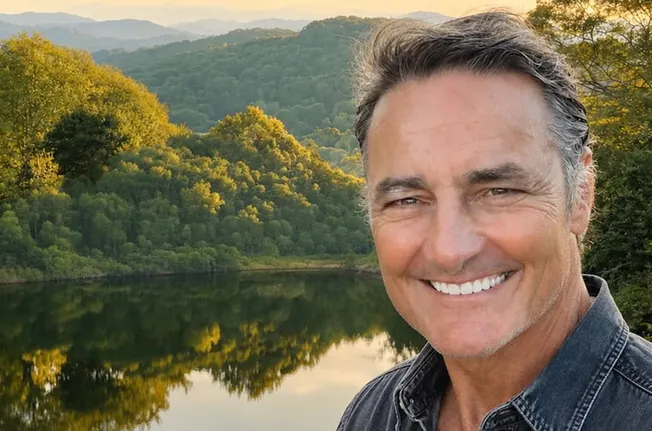
By Jeff Kaiser (aka JAK Kaiser)
For nearly thirty years, my songs lived only in a notebook.
I loved writing them. But melodies would only ever surface in fragments; enough to suggest where a song wanted to go, never enough to carry it. I couldn't play an instrument to chase them down, and I had no one to hand the words to. So the lyrics got finished. The music never did.
Then I found Suno. I knew almost nothing about prompting. I only knew the sound I wanted: warm male vocals, acoustic guitar, an unhurried tempo, an honest country feel. My first attempt was as basic as it gets:
"Country song. Male singer. Acoustic guitar. Slow tempo."
I pasted in the lyrics and hit Generate. A minute later, I was listening to one of my own songs. Exhilarating is the only word I have for it. Thirty years on a page, and there it was, coming out of a speaker. It still hits that way. Twenty-six songs later, it hasn't worn off.
As I listened to each replay, I found myself wanting more. So I generated again. And again. Then one came back that started to line up.
That's the one I played over and over. Somewhere in there, I stopped listening for what was wrong with it and started hearing it the way you hear a record you love, waiting for the line you know is coming — except the line was mine, from a notebook, and no one had ever sung it before.
When I looked up, most of the afternoon was gone. It was the first of a great many afternoons and evenings I've lost the same way. The next morning, I opened the notebook.
"I needed to get better at putting the sound in my head into words, and I didn't want to spend another thirty years figuring out how."
Most of it was half-written verses and fragments that had been waiting years for a melody. A few songs were close to finished. I picked two and set out to hear them. A basic prompt gets you something decent. Suno isn't hard to use — it's hard to aim. So I generated, listened, and tried again with different words. I wasn't diagnosing anything. I was guessing. When a version finally landed a melody worth keeping, I'd lock it in and build on it. Those two took dozens of passes.
Those early generations were teaching me something: I needed to get better at putting the sound in my head into words, and I didn't want to spend another thirty years figuring out how.
So I started talking it through with AI — ChatGPT, Gemini, Grok. I'd describe what I was after and they'd give it back to me in words I didn't have, sharper than anything I'd have come up with on my own. Then I'd show each one what the others came up with and push it to do better.
It helped. It took fewer passes to land a melody I could build on. That was the whole method for nine months — good enough that I didn't go looking for anything better, though I never stopped wanting it. They could put a sound into words. Whether those words were optimized for Suno, none of them could say.
Then I ran across an answer. There are probably a hundred of these out there: videos, courses, guides people post for free. I found one. Seven pages, not a wasted line. It wasn't about music. It was about Suno.
The prompt gives you a limited number of characters, and the earliest ones carry the most weight. Every word has to narrow something. Those words go to the recording: fidelity, frequency balance, era, energy, the room it's in, what the voice is doing. What you don't want goes last. And half of it isn't the prompt at all — it's tags dropped into the lyrics, telling the model how to sing each section.
Look at my first prompt again. "Country song. Male singer. Acoustic guitar. Slow tempo." I named four things and described none of them. Everything in frame, nothing in focus.
I pasted the guide into a new chat I labeled Prompting and never started another. Every prompt I've built since lives in that thread, one song stacked on the last. "She Came Out of the Blue" (which comes out Sept. 4) was the first song to get the full treatment. The prompt read, in part:
- Mood: Smoky late-night Gulf Coast energy. Cinematic atmosphere, driving groove.
- Vocal: Weathered country baritone. Soulful grit, restrained realism, subtle rasp.
- Arrangement: Short instrumental intro, immediate vocal entry, warm electric guitar textures, fingerpicked acoustic, melodic bass, brushed percussion, restrained lead, atmospheric textures.
- Production: Analog warmth. Intimate close-mic presence. Natural dynamics. Rich minimalism. No glossy pop sheen. No organ.
Those last two sentences — "no glossy pop sheen, no organ" — are easy to overlook. They came from iterating. You find the song you want by hearing the ones you don't. "She Came Out of the Blue" came back with a coastal, country, slightly jazzy flow — intimate, warm, and the vibe I'd been chasing. First pass. Others had taken dozens.
The guide wasn't just about what to say. It was about how to arrange it. A structured, precisely worded prompt meant fewer passes to get where I wanted to be. Plenty of songs still fight me, though, and the model can be stubborn no matter how well you describe things.
"For thirty years, I'd had nothing to put in anyone's hands. Now I did — and I started wondering what a musician would do with one."
I never stopped writing. Ideas that would have stalled felt worth chasing down, because now the words had somewhere to go: a melody, an arrangement, a finished song. In a year, two songs became twenty-six. For thirty years, I'd had nothing to put in anyone's hands. Now I did — and I started wondering what a musician would do with one.
Making that first approach was harder than any of the prompting. Uncharted water. I didn't know the customs. What to ask for, what things cost, what was reasonable to expect. Mostly I didn't know whether I'd look foolish, or whether I'd understand enough of that world to move through it competently.
I made myself a cheat sheet of musical terms and their definitions, words I wanted to be sure I understood before someone used one on me. Then I started making calls and sending emails. I contacted Nashville demo studios directly and found the rest of the artists and professionals through AirGigs and SoundBetter.
That outreach sent my songs to studios in Nashville and Europe, and to producers, vocalists, instrumentalists, and engineers I'd never have met otherwise. The fear was misplaced. Nobody made me feel foolish. Every one of them was helpful and enthusiastic. Within a few conversations the anxiety faded and I started looking forward to them.
On "Winding On" (which comes out Feb. 5), producer Vito Astone recreated every instrumental part, and added a fingerpicked acoustic introduction that draws the listener into the story before a single word is sung. Abbie Parker sang the lead.
A professional sang my words back to me like she'd lived them. When she reached the line "Some things break and just stay broken," her voice caught almost imperceptibly on the word broken. I'd carried that lyric for years. Hearing someone else find the weight in it changed the song for me permanently.
I wasn't ready for that.
"Winding On" is one of eight songs I've re-recorded this way, with producers, vocalists, and instrumentalists building new versions from the originals. They're part of my release catalog, coming as alternate versions, acoustic cuts, and studio cuts.
I've released an original song every month since November 2025. The catalog has accumulated nearly two hundred thousand streams. One track was used to promote Florida tourism. I'm grateful for those things. They aren't the point.
The point is that a door I'd been standing outside since my twenties turned out to have a handle.
AI didn't write my lyrics. It made the music, and learning to aim it took a year. It didn't make me a songwriter. I'd been writing songs for thirty years. What I hadn't been doing was finishing. It's hard to finish something no one will ever hear. What the technology gave me was the ability to hear my own work clearly enough to know it was worth finishing, and worth placing in the hands of people who could hear things in it I couldn't.
The software didn't replace Vito, Abbie, or the others. It introduced us.
There are still songs in that notebook to finish. I used to think that was where my songs would end; but it turns out they were just waiting for me to hear them.
+Read more: "Why AI Song Generators Don’t Grant Copyright"
Jeff Kaiser (aka JAK Kaiser) creates Country-Americana music in the “Country Coastal” style, which bridges the gap between traditional storytelling and modern HiFi production. His songs have generated nearly 200k streams across streaming platforms since his debut release in November 2025.