

Seoul traders: How Korean labels are building beyond the song
By Leon Farrell of MIDiA Research Blog
On a Sunday in August 2025, I approached the O2 Forum Kentish Town to see an act I had heard plenty about.
On this warm August afternoon, the main attraction was flamboyant, distinctive, petite in size and, by all accounts, electric. As I turned from Tufnell Park Road onto Kentish Town Road, the snake-like queue immediately came into view, with would-be fans streaming towards it.
A few minutes later, I reached the front. I pointed to what I wanted and asked for two. The attendant turned to the wall of pink and black boxes behind him, took down a pair and placed them in a bag with two packets of batteries and a Jennie photo card.
I had come to see a light stick.
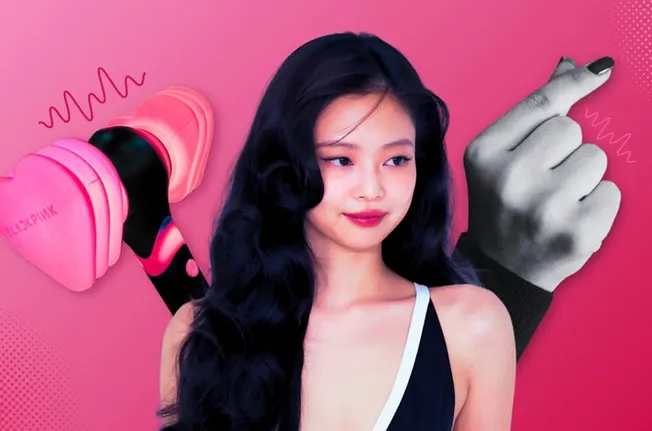
BLACKPINK were not performing at the Forum that day. They had played two dates at Wembley Stadium that weekend as part of their Deadline world tour. Nine miles away, however, the group had hired an entire 2,300-capacity music venue for a five-day merchandise pop-up. No artist was present and no song was sung, yet BLACKPINK had created a destination that fans were willing to travel across London to visit, centred around a product that turns superfandom into identity and belonging.
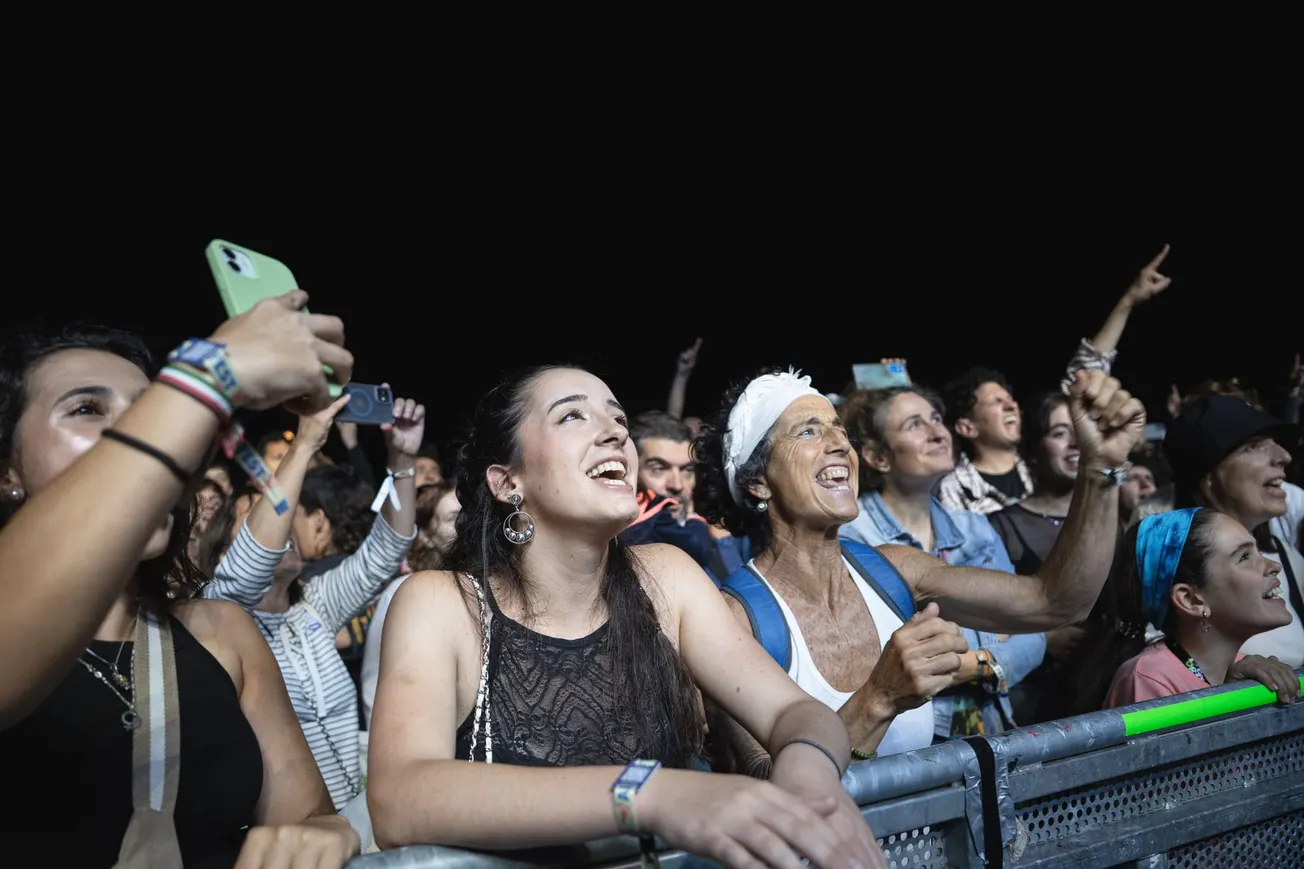
Each K-pop act has its own uniquely designed light stick. Fans bring them to concerts, where thousands can illuminate an arena in the artist’s colours and move in synchronized patterns. It is merchandise, but it is also part of the live performance, a rite of passage, and a visual expression of the community itself. Most importantly, it is just one example of K-pop’s holistic approach to world-building.
Music opens the door to a bigger world
The conventional music business has largely treated the song as the final product. Everything else exists to promote, distribute, or monetise it. Yet K-pop often reverses that relationship. The music remains essential, but also serves as the entry point into a broader artist world made up of visuals, fashion, video, performance, community, and physical products.
In fact, music, visuals, and products increasingly operate on equal footing and are designed into the artist proposition from the start. For some of Asia’s biggest music companies, merchandise, licensing, and other non-recorded-music products are no longer just supplementary revenue. They are central to the business.
In fact, among the Asian labels tracked by MIDiA, live and expanded rights revenue surpassed digital and physical recorded music revenue in Q2 2026 for the first time. This is according to MIDiA’s latest recorded music market shares report update, available soon.
+Read more: "Backstage Pass: Lynn Bartsch of Fanlight on the Future of Active Fandom"
The “SaWaDiKa” effect
The destinations audiences are directed towards help illustrate this shift. At the time of writing, BLACKPINK’s Lisa has around 100 million Instagram followers, placing her among the platform’s most-followed music artists. Yet on Spotify, she ranks much lower based on monthly listeners, at around number 750 globally.
That does not mean that the music is failing to connect. It suggests that streaming alone does not capture the full scale, intensity, or commercial potential of her audience.
Lisa’s latest single, “SaWaDiKa”, offers an even clearer view. The track has generated around 15 million streams on Spotify, compared with approximately 150 million views for its music video on YouTube. These metrics are not directly interchangeable, but the difference is still revealing.
For many fans, the complete product is not simply the audio. It is Lisa exploding to life across locations in Bangkok, the choreography, the production, the styling and the celebration of her Thai identity.
The video does not just accompany the song. It builds the world around it.
+Read more: "Concert Tickets Are Apparently the New Airline Miles"
Music as the beginning, not the end
Expanded rights have long been a part of entertainment strategy. Pokémon began as a video game before expanding into animation, trading cards, merchandise, and a wider entertainment universe. Star Wars began as a film and moved into toys, games, television, and eventually immersive theme park experiences.
Music artists have always sold products, too. What feels different now is the purposeful approach to building the product, experience, and purchasing journey around the artist from the outset.
K-pop offers perhaps the clearest view of where this can lead. The goal is not simply to convert more people into listeners. It is to convert attention into fandom, and fandom into participation across several parts of an artist’s world.
The music is not becoming less important. It is taking on a broader role. It brings audiences through the door, but increasingly, the value lies in everything waiting for them on the other side.
For more on the growing footprint of expanded rights, MIDiA clients can look out for the upcoming MIDiA report ‘Recorded music market shares Q2 2026 | Sony accelerated, Asian labels expand’.
Want the latest entertainment research and insights directly to your inbox? Our newsletter has you covered, click here to subscribe.