

Welcome back to our new interview series, Manager of the Month, in which we spotlight the work of successful pros in the artist management space, and ask them to share (just a few of) their coveted trade secrets... shhh!
Manager of the Month is supported by Bandsintown Pro, the smarter way to promote live concert events.
Isaac Gordon founded Breakpoint Booking in Beverly Hills in 2018. It's one of the only Black- and LGBTQ+-owned member organizations of the National Independent Talent Organization (NITO), and likely one of very few Black-owned talent agencies that takes a fully invested approach in developing raw, young, independent talent (across Music, Comedy, Speaking, and Branding/NIL). They've helped launch artists like Tank and the Bangas, Benny the Butcher, Harry Mack, Lost Dog Street Band, Sierra Ferrell, and hundreds more, and are on the verge of launching Sports and Television divisions.
Here's our conversation. Let's dive in. Enjoy!
Hypebot: Hey Isaac, thanks so much for taking the time to answer some questions. Breakpoint (aptly named) specializes in breaking early career performers and creators. Why is that important for you?
Isaac Gordon: "Great question. Honestly, I’ve always had a deep love for the independent side of the music industry. While in college, I had been managing emerging acts and exploring local scenes. When I finally found myself working professionally in the music industry with much bigger names, it didn’t take long for me to notice the amazing demos coming in from underground, unheard of talent."
For me, that was always where the real work lived: taking something completely unknown and being an active part of the process that makes it great."
In today's landscape, our model just makes sense. There are very few agencies out there willing to take on acts as early as we do and structurally develop them on the road. We proudly own our lane — whether it comes to breaking new talent or protecting the touring business of legacy acts. At the end of the day, it is all about helping our roster grow their business through hard work, absolute transparency, and foundational education."
H: How did you get your start in this business? And where did you acquire your entrepreneurial sensibilities?
IG: "I have no idea where I acquired my entrepreneurial sensibilities. Neither of my parents nor my grandparents ever owned a business; I come from a traditional, blue-collar, 9-to-5 family. My mom was a dedicated hospital worker and union president in Barberton, Ohio, and my dad worked concrete for a living when he wasn’t in the pulpit preaching on Sundays."
But even without a corporate blueprint, I was always hustling, constantly balancing two or three jobs at the same time. I’ve always believed that the absolute best way to learn anything is to just jump in and do it. Whether it was producing beats, starting a recording studio, or launching an independent record label — all of which I did when I was young — I did it to learn. You learn by executing."
Ironically, I got my professional start in booking as an intern, and if I’m being completely honest, I wasn't all that interested or excited about it at the time. I was hyper-focused on becoming a talent manager or an A&R. I applied everywhere like it was my full-time job, but the universe still guided me to a talent agency."
I didn’t sleep on the opportunity, though. Prior to landing that professional agency gig, I had founded my own management company where I was wearing every single hat imaginable. So while booking wasn't entirely new to me, it wasn’t until I started doing it for real, at scale, that I completely fell in love with it."
And if there's one thing I can say about making the shift to being an agent: it’s definitely not as thankless as being a manager."
H: This series is called Manager of the Month — I guess there’s a dispute about whether booking agents think of themselves in a “managerial” role but in a way you’re shaping an artist’s career nonetheless. What’s the most important thing when building relationships with artists from your seat?
IG: "Spot on. I mean, we are all part of the unified team that surrounds the talent — at least, that is exactly how I like to look at it. I firmly believe a great agent always keeps a manager's hat in their back pocket. There are days in this business when, even as the booking agent, the situation requires you to put that hat on to protect the client."
When it comes to relationship building in entertainment, the single most important thing you can do is just be yourself. Be who you really are, say exactly what you mean, and only promise what you can actually deliver — or better yet, under-promise and over-deliver."
From my seat as an agency owner, that is the exact culture I try to instill in our team. I don’t want order-takers. I want my agents to deeply uncover a client’s actual needs first, and then answer: How can we bring true value and fill this specific role for our client?"
"When it comes to relationship building in entertainment, the single most important thing you can do is just be yourself. Be who you really are, say exactly what you mean, and only promise what you can actually deliver — or better yet, under-promise and over-deliver."
H: Do you think it’s essential today for artists to develop their live performance skillset and go on tour?
IG: "Yes, I think it’s essential for artists to develop their live performance skillset. I’ll take it a step further and say it’s the first and most important thing an artist can do. It does worry me that so many of us are now hiding behind our screens. Nothing will ever replace that real human to human connection. You have to figure out a way to master that if the plan is longevity."
As for touring, I don’t think it needs to be mastered immediately. While I believe it’s something every act will have to face at one time or another it’s not immediate. For developing acts it’s more about perfecting the show and building an audience. Touring isn’t for the weak though. I feel a lot of acts come in excited and leave broken down similar to those freshman in engineering photos you see online. It’s real business."
H: You’ve mentioned in the past that you’re strangely one of “very few Black-owned talent agencies” — in fact you’re also LGBTQ+-owned as well — not to set up a sort of naïve premise here, but why is that? What advice would you give, for example, to aspiring members of the community to pursue these industry anchor positions if the doors aren’t opening for them?
IG: "I think it all speaks directly to this country’s history. It wasn’t very long ago when the music industry was entirely segregated. Today’s Black artists have had a path paved for them, and it is the exact same reality for Black executives. We didn’t always have a seat at the table. Today, we have a few more of those seats thanks to the radical groundwork laid by pioneers like Harry Herbert Pace, Gamble and Huff, and Clarence Avant."
I distinctly remember going to my first major agency conference and looking around the room — there simply weren’t many folks there who looked like me. My ultimate hope and goal with Breakpoint Booking is to structurally change that. There is an immense amount of brilliant talent hidden in underserved communities — specifically talent outside the traditional bubbles of LA, Nashville, and NYC. They don’t lack drive; they just lack the opportunity and the blueprint. That is exactly why I proactively seek them out annually for our internship and training programs."
Beyond providing opportunity, I think it’s critical just to raise awareness that these positions exist. I constantly hear stories of successful agents who arrived in this space after initially having no idea what the booking side of the industry even entailed. I was one of those exact people."
Most incoming professionals default to wanting to be A&Rs or talent managers because that's what is visible. A lot of people simply don’t know how agents structurally tie into those ecosystems, or what it actually takes to build a successful, sustainable career as an agent. I would enjoy helping to bridge that educational gap."
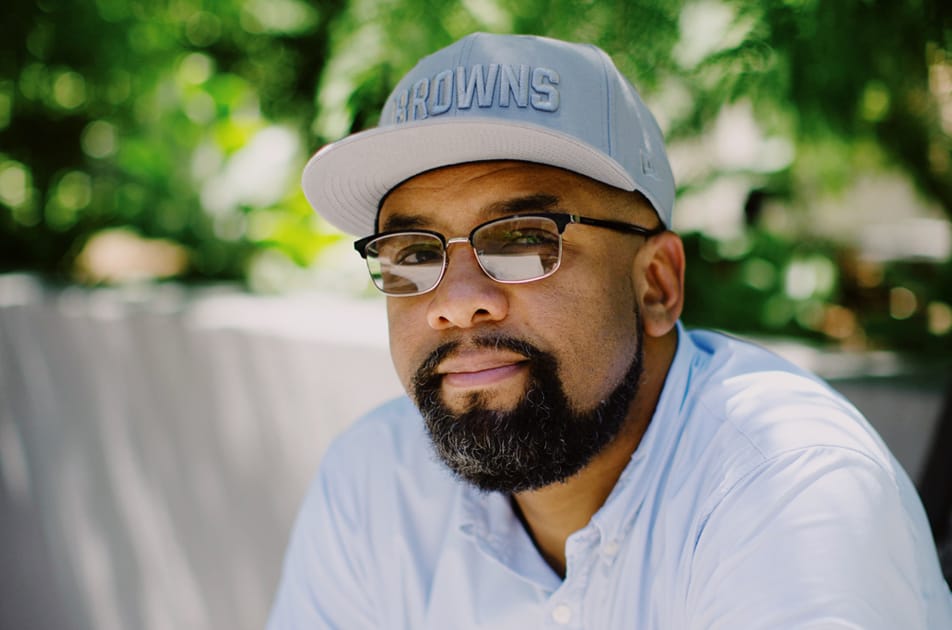
H: Can you point to certain successes you’ve had that have brought pride and a sense of trailblazing to the agency?
IG: "There are so many to name, but there is also still so much yet to accomplish. If I had to start anywhere, it’s simply the fact that we’ve been in business for more than five years and completely survived the pandemic. Those were incredibly stressful, unprecedented times for live entertainment, and making it through to the other side intact is a victory in itself."
From there, I point to our growth from literal obscurity to having represented world-renowned icons like Janet Jackson, Teddy Riley, and Keke Palmer. I also look back with immense pride at our early-stage bookings with music acts like Tank and the Bangas, Benny the Butcher, and Sierra Ferrell, as well as comedy powerhouses like Nasser Al-Rayess, Jeffrey Keller, and Sarper Güven."
I often begrudgingly joke within our circle that we seem to 'graduate' our clients to WME once they hit a certain stratosphere. While the ultimate goal is to scale our infrastructure so we hold onto those clients long-term, it is an undeniable testament to our ear for talent and our ability to build an eye opening box office foundation from scratch."
Lastly, and most importantly, I’d point to the growth of our agents. It has been incredibly humbling to watch the graduates of our training program transition into full-time agents, making this industry their life's work and truly succeeding at it. At the end of the day, watching them win is probably the best part of it all."
"Managers and agents often find themselves operating on completely different timelines. Managers naturally want to move fast and strike while the iron is hot. Agents, on the other hand, usually want to slow things down so there’s more time in the box office."
H: Is there a story of hardship or adversity you can point to that changed how you approach management/booking?
IG: "Going back to my earlier point about management being thankless, I have plenty of personal stories to vouch for that, and I hear the exact same horror stories from other managers and veteran industry professionals."
The reality is that artists can be incredibly cruel to the people building their careers. On the flip side of that coin, I constantly hear about managers and gatekeepers who were handed amazing opportunities to protect a talented individual, only to turn around, steal from them, and completely destroy their career. There’s a famous Hunter S. Thompson saying that perfectly encapsulates this industry: 'The music business is a cruel and shallow money trench, a long plastic hallway where thieves and pimps run free, and good men die like dogs.' And as the old joke goes: there's also a negative side."
In a twisted sense, that negative side is exactly what keeps a high-integrity agency like ours in business. Clients usually come to us after they’ve been burned by a shady third-party agency, or after they've trusted a bad agent who mismanaged their box office."
The silver lining here is that technology and access is helping artist get smarter. The modern independent landscape is forcing a level of transparency that didn't exist before. The scams that prey on hopes and dreams are being brought to light, and the people who entered this industry for all the wrong reasons will continue to be exposed. We’re just proud to stand on the right side of history. It’s important to me."
H: What’s your post-concert food craving? :)
IG: "I’m typically really hungry after concerts because it’s likely dinner for me. I would have to say any sort of dineresque spot within proximity. Please allow me the ability to choose between breakfast and dinner."

H: What are the biggest differences in the ways managers work with artists than bookers?
IG: "Let's be real. Managers are infinitely more involved in the day-to-day chaos than agents. Most artists aren’t picking up the phone at 3:00 AM to call their booking agent unless a show has gone completely off the rails. It’s the manager who has to sit on the line and talk them through the late-night existential crises. That’s exactly why management is such a thankless job."
However, when it comes to routing a tour, the agent is truly in the driver’s seat. We control the wheel when it comes to routing logic, geographic targeting, and granular venue negotiations. Meanwhile, the manager maintains a macro, high-level overview — orchestrating the surrounding orbit of the tour publicist, tour manager, label reps, and day-to-day teams."
Because our core responsibilities differ, managers and agents often find themselves operating on completely different timelines. Managers naturally want to move fast and strike while the iron is hot. Agents, on the other hand, usually want to slow things down so there’s more time in the box office."
H: If you could time travel to the past or future, which would you choose and why?
IG: "Ha! Being black I have to call the future on this one, right? I’m not trying to go back and have to fight to get back to where I am now! In all seriousness, the future would be amazing to witness. I can picture myself on a new earth-like planet. Maybe throw in a spaceship (all electric of course). I have a feeling we’d maybe be on GTA7 at that point."
H: Haha, "GTS: Grand Theft Spaceship."
To learn more, visit Breakpoint Booking and follow them on Instagram.
Join the leading live event professionals saving time and selling more tickets with Bandsintown Pro.