

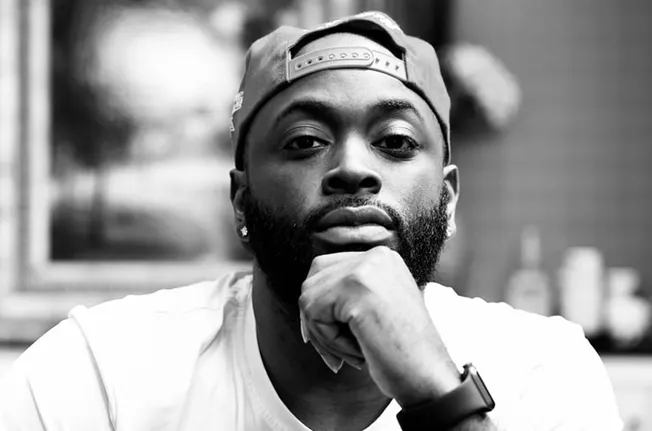
Welcome back to our new interview series, Manager of the Month, in which we spotlight the work of successful pros in the artist management space, and ask them to share (just a few of) their coveted trade secrets... shhh!
Manager of the Month is supported by Bandsintown Pro, the smarter way to promote live concert events.
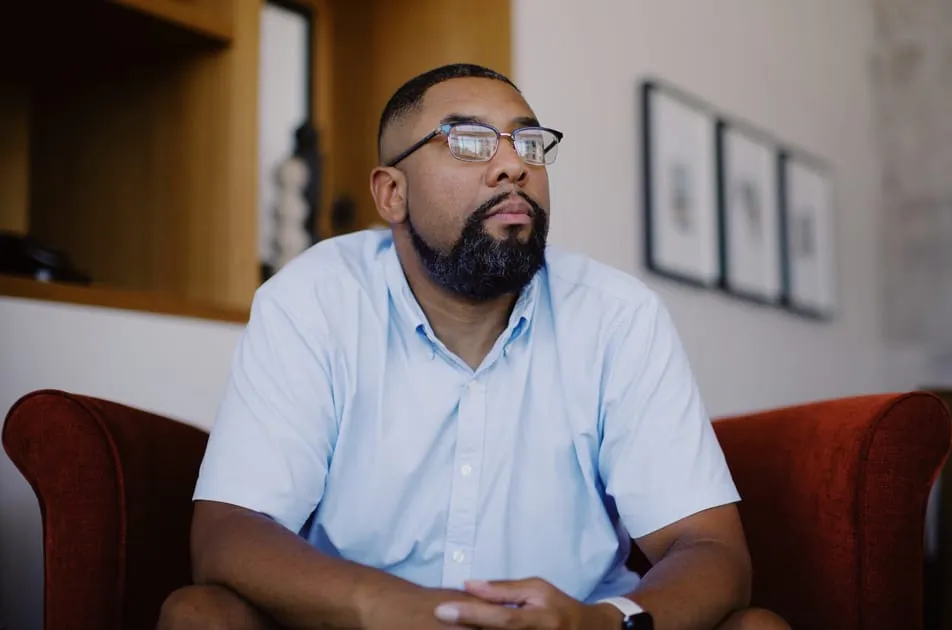
Justin "Legacy" Bishop is a professional who wears a ton of hats in this industry. He's the Founder of Legacy House Productions and GoodAdvice Management, and simultaneously the Head of A&R at Monopoly Distribution. He has helped develop campaigns, release strategies, touring opportunities, and growth infrastructure for emerging artists across Hip-Hop, R&B, Afrobeats, Pop, and Alternative music, and he's got more ambition and aspiration than most folks I've ever met.
We talk about it all — let's dive in. Enjoy!
Hypebot: Hey Justin, thanks so much for taking the time to answer some questions. You wear a lot of hats! Where do you find the time to balance all these pursuits and not burn out?
Justin: "Honestly, balance is something I'm always actively working toward — it doesn't just happen. But what's made it sustainable is that I didn't build three separate things. I built one ecosystem where every piece feeds the others."
GoodAdvice Management gives me that deep, in-the-trenches involvement with artists — strategy, career architecture, the long game. Legacy House Productions extends that into the creative and developmental side, where I can offer real A&R perspective and label services to artists who are still finding their footing. And Monopoly Distribution closes the loop — if an artist has real momentum and we believe in the art, we have a home to release it properly, with real infrastructure behind it."
So internally, it's a pipeline, not a juggling act. Externally, it gives me multiple entry points into the creative community. An artist who isn't quite ready for management can still come into the ecosystem through development. A producer looking to scale their business has a path. And when someone has genuine motion, I can bring them into Monopoly and still be deeply involved in the success story."
That's what keeps me from burning out — nothing I'm doing is isolated. It all compounds."
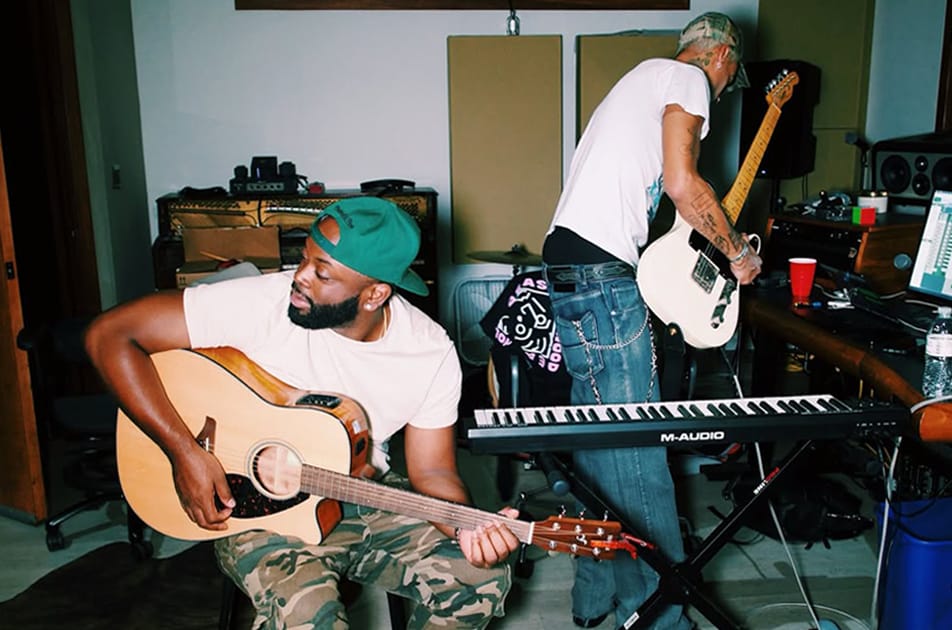
H: Where did the passion for music come from for you?
J: "I was a fan first. That's where it all started — just a kid who genuinely loved music. As I got older, I found myself in the studio recording hooks for friends, and that turned into performing at school events and local clubs. It grew organically, the way it does when something is real."
But there was a moment of reckoning. Going into college, I had to choose between sports and music. I went the athletic route, and when that ran its course, I didn't walk away from competition — I just redirected it. I came back to music, but this time through the business side. I started a music festival called Sloughfest at Augustana College, and that became my real introduction to the industry. Not theory. Actual execution."
That led to internships with C3 Presents, work with Danny Wimmer Presents in the concert and festival space, and eventually landing on the management team with Marc E Bassy. From there, it was year by year — growing, learning, elevating. I went from personal assistant to Music Executive, and somewhere along that journey, helping artists reach their dreams became just as fulfilling as the dream I was chasing myself."
I've worked with hundreds of artists at this point. And every single one of them reminds me why I started — because someone believed music was worth building a life around. I just happen to believe that too."
H: This series is called Manager of the Month — you’re not really a manager but you’ve helped shape artists' growth through both short-term campaigns and long-term career paths. Let’s start with this: what do you look for in an artist?
J: "lol Our internal team actually calls it Super Management — because the scope of what I do touches every area of the industry at a high level. Artist Development, Business Development, Brand Partnerships, and Touring are the pillars that actually drive careers and businesses globally. So yeah, the title is fun, but the work is serious."
When it comes to what I look for in an artist, it really comes down to a few non-negotiables: work ethic, character, quality of music, a willingness to be a student, and a real vision for themselves. Those things you can't manufacture. Everything else? That's what artist development is for."
And I want to be clear about what artist development actually means to us — it's not just sonic refinement. It's not just making better records. It's making sure an artist understands that they are the CEO of their own business. That shift in mindset changes everything. Once an artist sees themselves that way, the conversation moves from 'how do I get on' to "how do I build something that lasts.'"
Our job is to help them identify their strengths, sharpen them, and then find the right partners and team members to support wherever they have gaps. You don't need to be great at everything. You need to know what you're great at — and surround yourself accordingly. That's the foundation. That's what separates a moment from a career."
"Countless sessions trading lyrics back and forth. Learning his life story in depth and weaving it intentionally into the music and the album campaign. Understanding what he wanted beyond music — his actual life goals — and making sure we were checking those off as we scaled... That's the work I'm most proud of. Not the numbers — the person behind them."
H: You've reflected on the success you’ve had as an A&R, but have talked about how it often comes with the feelings of being underappreciated and undervalued. I think so many folks working across the music industry can relate. How did that manifest for you?
J: "A service role — whether that's A&R or management — comes with a particular kind of invisibility that doesn't get talked about enough. You are in the trenches with these artists. You are too close to the source. And because you're wearing so many hats at once — friend, mentor, therapist, teacher, strategist — the lines blur. Clients can start to feel like the results are purely their own momentum, without fully seeing the calls being made at midnight, the relationships being leveraged, the meetings being set up, the budgets being fought for, the partnerships being architected before they ever hit the table."
We are the people losing sleep. Missing family moments. Making sacrifices that no salary could quantify. And we do it because we're bought in — genuinely bought in — to the vision."
One of my darkest stretches was my last couple of years in LA. I was trying to build a label with developing acts, and the artists were doing well. The strategies were working. But the business itself was struggling to grow alongside what we were building, and the music industry was shifting in ways that were exposing the cracks. What made it harder was watching the role of A&R get devalued internally — feeling pressure to shrink my ideas and my skillset to satisfy an executive team, while simultaneously carrying the executive workload with no real seat at the table."
That's a particular kind of hard. Doing the work. Seeing the results. And still feeling like an outsider in a company your contributions were helping hold up. That experience shaped everything about how I operate now. I never want someone on my team to feel that way. Ever."
H: On the flip side, what’s a success story from your managerial capacity?
J: "The one that comes to mind most immediately is Petti Hendrix. And this one is personal on multiple levels."
Petti grew up about 45 minutes north of where I'm from. So there was already a familiarity there — an unspoken understanding of the world he came from. We were introduced during my time at MDDN, and he was in the middle of something rare and difficult: a full identity transition. He wasn't just changing his sound — he was transitioning from a rapper into a rockstar. That's not a rebranding exercise. That's a life shift."
When he was assigned to me, he had virtually no monthly listenership. Nothing on paper that would make an executive stop and look twice. But there was something about him I understood immediately. So I gave it everything I had — because I knew this was going to be a defining moment for both of us, in a genre neither of us had fully navigated before."
What followed was some of the most genuine artist development work I've done. Countless sessions trading lyrics back and forth. Learning his life story in depth and weaving it intentionally into the music and the album campaign. Understanding what he wanted beyond music — his actual life goals — and making sure we were checking those off as we scaled. One of those goals was getting a song to a million streams. He hit that after I departed from MDDN, and that meant everything."
We took him from zero to 250,000-plus monthly listeners over the course of two to three years. We presented him to the world with what I genuinely believe will stand as a classic album in his catalog. And we showed him what real development looks like — not just creatively, but in the streaming era where visibility and narrative both have to work together."
That's the work I'm most proud of. Not the numbers — the person behind them."
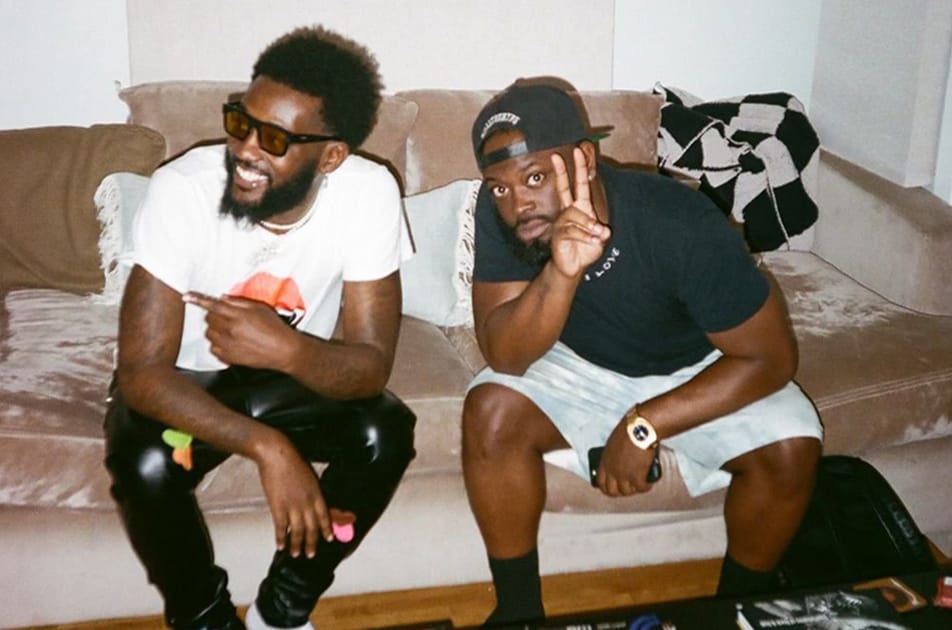
H: You mention that you take a “People First” approach to artist brand development. What does that mean for you?
J: "It means exactly what it sounds like: the person comes before everything else. Before the campaign. Before the release strategy. Before the meeting."
Business is business, but there is no business without the human being at the center of it. If a client is going through something — a life change, mental exhaustion, a creative block, a personal loss — that matters to me. Not because it affects the timeline, but because they matter to me. Practically speaking, none of the work moves forward at its highest level if the person driving it isn't operating as the best version of themselves."
I've been in rooms where the pressure to perform — to deliver, to execute, to hit numbers — completely overrides any conversation about how someone is actually doing. I've seen what that costs people. I made a decision early that I would never be that person in someone's corner."
There is no amount of money, no deal, no opportunity that could make me bypass a client's wellbeing. The music will come. The strategy will come. But first: 'How are you? What do you need? Are you good?' That's where I start. Every time."
H: What’s the best soul food joint in Atlanta?
J: "Since my family is rooted in the South, soul food has never done me wrong. So I have to give my flowers to Southern Fire Kitchen. That's my go-to when I actually have a moment to sit down and enjoy a real meal. No rush, no meetings — just good food."
Now — I also have to shout out Harold's Chicken, and I'll say this carefully: Harold's is a Chicago staple. If you know, you know. And I'll leave it right there because Chicago takes its wings very seriously, and I am not about to start that conversation down here in Atlanta. Some debates you just don't win."
"The strategy will come. But first: 'How are you? What do you need? Are you good? That's where I start.' Every time."
H: What is the biggest thing you’ve learned working with artists over time?
J: "That they're just people. Deeply, beautifully sensitive people. And I mean that with the highest respect — because when you really sit with what artists do, it's extraordinary. They pull something from thin air. From lived experience, from emotion, from imagination — and then they stand in front of the world and offer it up, hoping someone connects with it deeply enough to invest in their dream. That takes a kind of courage most people will never fully understand."
There's really no other industry like it. The closest parallel I can draw is a painter in fine arts — creating something deeply personal and then releasing it into spaces you can't always control."
Once I understood that, everything about how I showed up for my clients changed. I became more compassionate. More patient. More thoughtful about timing and tone. Because it takes an enormous amount of energy to produce the craft — and it takes just as much, if not more, to manage everything that comes with the visibility and success that follows it."
That world deserves to be protected. The art, the person behind it, the process that creates it — all of it. And that protection is a big part of what I consider my responsibility in this role. That's the biggest lesson. Treat it all with care. Because it all cost somebody something real to create."
H: When was the first time that a concert blew your mind?
J: "You know, the one that comes to mind isn't just a concert — it's a full-circle moment I got to witness in real time."
Watching K Camp on the Kiss 6 tour was something else entirely. What made it hit so differently is that I had been around the team before any of this — before he was moving hard tickets, back when the nights looked like walkthrough appearances at nightclubs. So to watch that same artist, that same energy, grow into selling out the Kiss 6 tour and closing in Atlanta in front of 4,000 people — that wasn't just impressive. That was profound."
Most people see the finished product. I got to see the whole journey. And there's something about standing in that crowd, feeling the electricity of 4,000 people locked in, and knowing where it all started — that feeling is genuinely unmatched. You can't manufacture that perspective. You either lived it from the beginning or you didn't."
That night reminded me of exactly why I do this. Because at one point, it wasn't like that. And now — it's only up from here."
H: What is the best non-musical sound in the world?
J: "Water. Without question. Whether it's rain coming down or waves crashing — there's nothing like it. I grew up near the water, so it's always been my place of solitude. It has this way of quieting everything else down and just centering you."
And honestly, it's followed me into the work too. It's almost always running in the background during production sessions. There's something about that sound that opens things up creatively — it creates space. I don't think that's a coincidence. I think some things just stay with you from where you come from."
To learn more, visit Legacy House Productions and Monopoly Distribution.
Join the leading live event professionals saving time and selling more tickets with Bandsintown Pro.