


SOCAN is partnering with Canadian rights technology company Musical AI to explore how songwriters, composers and music publishers can be credited and compensated when their work influences AI-generated music.
The collaboration is built around two central principles: creators should be able to decide whether their music participates in AI systems, and they should receive attribution and payment when it contributes to an AI-generated output.
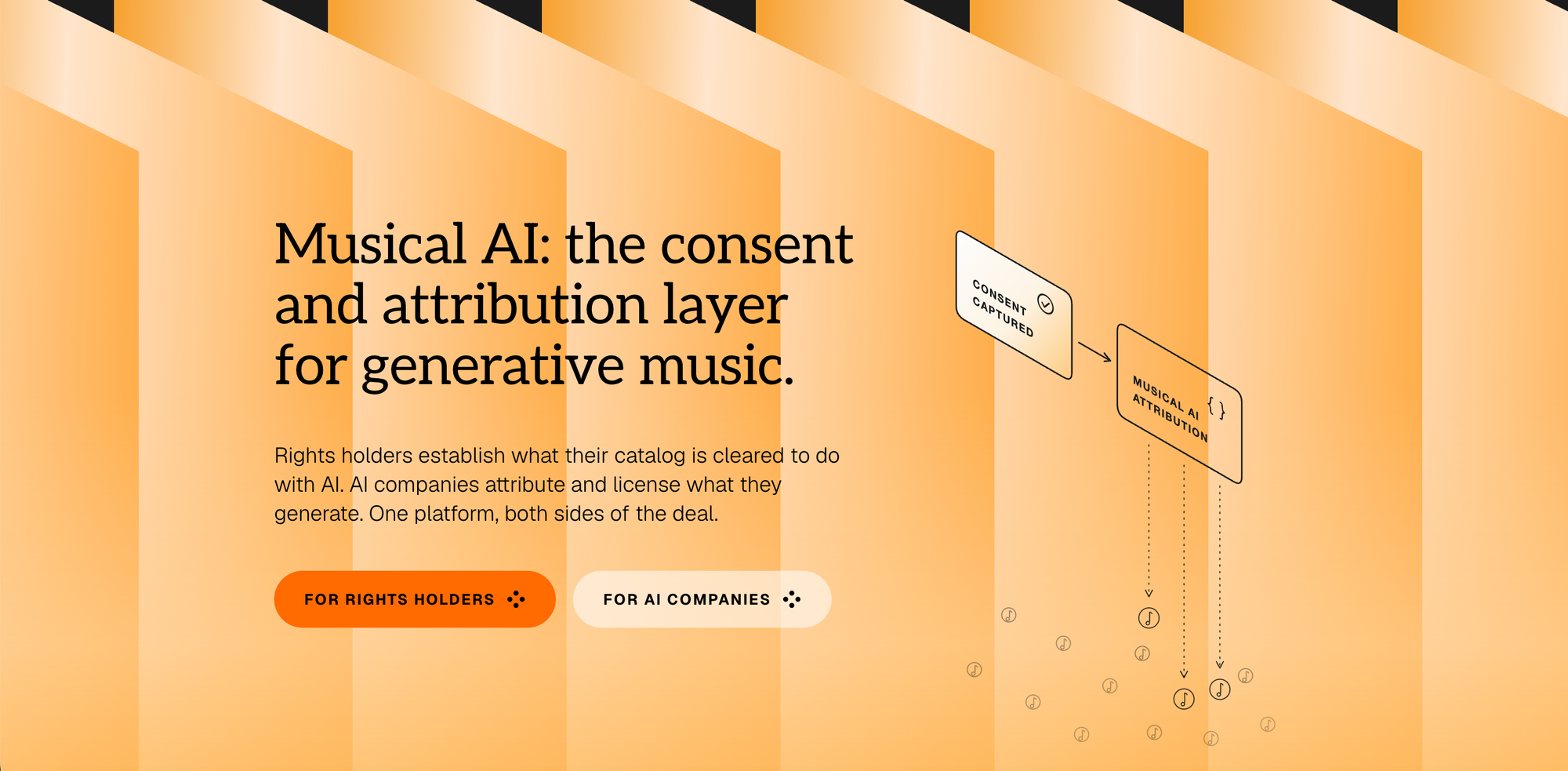
Under the agreement, SOCAN will recognize Musical AI as an approved technology partner for attribution services and related initiatives. The two companies will explore consent, attribution and reporting infrastructure that could eventually help SOCAN determine how its members’ work has been used by AI — and how compensation should be distributed.
That “eventually” matters. The partnership does not immediately establish a new AI royalty system. Instead, it begins developing the technology, guidelines and rights-management framework that could make one possible.
Giving Creators an Opt-In
SOCAN and Musical AI say music should only be used by AI systems when creators have actively consented. As part of the initiative, the companies will explore Musical AI’s consent-management tools, which are designed to make those choices clear and scalable across large catalogs. That could give songwriters, composers and publishers a more structured way to authorize or decline particular AI uses.
Musical AI CEO Sean Power says:
"The first step is consent, the next step is attribution that can show how music contributes to an output and how value should flow to artists and songwriters."
That represents a potentially important shift from the current AI landscape, where rights holders often struggle to determine whether their music was used to train a system, influence an output or generate commercial value.
+Read more: "Canadian Music Is Getting Two Bumps in Investment"
Turning AI Influence Into Something Measurable
Musical AI’s attribution technology analyzes AI-generated outputs to identify the licensed source material that influenced them. It separately assesses contributions from sound recordings and underlying musical compositions, producing reports that can support licensing, accountability and compensation.
In practical terms, the goal is to create something resembling a split sheet for AI-generated music: a record of which works contributed to an output and how the resulting value should be divided.
That infrastructure could be especially significant for a performing rights organization like SOCAN. The organization already collects license fees for public performances and reproductions of music, matches those uses with rights holders, and distributes royalties to songwriters, composers and publishers.
AI-generated music complicates that process. If an output incorporates the influence of multiple existing works, rights organizations need a reliable way to identify those contributions before they can license the use or distribute money. SOCAN CEO Jennifer Brown said:
'As AI reshapes the music industry, music creators must have transparency, credit and fair compensation. This collaboration with Musical AI establishes a foundation for attribution and compensation, to ensure that music creators are paid when their music is used by AI."
The partnership is also being positioned as part of a broader Canadian effort to protect the country’s music, cultural identity and creative economy as AI adoption accelerates. Canada’s Minister of Artificial Intelligence and Digital Innovation, Evan Solomon, calls this collaboration an example of responsible Canadian innovation that could create new opportunities while recognizing the value of human creativity.
+Read more: "Why AI Song Generators Don’t Grant Copyright"
SOCAN is Canada’s largest member-owned music rights organization, championing the fundamental value of music and the people who create it. SOCAN collects license fees for the public performance and reproduction of music, matches them to rights holders, and distributes them as royalties to music creators and publishers in Canada and around the world.
Musical AI is a Canadian rights technology company providing consent management and attribution infrastructure for generative music. Its platform helps rights holders manage permissions and helps identify how licensed works influence AI generated outputs across composition and sound recording rights, supporting transparent reporting, licensing and compensation.
![MUTEK Elevates Live Electronic Music Performance Yet Again [PHOTOS]](https://storage.ghost.io/c/3a/95/3a957c06-c825-4057-9939-0a274cc16d23/content/images/size/w1304/format/webp/2026/09/MUTEK27_20260827_Korea-Town-Acid---Ajeebsir_credit_Fre--de--rique-Me--nard-Aubin-1506.jpg)