



By Ciara Azam, Founder of Eventist
Every festival organizer can tell you their ticket price to the cent. Almost none can tell you what their ticketing platform costs them per ticket, because the number hides inside a percentage.
I run a ticketing company in Canada, so weigh what follows accordingly. The figures are published Canadian rates in CAD as of September 2026, and the currency does not matter. The "shape" of the fee does.
Why a percentage is the wrong "shape"
Most large platforms charge a percentage of the ticket price plus a fixed amount per ticket, then card processing on top. In Canada, that looks like 3.5% plus $1.29, or 2.1% plus $0.99, or 2.5% plus $1.69, depending on the platform. A percentage makes sense when someone earns a commission on a sale they made happen.
That is not what a ticketing platform does for a festival. Nobody discovers your festival by browsing a ticketing site. You booked the lineup, rented the field, bought the ads and built the mailing list. The platform served a page, took a card, sent a QR code and scanned it at the gate.
That work costs the same whether the ticket is $35 or $250, so a fee that climbs with the price is charging you more for the same thing because you were able to charge your fans more. It also means the ticketing line in your January budget is wrong by August after two price changes.
The example
Take a $120 weekend pass. On a 3.5% plus $1.29 model the platform fee is $5.49, and with 2.9% processing the organizer gives up $8.97 before seeing a dollar. On a flat model, which is what Eventist charges at 85 cents per ticket, processing is $3.78 and the total is $4.63. Now change the price and watch what moves.
Processing scales with price on both sides because the card networks charge a percentage, and that is not the platform’s doing. Look at the platform fee column. On the percentage model it climbs from $2.52 to $5.49 to $10.04. On the flat model it stays at 85 cents.
So ask the obvious question. If you are paying $17 in fees on a $250 pass, what are you getting for it? A QR code. The same QR code the $35 ticket got for $3.54.
+Read more: "Concert Tickets Are Apparently the New Airline Miles"
Ticketing should do more than sell a ticket
The product has barely changed in thirty years. In the 1990s you got a printed ticket with a barcode. Today you get an email with a QR code. The scan is the same scan and the fee model is the same model, and that is what a market run by a handful of monopolies looks like. Regulators in more than one country have taken them to court over it, and still nothing pushes the ticket to do more.
It could do a lot more.
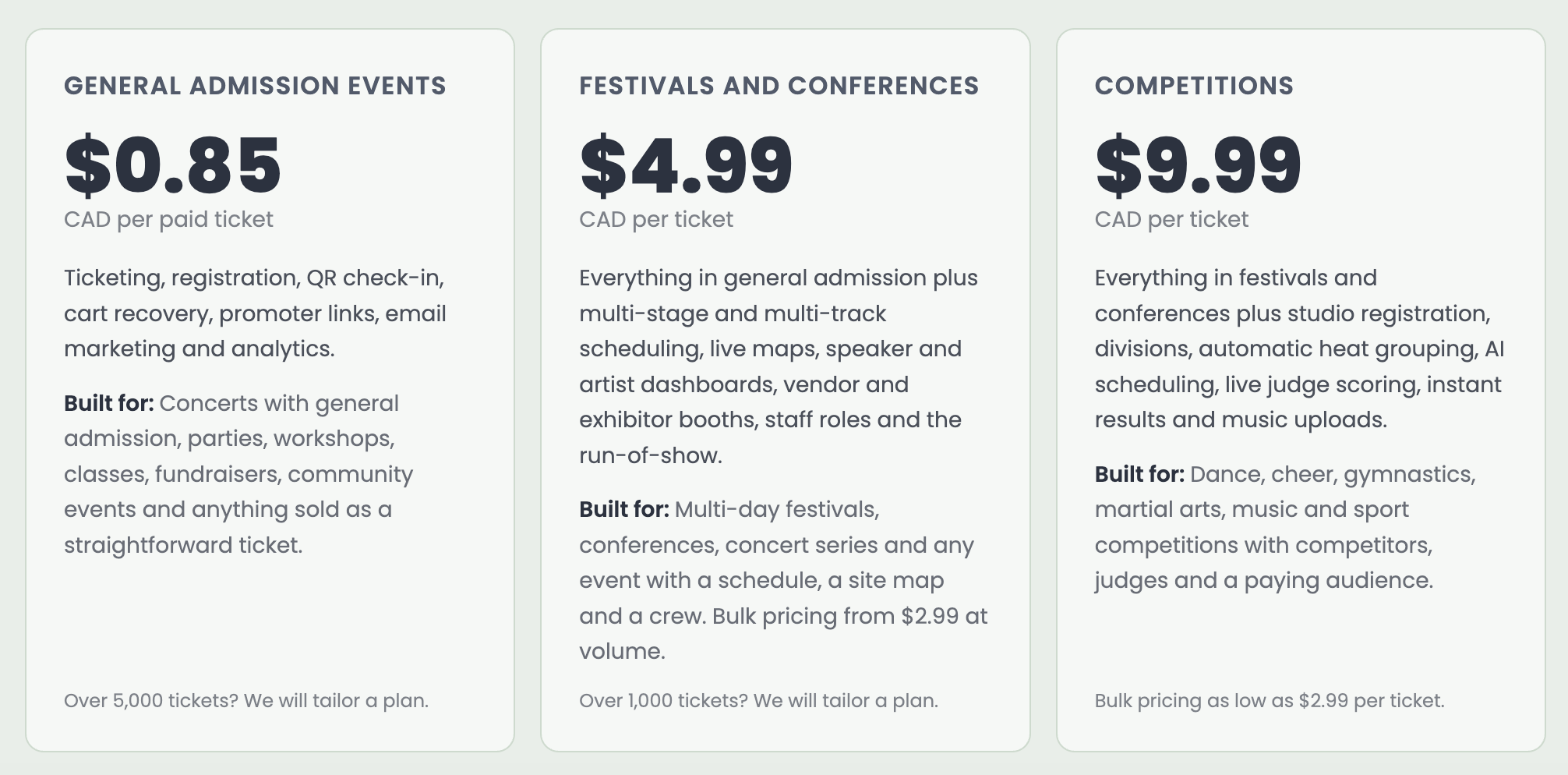
Live events are a $1.5 trillion global market by most estimates, and the sale is a sliver of what happens at one.
The schedule across four stages, the vendor map, the volunteer shifts, the crew run of show, the medical tent, the artist advance, the attendee who wants to know when their set starts: at most festivals all of that still lives in spreadsheets and group chats, while the ticket, the one thing every single attendee touches, does nothing after the scan.
There is room for dozens of companies to solve those problems. The fastest way to get them is for organizers to treat ticketing as software they buy, priced by the unit consumed, and to say so when a platform quotes them a percentage.
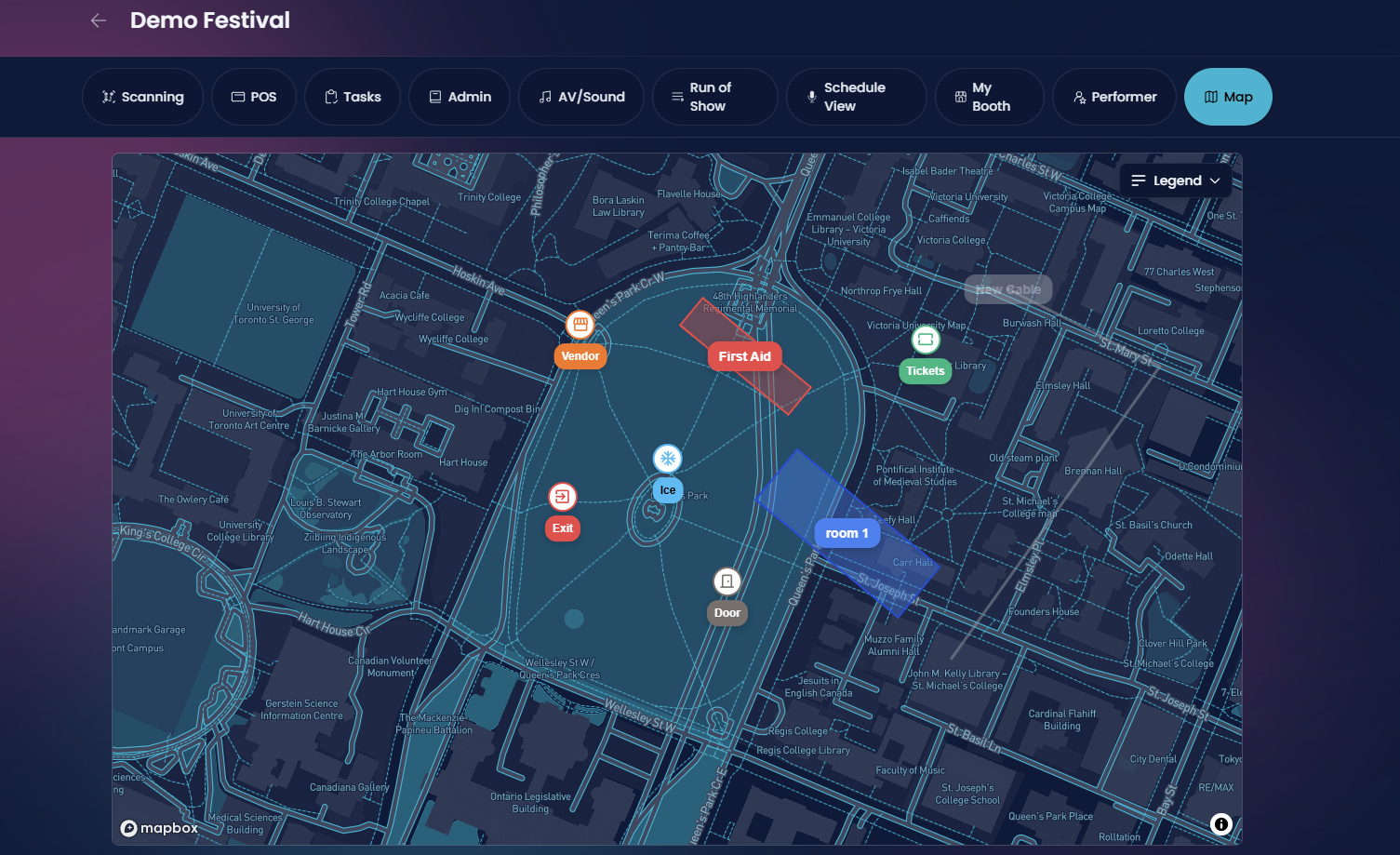
Change is coming.
It already has, at the edges. Flat fee platforms exist now, Eventist among them in Canada and others elsewhere, and the gap between $17 and 85 cents on a VIP pass is not something an organizer forgets once they have seen it. More platforms let you export every attendee and every order, so the fan stays yours.
Regulators are finally asking who owns the venue, the promotion and the ticket at the same time. And organizers are asking the question this piece is built on: what does it actually cost you to sell one ticket, and why should I pay more for the expensive one?
Keep asking it. The answer tells you which platforms think you are their customer, and which think your fans are.
+Read more: "How to Build a Greener Concert Industry"
Ciara Azam (she/her) is the Founder of Eventist, a bootstrapped, woman-founded festival and event ticketing platform based in Kitchener, Ontario, founded in 2021. She writes about the economics of independent events and how organizers can keep more of what they earn.