

I’ve spent the last four years trying to move one of the most stubborn industries on earth. Not gaming — which moves fast, furiously, and with enormous capital. But the relationship between gaming and music. Specifically, the shift from single-track sync licenses to full catalog deals that would make licensed music a native, structural part of how games are built and played.
It has been slower, harder, and more complex than almost anything I’ve done in two decades of working at the intersection of music and technology.
I tell you that upfront because everything else I’m about to write is informed by that experience — not as an analyst watching from the outside, but as someone who has been in the rooms, across the table from gaming executives, trying to solve a problem that both industries have long acknowledged and neither has fully cracked. The observations here are personal. The conviction is earned.
I. Where It All Begins
It was the summer of 1982 when I first heard the name Silicon Valley from my father’s lips. For a pre-teen in Spain, it sounded electrifying — even if I couldn’t quite place it on a map. My father, a professor and a renowned sculptor, filled our household with provocative ideas, intellectual curiosity, and a deep appreciation for creativity and the tools that enable it. While my mother shaped my love for music, my father gave me Hergé and Moebius, Leonardo and Rembrandt, Blade Runner and Tron and Alan Turing.
He made me understand that technology and art were not opposites. They were co-conspirators.
That same summer, a strange machine appeared in our sitting room — one of the earliest Philips stand-alone gaming consoles to reach Europe. What I remember most vividly wasn’t the gameplay. It was the sound. Those synthetic beeps and pings mimicked real-world actions, and unknowingly, they marked the beginning of my awareness of music’s role in interactive experiences.
Soon after came the Sinclair Spectrum 128K — a computer almost unknown in the U.S., but a pioneer in European homes. Games loaded via cassette tape. Characters had personality. Scenarios carried emotional weight. And the music, still rudimentary sonically but compositionally richer, began to stir something in me. I realized how profoundly it shaped my emotions and memory. To this day, certain melodies from those games give me chills. Decades later, research would confirm much of what I felt instinctively: music plays a profound role in memory formation, emotional engagement, attention, and immersion. Combined with interactive experiences, it has the power to amplify how we experience, remember, and connect with digital worlds.
As the 1980s gave way to the ’90s, my path diverged from gaming and moved deeper into music — record collecting, DJing, synthesisers, samplers, and eventually the music-tech business. My younger brother went the other way: he became an industrial designer and later a game artist. Two paths that, as it turned out, were always heading toward the same destination.
II. The Moment Music Moved to the Foreground
The 1990s brought faster hardware, bigger budgets, and gaming franchises that matched film in scale and ambition. Music entered not just as atmosphere but as a core storytelling element. PlayStation helped shift the culture — where Nintendo had maintained clean, educational aesthetics, Sony reached into youth counterculture: skateboarding, punk, electronic music, rave fashion. This was the era of Napster and an entire generation finding identity in music, technology, and games simultaneously.
The pivotal moment came with the Grand Theft Auto series. Gritty, controversial, and revolutionary. The breakthrough wasn’t just its open-world mechanics — it was a car radio. Players could change the station. Those stations played licensed music from major labels in a new context. Real songs. Songs you recognized. The effect was groundbreaking: it made the experience hyper-realistic and, crucially, it breathed new life into catalog tracks, reviving them for an entirely new generation of listeners.
Music moved from background noise to foreground influence. Tony Hawk’s Pro Skater followed, redefining what a licensed soundtrack could be — not just accompaniment but cultural manifesto, filled with punk, hip-hop, and underground gems. Sync licensing departments at major labels began treating games not as novelty placements but as premier platforms for discovery. Games were becoming the new MTV.
+Read more: "A New Video Game Lets You Manage a 90s Grunge Band. It’s… SO FUN."
III. The Dirty Truth About Music Licensing
Here is the problem that nobody in the gaming industry likes to say out loud, and that nobody in the music industry has fully solved: licensing music for games is still a mess.
It is a fragmented, high-stakes ecosystem built on infrastructure designed in a different era. To license a single track for a game, you typically need to clear master rights from the record label, synchronization rights from the music publisher, and — depending on territory and platform — performance rights through collecting societies.
Each of those conversations involves different organizations, different timelines, different approval chains, and different commercial expectations. Multiply that by a large catalog, across dozens of territories, and you begin to understand why most game developers commission their own soundtracks, use cheap library music, or simply give up.
This complexity has had a distorting effect on the market. High-quality recognisable music has been almost exclusively the domain of major franchises with the budget and legal infrastructure to navigate them — your GTAs, your FIFAs, your Fortnites. Everyone else has been locked out. The result is a massive unrealized opportunity: billions of players who are also music fans, playing games that are largely silent on the licensed music front.
And let me be direct about something else: music isn’t cheap, nor should it be.
Artists at the top of their craft spend months, years, lifetimes perfecting their work. Labels invest billions annually in scouting, developing, recording, mixing, promoting, and managing artists. Those songs aren’t accessories. They are cultural artefacts and emotional triggers that have shaped generations. The industry’s challenge has never been the value of music — it has been the machinery required to unlock it.
The new generation of platforms — Roblox, Fortnite, Minecraft, ZEPETO — are not games in the traditional sense. They are the new social operating systems. Players spend thousands of hours inside them. They form identities, build communities, attend events, and consume culture continuously. These platforms do engage with music — but selectively, in a movie-style fashion: curated events, artist moments, identity activations tied to virtual concerts or digital fashion drops.
But strategically, very few game developers will build the full-catalogue kind of music experience gamers would like, simply because the operational weight — the rights data, the royalty flows, the territorial compliance — is equivalent to running a music streaming service. It has nothing to do with their core business.
The model built for the film era cannot serve the social platform era.
IV. The Structural Gap — The music industry needs a new growth engine
The music industry’s remarkable recovery from the Napster crisis was built on two successive waves: the rise of streaming services, which converted piracy into subscription revenue, and the explosion of social platforms, which turned music into the engine of viral culture. For nearly two decades, those two forces compounded. But both are now showing their limits.
Streaming has largely saturated its high-value markets. Growth is migrating toward lower-ARPU territories — Southeast Asia, Latin America, sub-Saharan Africa — where per-stream economics are structurally compressed. Meanwhile, the major platforms are diversifying: Spotify has moved into audiobooks and podcasts, diluting music’s share of both attention and investment. TikTok proved that music retains extraordinary cultural power in social environments, though the industry continues to debate how effectively that cultural influence translates into proportional long-term revenue for artists, songwriters, publishers, and labels. The result is a music industry that is growing, but growing into thinner margins and diminishing leverage over the platforms it depends on.
The labels are not in crisis. But they are searching for the next structural channel — one that combines scale, cultural relevance, and genuine monetization capacity. Gaming is arguably the only category that currently combines those three attributes at this magnitude.
More than three billion people play games globally, and research from organizations such as IFPI, MIDiA Research, and Newzoo consistently shows that gamers represent one of the most music-engaged consumer segments in the world. If the major labels can integrate into gaming infrastructure the way they integrated into streaming, they do not just find a new revenue line — they regain massive cultural leverage.
+Read more: "Why Indie Video Game Sync Is More Accessible Than Film and TV in 2026"
V. The New Frontier: UGC Platforms
Today’s gaming landscape is divided across several distinct categories: AAA titles — the giants with Hollywood-scale budgets; mobile games (casual & hyper casual), where scale, rapid iteration, and monetization dominate; PC indie games, a fast-growing sandbox for experimentation; next-generation platforms including XR, cloud gaming, and blockchain; and User-Generated Content platforms — UGC — where players themselves become the developers.
That last category is where the most radical transformation is happening. Platforms like Roblox, Minecraft, Fortnite Creative, ZEPETO, and even Second Life are not just games. They are creative ecosystems where culture moves faster than any traditional studio can track. And around them, an entire professional universe is quietly forming. Specialized UGC development studios — SawHorse, Superfam, Super League Games and others — are now among the most sought-after studios by brands in the industry, collaborating directly with the largest IP holders in the world, from Hollywood to global music artists. Dedicated conferences such as the Roblox Developer Conference or emerging ones such as
The World Builders Conference, which recently took place in Los Angeles, are a signal that UGC has graduated from a platform feature into its own discipline. The rest of the gaming industry is watching closely — and the speed of development is accelerating.
The fashion industry already understands this. Major luxury and streetwear brands have spent hundreds of millions of dollars securing a presence inside UGC platforms — not for direct sales, but for cultural positioning. A teenager who wears a virtual Adidas jacket on Roblox is building brand loyalty that will outlast any billboard campaign. These brands are not confused about ROI. They are buying identity real estate at the moment when identity is being formed, on the platforms where it is being formed. Music, media, and fashion are converging on the same digital layer — and the ones moving fastest are the ones who recognize that the infrastructure gap is temporary.
New companies like Alvalan, founded by fashion industry veterans, are already creating licensing frameworks, rights data systems, tools, infrastructure, and platform-level agreements that are cutting time-to-market by 80% and building a previously nonexistent data layer. When they standardize, the opportunity closes to latecomers. Fashion brands already know this. Can the music industry move quickly enough to build the scaffolding before the moment passes?
VI. The Proof Is Already There
The sceptic’s rebuttal to any argument about music’s potential in gaming is simple: show me the evidence. Here it is.
The numbers from gaming’s most significant music activations don’t just suggest an opportunity — they dwarf nearly every metric the traditional music industry uses to measure success. When Travis Scott performed inside Fortnite in 2020, 27.7 million unique players participated live, with 45.8 million total attendances across five showings and a peak concurrency of 12.3 million simultaneous viewers. For context: the Super Bowl halftime show — the most-watched music event in American television — draws roughly 100 million viewers, once, on a single night. Scott’s Fortnite event matched that scale, inside a game, across five nights, with an audience that was actively participating, not passively watching.
The pattern repeated. Fortnite’s Remix: The Finale — featuring Snoop Dogg, Eminem, Ice Spice, and the posthumous presence of Juice WRLD — drew over 14 million concurrent in-game players and an additional 3 million streaming viewers on YouTube and Twitch. Lil Nas X’s Roblox concert attracted 36 million attendees. Roblox itself now stands at 111.8 million daily active users and 27.4 billion hours of engagement in a single quarter — more than Twitch, Steam, and PlayStation combined.
These are not niche experiments. They rank among the largest music events ever measured by active participation happening inside platforms the music industry has not yet built the infrastructure to properly monetize.
What makes this more than a spectacle is the catalog effect. When Eminem appeared in Fortnite, he hadn’t released a major hit in years. Within days of the activation, his catalog was surging on streaming platforms — a new generation of teenagers discovering The Slim Shady LP through a video game. The same phenomenon has played out with The Weeknd and Snoop Dogg: Fortnite and Roblox moments have functioned as some of the most effective marketing campaigns their labels have ever run.
My own son — fourteen, deep into gaming — came to me completely unprompted after one of these activations and asked: “Who is Eminem? I love him.” That is the behaviour the music industry has been trying to manufacture for decades through radio promotion, playlist placement, and influencer marketing. Gaming delivers it organically, at scale, to the exact demographic that will drive streaming revenue for the next thirty years.
This year, Bruno Mars performed in one of Roblox’s most popular games, Steal A Brainrot, and 12.8M people showed up simultaneously. Fortnite Festival, in its first year, featured 236 artists, offered 280 tracks, and saw players hit over one trillion notes. That is not passive listening. That is active, repeated, muscular engagement with music as a mechanic. The Chainsmokers’ concert experience drew 4.2 million visits with an average playtime of over sixteen minutes and a 91.6 percent player approval rating — numbers that would be the envy of any festival promoter.
And yet the infrastructure does not exist to capture the value being created. Every one of these activations functions as a marketing spike. A moment in time. Without the full catalog licensing frameworks and platform infrastructure to sustain them, they generate cultural impact but not lasting economic architecture. The music plays, the players engage, the streams briefly surge — and then the moment passes, leaving no permanent commercial layer behind.
I experienced this firsthand.
During my time at Universal Music Group, I launched the Boombox project on Roblox — the first fully licensed virtual item that played catalog music as players moved through the game. Players carrying the Boombox showed a threefold increase in session retention. The product demonstrated, in controlled conditions, exactly what the theory predicts: music increases engagement, which increases time-in-platform, which increases revenue. And yet it could not be sustained at scale. Not for lack of demand. Because the rights data infrastructure and platform-level licensing agreements required to make it permanent simply did not exist. The behaviour was there.
The market was there. The plumbing was not.
VII. What Comes Next
I think about this space through a very specific lens: I built Pulselocker, the first music streaming platform designed for DJs, the most demanding “super-user”, which taught me that the music industry’s licensing protocols, while genuinely complex, are not immovable. I spent years at SoundCloud watching what happens when you put the right tools in the hands of the most forward-thinking creators.
And I have spent four years at UMG, working directly from the CDO’s office, trying to translate all of that into something that the gaming industry can actually use. The global gaming ecosystem generates well over $200 billion annually and, depending on methodology, exceeds $250 billion when hardware, software, services, subscriptions, advertising, and virtual economies are included.
Music — across all the major labels combined — captures a very, very small fraction of that through sync licensing. That is not a revenue shortfall. That is structural exclusion from the largest concentration of youth culture on earth. The opportunity isn’t to grow a line item. It’s to build an entirely new revenue class that doesn’t yet exist.
There are 3 billion gamers worldwide, and nearly a third are active music fans — a massive, underserved market that no one has cracked. Until now. Roblox alone generated 39.6 billion hours of engagement in a single quarter in 2025 — more than Twitch, Steam, and PlayStation combined — and approximately 30 per cent of that audience are music superfans: people who subscribe to streaming services, buy merchandise, attend shows, and organize their identity around artists.
There is now a second urgency that didn’t exist three years ago, and it significantly changes the calculation: AI-native content. As game developers gain access to increasingly sophisticated generative music tools capable of producing adaptive, royalty-free music at scale, the competitive window for licensed catalog music to establish itself as a native component of gaming may narrow significantly. The cultural and emotional value of authentic artist-created music remains substantial, but the infrastructure required to deliver that value must arrive before AI-generated alternatives become deeply embedded in development workflows.
This is why the pace of the next two years matters more than any individual deal. Every major gaming monetization mechanism — free-to-play, in-game advertising, virtual economies, live services — took between seven and twelve years to standardize from first commercial experiment to industry-wide revenue foundation. Music licensing is earlier in that curve than most people realize. We are at the infrastructure-building phase. What gets established as standard now will define the economics for the decade that follows. The companies who move in this window don’t just participate in the outcome — they shape the terms of it.
What I’ve learned, across all of this, is that the companies that will win in this space are not the ones who wait for perfect licensing conditions. They are the ones who help create them — who sit across the table long enough, and with enough patience and commercial creativity, to build frameworks that didn’t exist before. That is what is beginning to happen now, with new catalog licensing infrastructure, adaptive music systems embedded at the game engine level, and a cohort of gaming executives who grew up with music as the emotional core of their experience.
There are now purpose-built products emerging to close the gap. Reactional Music is making in-game ads perform dramatically better by dynamically syncing them to the music. Styngr and its Play Music platform are building the backend distribution layer between rights holders, developers, and platforms. And Tyger is one of the first music streaming services designed specifically for the gaming generation— letting players bring their own playlists into the games they already love while creating a personalized and social music experience and gameplay. Each approaches the demand from a different angle. Together, they suggest that the plumbing is finally being built.
One of the clearest market signals that this thesis is moving from argument to institutional reality arrived in May 2026, when Microsoft appointed Matthew Ball — author of The Metaverse and creator of the most widely-read annual State of Video Gaming report — as Xbox’s new Chief Strategy Officer. Ball’s book emerged during the peak speculation years of 2021–2023, when corporations were renaming themselves and billions were chasing a VR avatar future that never arrived. That specific vision did not materialize.
But the underlying architecture Ball mapped — interoperability, interconnected economies, platformization, persistent digital identity — remains the intellectual scaffolding of every serious long-term bet being placed on gaming infrastructure today. His appointment alongside Azure OpenAI’s Scott Van Vliet as Xbox’s new Chief Technology Officer signals that Microsoft is now explicitly building toward AI-native, socially interconnected infrastructure: not the metaverse as spectacle, but the metaverse as plumbing.
That is precisely the environment in which licensed, adaptive music stops being a feature request and becomes a structural requirement.
From those first synthetic beeps on a curved CRT screen in Spain to today’s gaming platforms with hundreds of millions of users, the distance travelled is staggering. But the fundamental truth hasn’t changed: music makes experiences more human. It creates memory. It builds identity. It drives the emotional architecture that keeps players coming back. No algorithm generates that from scratch. It is earned, over decades, by artists and the cultures they create.
This new generation isn’t just building games. They are building the next operating system of culture. But the architecture is being laid right now, and music will only be native to it if the industry moves fast enough to be in the room when the foundations are set. Properly licensed, deeply integrated, and commercially structured to serve both industries, music will be the sound of this next revolution, again.
+Read more: "Why Publishing Still Confuses Artists (and What to Do About It)"
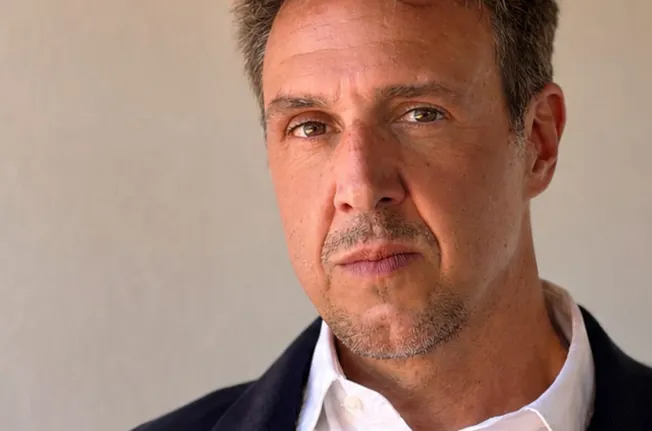
Alvaro Galbete-Velilla is a music and technology executive, entrepreneur, and longtime operator at the intersection of music, technology, culture, and interactive media. As former SVP of New Business at Universal Music Group, an executive at SoundCloud, and the founder of Pulselocker, he has helped develop projects, partnerships, and digital strategies spanning major record labels, gaming platforms, creator ecosystems, creative tools, emerging technologies, and new business models for over two decades.