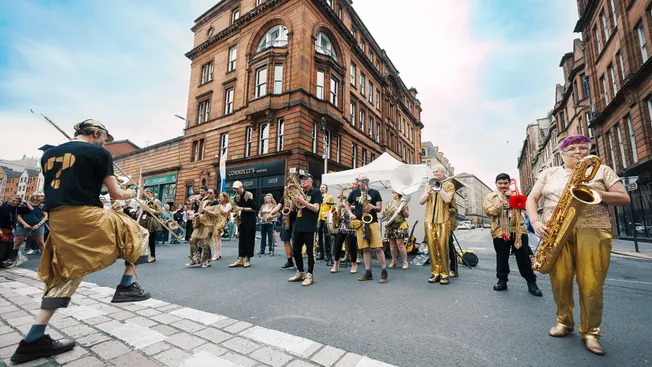
Glasgow is about to test a festival strategy that sounds almost radical in 2026: build an ambitious music event around the people already making music in the city, then make it affordable enough for the people who live there to attend.
Running July 24 through August 2, the expanded Merchant City Festival will spread live music across The Old Fruitmarket, Candleriggs Square and Clydeside Commons at The Briggait. Much of the outdoor programming is free, while promotional tickets for several headline concerts are available for just £10.
Glasgow Life describes it as Scotland’s leading outdoor arts festival, and its music programming feels distinctly rooted in the city hosting it.
Hen Hoose will showcase Scottish women and non-binary artists. The Scottish Alternative Music Awards will present a night featuring VLURE, Chiedu Oraka, Dirty Faces and Jenn Gunn. Techno pioneers Slam will lead a Glasgow Techno Alliance lineup filled with underground DJs, while Candleriggs Square will host free Gaelic, jazz, indie and traditional music showcases. Local radio stations and DJ collectives will soundtrack an open-air food market at The Briggait.
It is not an exclusively local lineup, but Glasgow is unmistakably turning its own self-powered music ecosystem into festival-sized ambition, and "local" is the true center of gravity.
We're living in an age where everything — music festivals especially — seems to be getting bigger and more expensive. To build a week's worth of programming around the premise that local artists get central focus and local audiences get affordable access is a strong rebuttal to this trend.
Local Pride Compounds
A local artist does not only bring listeners, but parents, siblings, former classmates, coworkers, neighbors, collaborators and friends who have been watching the project develop. A hometown performance can activate an entire social network in a way that another touring act passing through town may not.
Then the snowball effect takes hold.
Local media has a reason to cover the artist. Independent businesses have a reason to sponsor or partner with the event. City officials can see a direct connection between cultural investment and the people they represent. Other musicians attend, meet one another and begin planning whatever comes next.
Each artist becomes an access point into a different pocket of the city.
That does not guarantee a sellout. Local bookings still need thoughtful curation, promotion and artists with genuine momentum. But when several of those networks overlap, local pride begins to compound, and it can reflect importance that the community has already created.
+Read more: "Exposing How the Live Music Industry Lies About Its Massive Carbon Footprint"
The Money Stays Local, Too.
The conventional festival model often sends a significant portion of its budget toward large artist guarantees, long-distance transportation and infrastructure brought in from somewhere else, and pulls from international brand sponsorships. The headliner performs, collects the check, and leaves Monday morning.
A more locally-rooted festival naturally circulates more of that spending through the place where the event happens, which means hiring area production crews, photographers, videographers, and designers. It also means working with local backline companies, merch printers, breweries, restaurants, and food vendors. Visiting attendees still fill hotel rooms, while residents spend money in their surrounding neighborhoods rather than behind a fenced-off destination site.
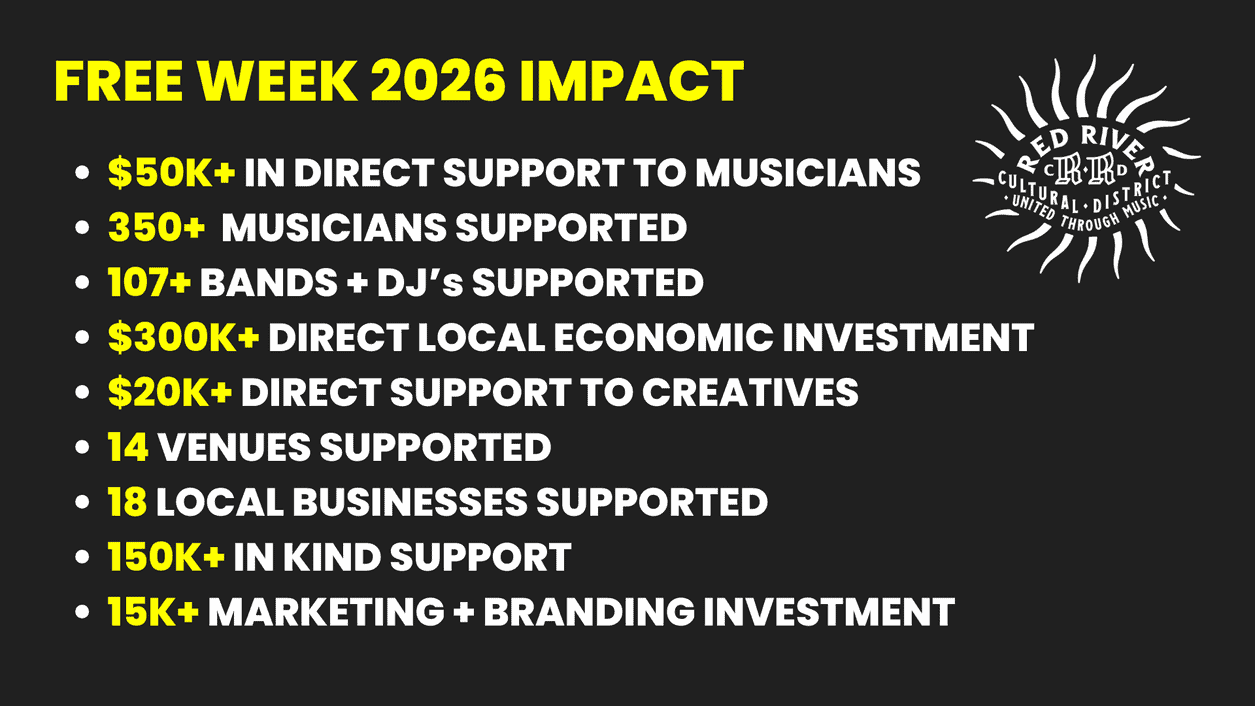
Austin’s local-artist-centered Free Week offers one illustration of the potential. A recent economic analysis estimated that the multi-venue event generated $2.2 million in total economic impact, much of it through spending at restaurants, transportation providers and nearby businesses.
The point is not that every dollar magically stays within city limits. It is that organizers can intentionally give more of those dollars another turn through the local economy. There is also an important caveat: “book local” cannot become another way of saying “pay artists less.”
If reduced travel costs or smaller guarantees merely produce more poorly paid exposure slots, the model fails the community it claims to support. The savings should help create fair artist fees, affordable tickets, stronger production and repeat opportunities.
The UK's Music Venue Trust published their latest annual report recently, and it warns that fewer shows produce fewer opportunities for artists alongside lower bar sales, reduced employment, and declining cultural participation. Its conclusion is effectively that local music infrastructure cannot be separated from the health of the surrounding community. Read the report here.
+Read more: "Manchester Launches Fund Supporting Grassroots Venues: Could This Work Elsewhere?"
Audiences As Stakeholders
A locally built festival can create a different emotional contract with its fan community than a massive festival. People attend because these are our bands. This is our venue. That DJ runs the record shop down the street. That singer played to 30 people here two years ago. That promoter has been building this scene one club night at a time.
The audience is no longer simply purchasing access to entertainment. It is participating in the story of its own city, and this sense of ownership can deepen loyalty beyond any single lineup.
If people believe a festival represents them, attending becomes a form of civic participation — and supporting an unfamiliar artist feels less like taking a risk than discovering another part of the community.
It can also make artistic discovery more meaningful. Angine de Poitrine offers an extreme example of how quickly a regional curiosity can become a global story. The masked experimental duo emerged from Quebec’s independent circuit before its KEXP performance exploded internationally. By March, KEXP reported that clips from the session had accumulated more than 7.5 million YouTube views and six million Instagram views.

+Read more: "Angine de Poitrine Is Real Weird — They’re Also Probably Coming to Your Town Real Soon"
Local and ambitious are not opposites. Sometimes the most globally interesting thing a festival can present is the act that could only have come from its own backyard.
How to Become Indispensable...
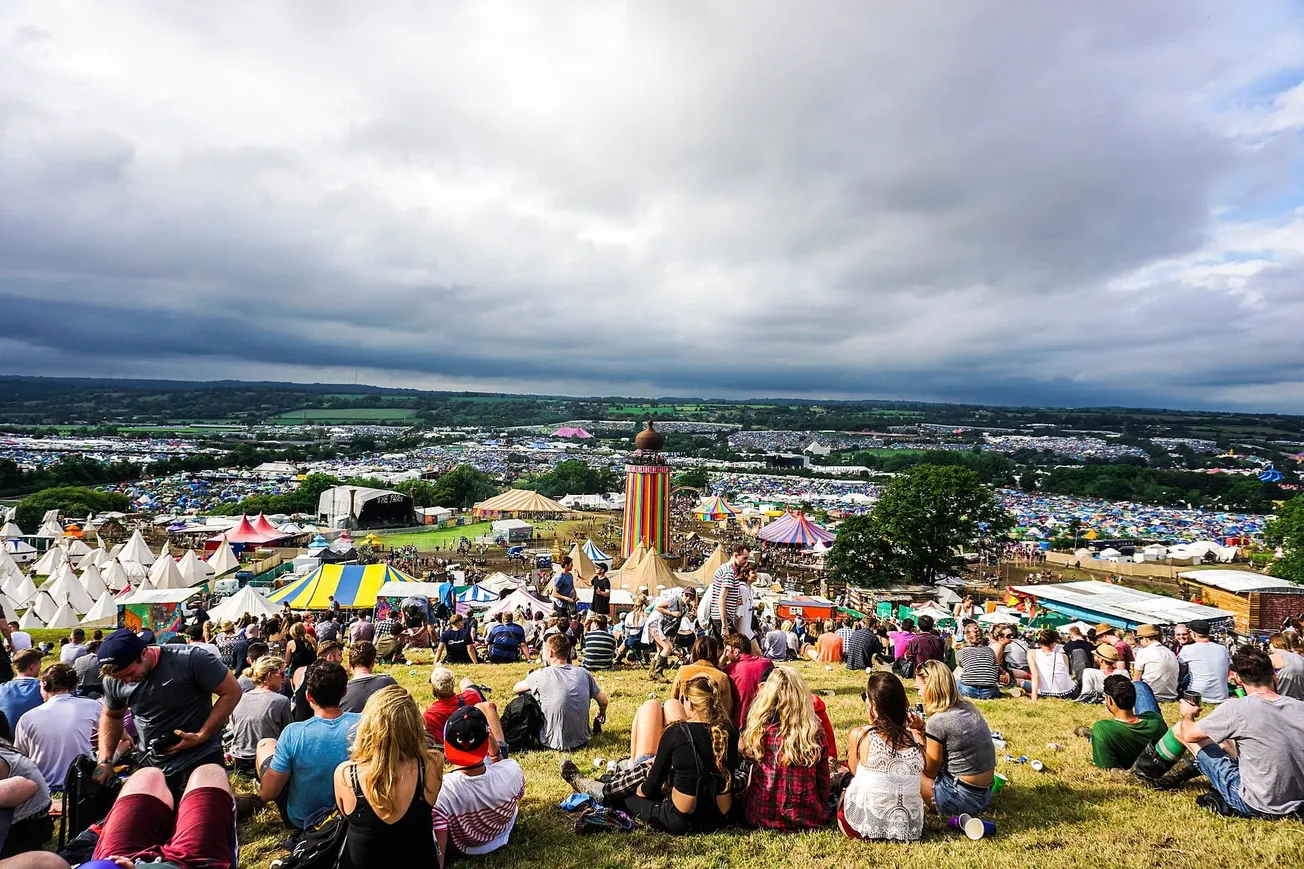
For smaller festivals, the goal does not need to be competing with Coachella, Glastonbury or whichever national event has captured the biggest names this year. The better goal may be becoming indispensable to one place.
A festival wins when local artists see it as a career milestone, residents consider it part of the city’s identity, businesses plan around it and audiences trust its curators enough to arrive before they recognize every name. That kind of loyalty cannot be purchased from a headliner. It has to be accumulated.
Book closer to home. Build partnerships that last beyond the weekend. Keep admission accessible. Pay local artists properly. Give audiences a reason to see the festival as something they help sustain.
Thinking smaller does not have to mean making a smaller impact.
Learn more about the Merchant City Festival here.