

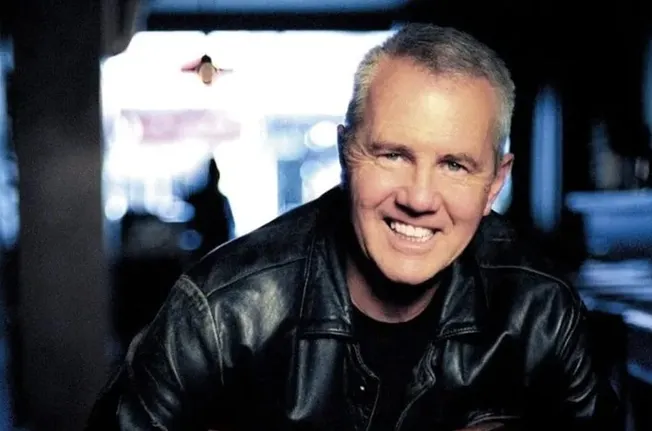
When Australian singer Daryl Braithwaite recently announced that he plans to step away from live performance, his explanation wasn't dramatic. It wasn't the result of controversy or a farewell tour designed to maximize ticket sales. He simply admitted that singing has become more physically demanding, and that he wants to stop before performing no longer brings him joy.
Braithwaite posted:
"After much thought and consideration, I have made the difficult and sad decision to step back from performing live gigs."
This kind of announcement appears every few months from one veteran artist or another. In a way it's predictable, but perhaps with acts like The Rolling Stones, Def Leppard, Iron Maiden, and others just refusing to stop touring, it's almost as if we expect all artists to go until they drop.
Perhaps that's why announcements like these are so often met with audience reactions that hover around disappointment, disbelief, and endless speculation about whether the artist in question will eventually come back. And this all raises an interesting question:
Why do we expect singers to perform forever?
+Read more: "Lauv Stepped Away From a Major Tour. Artists Should Know That's Okay."
Live Performance Is Physical Labor
Professional musicians occupy a strange place in our mind-view.
We celebrate them as artists, but we often forget that performing is also work — and demanding work at that. NFL, NHL, and NBA players all typically retire early into their thirties, with full recognition that in order to stay competitive and relevant, being able to upkeep one's body and health for the job becomes less sustainable over time.
Physical ability is not separate from being a professional, touring, performing musician. A voice isn't just inspiration; it's muscle, breath control, stamina, hearing, coordination, recovery, and countless hours of conditioning. Night after night on tour means long travel days, inconsistent sleep, changing climates, and performances that ask the body to operate at a high level for months at a time.
The instrument ages because the body ages.
Some artists adapt. Others change keys or shorten their sets. Eventually, many reach a point where maintaining the standard they've set for themselves becomes harder than audiences realize.
We Treat Musicians More Like Institutions Than Individuals
For many fans, an artist isn't simply someone who makes music. They're woven into decades of memories — first concerts, road trips, breakups, weddings, entire chapters of life. I can't help but feel that part of the difficult of saying goodbye comes from an unwillingness to let those memories go?
Almost as if it's as if, when an artist retires, those memories are somehow ending too.
But from the performer's perspective, retirement often isn't about abandoning fans. It's about recognizing that the relationship they've spent decades building deserves honesty, and evolution. Continuing indefinitely isn't always the most respectful choice. Sometimes knowing when to stop is.
We've seen this before.
- Elton John framed his farewell tour around spending more time with family after decades on the road.
- Neil Diamond stepped away from touring after revealing his Parkinson's diagnosis.
- Linda Ronstadt has spoken candidly about the heartbreak of losing the ability to sing due to illness.
- Kenny Rogers chose to end touring while he still felt in control of the decision.
- Even Ozzy Osbourne, after years of postponements and health struggles, ultimately acknowledged that his body simply couldn't meet the demands of large-scale touring anymore. And despite that, still got on stage for one final Black Sabbath show just before his passing in 2025.
In none of these cases did these decisions ultimately erase the bright spots of these artists' careers. If anything, they reminded audiences how extraordinary those careers had been.
Maybe Retirement Is Part of a Great Career
Music culture has a great time celebrating the encore.
- One more album.
- One more tour.
- One more reunion.
Economically, reunion tours are almost a locked bet in terms of their power to generate revenue and media buzz. Everyone loves a comeback story, too, because it reminds us of the parts of our own identities that we have the capacity to save and revive.
We spend so much time talking about career longevity, but we rarely talk about what longevity is actually for. Is the goal simply to keep performing forever? Or is it to build a sustainable creative life that allows artists to leave on their own terms?
Perhaps the healthiest long careers are the ones where artists are allowed to decide that they've done enough, ones that include a "walking off into the sunset" moment.
+Read more: "What Constant Visibility Is Doing to the Creative Process"