

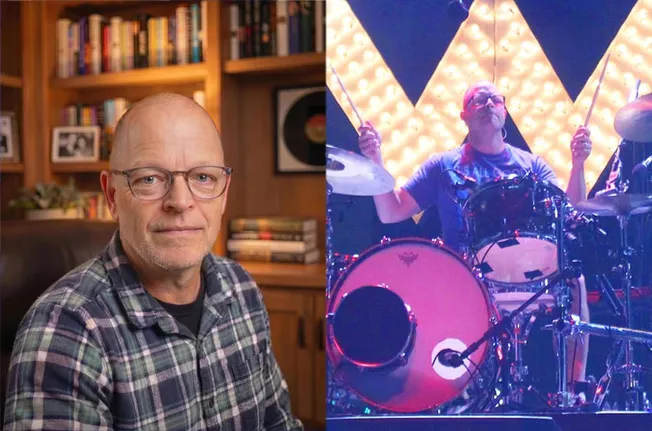
By Patrick George Wilson, Weezer drummer & CFO of OPUS
I spent most of my life on one side of the music business. I play drums. I co-founded a band that somehow kept going for three decades. For years, the work was the work: write it, record it, play it, repeat. The money was something other people handled, until it wasn't.
At some point I ended up in the CFO chair at Weezer Touring. That is where I learned the thing nobody tells you when you are twenty-two and just happy to be in the van. The song is not the finish line. The song is the starting line. What happens to the rights, the masters, the publishing, and the brand over the next twenty years is the actual return on everything you poured in.
Most artists never get to see both sides. You are either the person making the work or the person counting it, and those two people rarely sit in the same room. I got to be both. And from that seat, the same pattern shows up again and again: enormous creative value gets created, and then it quietly leaks away because no one is treating it like what it is.
An asset.
I want to be clear about what I mean by asset, because the word makes some people flinch. I am not telling you to think about your music the way a hedge fund does. I am telling you that a catalog is not a trophy you put on a shelf after the release. It is a living thing that either compounds or erodes depending on whether anyone is paying attention to it.
+Read more: "You Don’t Need to Be Famous to Sell Your Music Catalog Anymore"
Here is what neglect looks like in practice.
- Royalties that never get collected because the registrations were never done.
- Masters scattered across old hard drives and a former manager's inbox.
- Publishing splits agreed on over text and never papered.
- A brand that meant something for a moment and then got rented out cheap because a bill was due.
None of this is dramatic. That is exactly why it is dangerous. The value does not disappear in one bad deal. It seeps out a little at a time, for years, while you are busy making the next thing.
The numbers around this are not small. Kobalt has estimated that more than a billion dollars in global publishing royalties go uncollected every year. The Mechanical Licensing Collective keeps finding piles of unmatched mechanical royalties owed to creators who never registered correctly. That is not money the majors are hiding from you. A lot of it is just sitting there, unclaimed, because the owner treated administration as someone else's job.
So what do you actually do about it, especially if you are independent and do not have a finance department? A few things, and none of them require selling out.
1) Know what you own.
Write down every master, every split, every piece of publishing, every trademark and handle. If you cannot list your assets, you cannot protect them.
2) Register and collect.
Get set up with your PRO, with the MLC, with whatever collects the money you are owed. This is unglamorous, and it is the single highest-return hour you will spend this year.
3) Paper the splits while everyone still likes each other.
The cheapest time to settle who owns what is before there is anything worth fighting over.
4) Separate the artist decision from the owner decision.
As an artist you might want to release something for free, or license it for exposure. As the owner of that work, you should at least know what you are giving up. Make the call on purpose, not by default.
5) Think in decades.
The question is never just what this song earns this year. It is what the rights, handled with care, are worth in 2046.
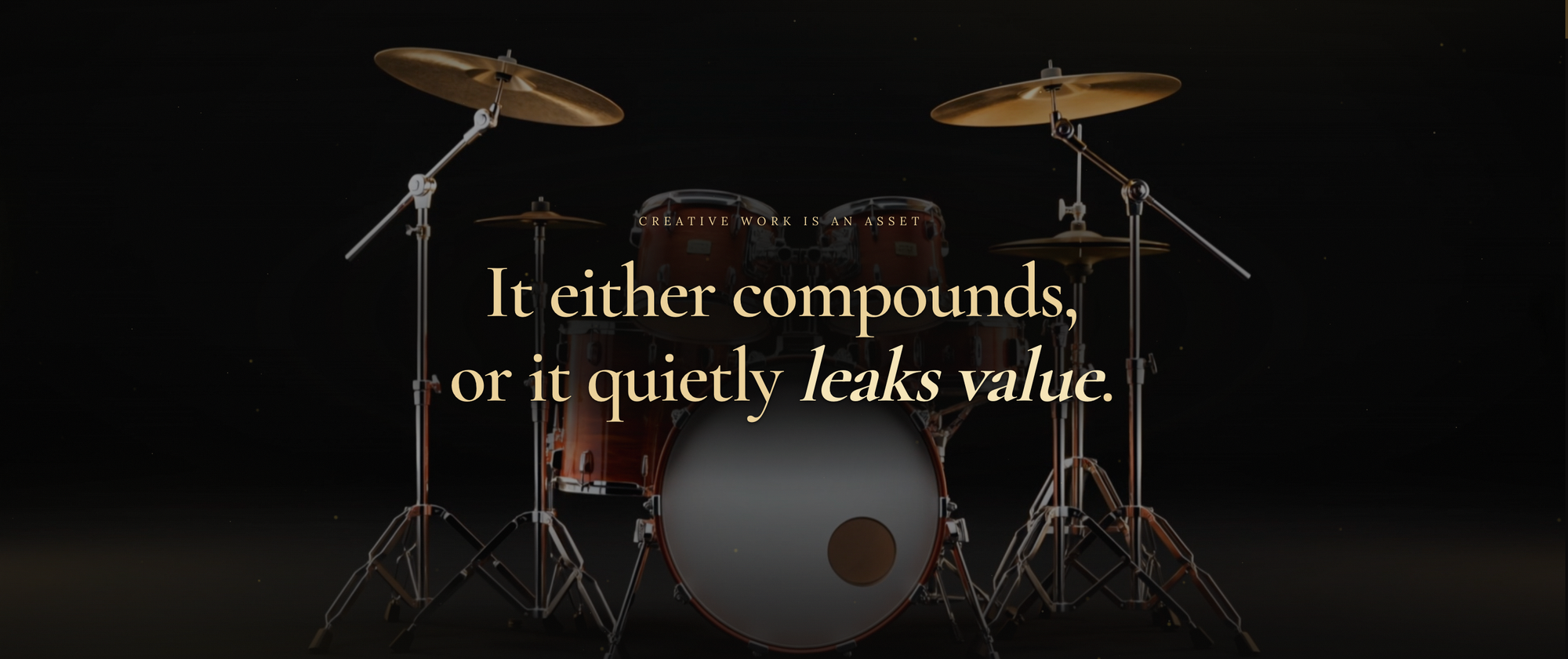
Now the objection I hear most. This all sounds corporate, and music is supposed to be about the art.
I understand the instinct, and I disagree with the conclusion. Structure does not kill the art. Structure is what finances and protects the art. The reason to get the ownership right is so you can keep making work on your own terms, and so the work keeps paying the people who made it long after the applause stops. Treating your catalog like an asset is not the opposite of caring about it. It is what caring about it looks like when you zoom out.
I started a firm, OPUS, because I kept watching talented people lose the long game on work that should have set them up for life. But you do not need me, or anyone, to begin. You need to stop thinking of the finished song as the win. The win is everything that happens to it after.
The work is the starting line. Treat it like the asset it is, and it will still be working for you when you have long since moved on to the next thing.
+Read more: "The 5 Clauses Songwriters Miss Most Often (and What They Cost You)"
Patrick George Wilson is the Co-Founder and drummer of Weezer and the former CFO of Weezer Touring, Inc. He is the Founder and CEO of OPUS, a firm that helps artists, founders, and family offices treat catalogs, masters, publishing, and brand as long-term assets rather than one-off paydays.