


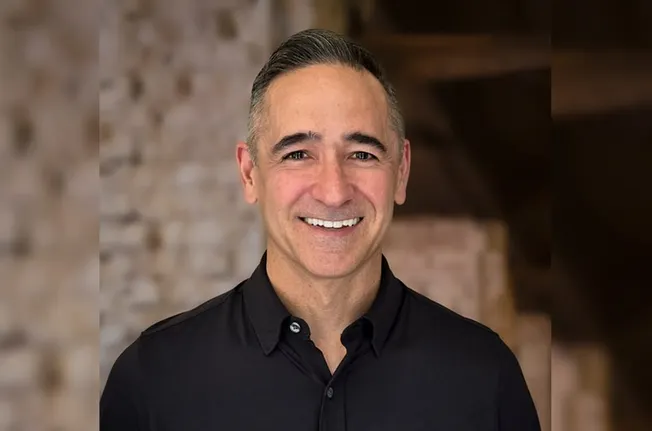
By Marc Caruso, CEO/Co-Founder of Angry Mob Music
The music publishing industry will tell you it's in the business of managing copyrights. It isn't. It's in the business of managing trust.
Songwriters hand over pieces of themselves to publishers. Some of those hand-offs are apparent from the start, while others reveal themselves through their songs over time, often from emotional places that remain sensitive or unresolved. When a songwriter places those songs with a publisher, their trust carries the emotional weight of their work. It's a passenger on their life's journey.
Music publishing is often described in terms of assets, catalog, scale, market share, and revenue streams. While these terms explain the mechanics of our industry, they also create a distance, and that distance affects how decisions get made.
Our business happens between people, over conversations that take time. It happens in writing rooms, in offices, at coffee shops, and on FaceTime. Out of those conversations, we build trust and relationships on a foundation of mutual understanding and respect. Because we are dealing with an art form, humans are at the center of everything we do.
If you've spent meaningful time with songwriters, you begin to notice their sensitivity fairly quickly. Songs are often born out of fear, doubt, regret, love, loss, and hope, and you can feel it in just about every writing session. When writers embrace their vulnerabilities and share their most intimate life experiences with the world through music, songs become the conduit by which the world sees and understands them.
From my experience running an indie music publisher, I believe the hardest part of this job is where belief meets reality. Belief in a writer's creativity sits directly alongside our industry's response to their music, and carrying both at once requires care and honesty, especially when things don't go as planned.
These moments reveal themselves in uncomfortable situations: in unprepared conversations, in calls that can’t be rushed, when career trajectories feel like they're plateauing, when expectations and outcomes fall out of alignment. I think of a writer I've worked with for years, someone with undeniable talent, sitting across from me when the momentum has stalled and there are no clear answers.
The question isn't just what do you say, it’s:
- How do you stay honest without eroding their confidence?
- How do you protect that trust when reality is disappointing?
- And how do you help someone keep going when certainty feels out of reach?
Those questions led me to a simple principle that guides every decision we make: Is this in the best interest of our songwriter, both personally and financially? If the answer to either is no, that decision can create unintended consequences.
At a boutique company like ours, there's no buffer between us and the writers we represent. We don't manage hundreds of relationships at arm's length. We know our writers. We know what they're going through. That close proximity is a responsibility.
When writers trust us with their work and their careers, that trust calls for us to be good stewards of their livelihoods. It asks us to think outwardly and expansively about careers that grow over years, not just transactions that happen at a moment in time. Writers deserve transparency and respect in the difficult moments more than any other.
This principle shouldn't stop at one company's door. It needs to guide how our entire industry evolves, because the consequences of getting it wrong are not abstract. They show up in policy, in licensing decisions, and in the daily reality of whether a songwriter can make a living.
Consider how we consume the world around us. We come home, flip a switch, and our lights come on. We turn a faucet and water flows. We press a button and music plays. The ease of that last action has quietly convinced the market that music belongs in the same category as the other two. It doesn't.
Electricity and water are infrastructure. Music is art and expression. It is made by human beings who have given their time, their energy, and often the sharing of their most painful and personal parts of their lives. The accessibility of music is a triumph of technology, but when that accessibility is used to justify paying less for it, we have confused convenience with value. And the people who pay the price for that confusion are songwriters.
The Spotify bundling dispute is a perfect example of what's at stake. When Spotify reconfigured its premium tier to bundle audiobooks with music, it triggered a lower royalty rate for songwriters under the Phono IV framework. The industry pushed back hard, and rightly so. But the fact that a platform could make that move at all tells you something about where songwriters sit in those decisions. The question that should precede every licensing and platform decision, does this make it easier or harder for a songwriter to make a living, is one the industry asks.
The problem is that not everyone at the table feels bound by the answer.
We can't continue to celebrate big, buzzy numbers about DSP payouts while ignoring what songwriters actually face every day. If you want to know whether the system is working, don't start with the headline. Start by looking at the livelihood of the entire songwriting community.
When the humans behind the music are deprioritized, their songs get treated like inventory, not the artistic and emotional vessels they're intended to be. The real consequence isn't just that trust erodes, it’s that writers stop writing freely. They pull back. They protect themselves. The creative risk-taking that makes great songs possible begins to disappear, and when that happens, we've failed at the most fundamental level.
Publishing grows from relationships that depend on patience, accountability, and a willingness to remain in difficult conversations. It depends on speaking up when the easier path is silence. But most of all, it depends on remembering that behind every copyright is a human being who has entrusted something deeply personal to you, hoping it would be handled with your utmost care.
If we can't prove we value the human in front of us, by being honest and treating them and their art with genuine respect, then why should they trust us?
That's our work.
That's our responsibility as publishers. And it's the responsibility our industry should never lose sight of. Start by asking, in every negotiation, every licensing decision, every policy conversation: Does this make it easier or harder for a songwriter to make a living?
If you can't answer that question, you're not ready to make the decision. Because when we keep the human being behind the song at the center of everything we do, we protect the very foundation our business is built on.
Marc Caruso is the CEO and Co-Founder of Los Angeles-based Angry Mob Music. With over 25 years of experience in music publishing and rights management as an entrepreneur, composer, producer, and Emmy-nominated music editor, he has guided Angry Mob’s growth from a boutique startup into a respected, full-service independent publisher with global reach and successful operations in music licensing, master rights management, creative development, and custom music production.