

By Matt Walton
Every week, independent artists ask the same question: How do I get people to hear my music?
Most of the advice they receive focuses on content creation and dialling up the promotions against ever-elusive algorithms. Post more on TikTok. Make more Reels. Run ads. Pitch more playlists. Feed the system.
But after spending three decades building brands in the tech space before returning to music, I've come to a different conclusion: Most independent artists don't have a content marketing problem, they have a strategy problem. How to stand out amidst the volume of online noise.
The daily marketing side is visible through social posts, streams and other online content. Strategy happens much earlier, long before the first single is released, and that's where I think too many independent artists are falling short.
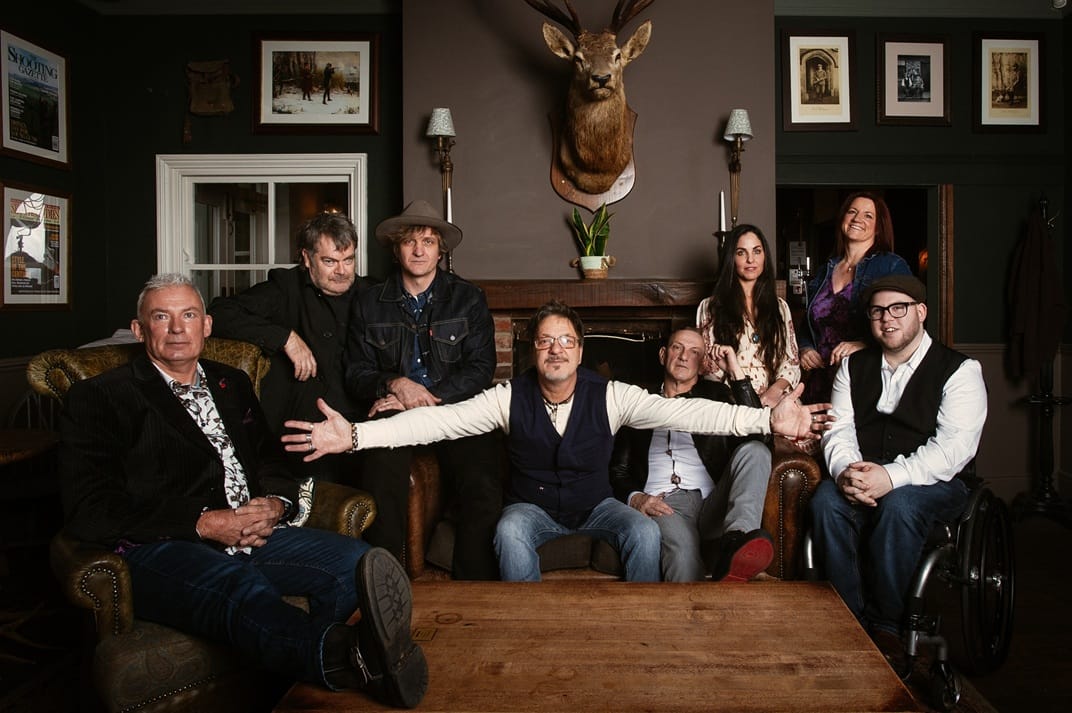
When I launched Good Vibes Rollercoaster in March, I wasn't trying to prove a marketing theory. I simply applied the same principles I'd used throughout my business career. The result surprised even me. In ten weeks, an entirely unknown independent band generated more than 665,000 YouTube views, almost 29,000 subscribers, over 1.5 million cross-platform views and hundreds of playlist additions, all without label backing.
+Read more: "Distributed Everywhere But Nowhere Is Home"
Those numbers aren't important because they're large for an unknown, self-funded band launched out of nowhere on a small budget. They're important because they demonstrate what can happen when marketing becomes the final stage of a much longer process rather than the starting point.
I've always believed success rests on four things: good purpose, good people, good product, and good promotion. Notice that promotion comes last.
Too often, artists obsess over social media tactics before they've honestly asked whether the songs are ready, whether their visual identity is consistent or whether they can clearly explain what they stand for in a sentence. No amount of clever marketing compensates for weak foundations.
The product has to be worth discovering.
The people matter just as much. Independence shouldn't mean isolation. We assembled a team of exceptional musicians, engineers, designers and creatives because every great brand is ultimately built by people who share a common purpose. Collaboration isn't a compromise of artistic vision — it's often what allows that vision to be realized.
Only then does promotion begin to make sense.
One lesson from the corporate world that transfers remarkably well to music is that launches don't start on release day. Our marketing plan began around six months before the first single appeared. Branding, photography, artwork, messaging, search optimisation, website content and release schedules were all developed before audiences knew the band existed. That's exactly how companies launch products, yet musicians often finish an album before asking how anyone will find it.
The irony is that audiences are remarkably good at recognizing authenticity, but authenticity isn't something you invent halfway through a campaign. It comes from understanding your purpose from the very beginning.
For us, that purpose was straightforward. We wanted to make optimistic rock n roll music that celebrated community rather than division and celebrated the great things in life. Once that was established, creative decisions became much easier. Songs, videos, artwork, interviews and social content all reinforced the same idea without feeling manufactured because they genuinely reflected who we were. And if the message is strong and consistent and it resonates, then the cost and professional quality of the content is less important. You can entirely work within budget.
So, purpose isn't a marketing slogan. It's a decision-making framework.
The other misconception I often hear is that data somehow diminishes creativity. I couldn't disagree more. Data never told us what songs to write. It told us whether the people who might enjoy those songs were actually finding them.
We watched patterns carefully across YouTube, Spotify, and Instagram. We looked at audience behaviour, search performance, playlist categories, viewing habits and engagement trends. Not because we wanted to chase algorithms, but because we wanted to understand where our audience naturally lived.
Artists shouldn't spend their lives trying to outsmart recommendation systems. They should spend their time understanding the people those systems are connecting them with.
"The future won't necessarily belong to the artists with the biggest budgets or the loudest social media presence. It will belong to those who understand that music and strategic marketing aren't opposing forces."
One unexpected discovery was just how international that audience became. While we naturally expected to build momentum in the UK, some of our strongest early support has come from Brazil, Mexico, Indonesia and Japan, where passionate communities continue to embrace uplifting British guitar music.
That's changing the way I think about artist development.
Instead of viewing overseas success as something that comes after domestic recognition, independent artists now have the opportunity to build internationally from day one. In some cases, momentum abroad may become the catalyst that creates attention back home.
+Read more: "60 Years of the SM58 🎤 A Lesson in Branding"
Another area I believe artists still underestimate is search.
Most musicians understand social media optimisation, but far fewer think about search engine optimization — or the emerging role of generative search optimization — as part of their release strategy. Increasingly, fans aren't just discovering music through streaming platforms. They're asking AI assistants, searching conversationally and consuming recommendations generated across entirely different ecosystems.
Being discoverable is no longer just about algorithms inside Spotify or YouTube. It's about ensuring your identity is understood wherever people go looking.
Perhaps the biggest lesson I've taken from this experience, though, is that community is a far more sustainable goal than virality. Virality is exciting, but it's fleeting. Community compounds. And community is something audiences are seeking in this increasingly digitized world.
Marketing can persuade somebody to press play once. Authenticity is what persuades them to come back, tell their friends and become advocates for your music.
Technology has given independent artists access to extraordinary tools. Recording, distribution, analytics and audience building are more accessible than they've ever been. What hasn't become commonplace among artists is strategic thinking – a key ingredient to label launches of even their smallest-budget projects.
That’s a major gap that has stood out to me.
The future won't necessarily belong to the artists with the biggest budgets or the loudest social media presence. It will belong to those who understand that music and strategic marketing aren't opposing forces. They're complementary disciplines, united by one simple objective: helping great songs find the people who'll genuinely love them.
Discover Good Vibes Rollercoaster on YouTube and Spotify, or visit their website to learn more.
Matt Walton is a global technology executive, business leader, mentor and musician whose career has been defined by resilience, innovation and a belief in the potential of others. Over the past three decades, he has built an international career leading digital transformation programs for some of the world's best-known organizations. Currently a Global Strategic Deals Executive at Oracle, he has advised companies including Marks & Spencer, Sainsbury's, BP, and Virgin.