

By Yali Harel
Most independent artists release their albums without a proper campaign, relying on little more than a few posts in the weeks before release. Meanwhile, major label campaigns often begin months before the release date and continue for months afterward.
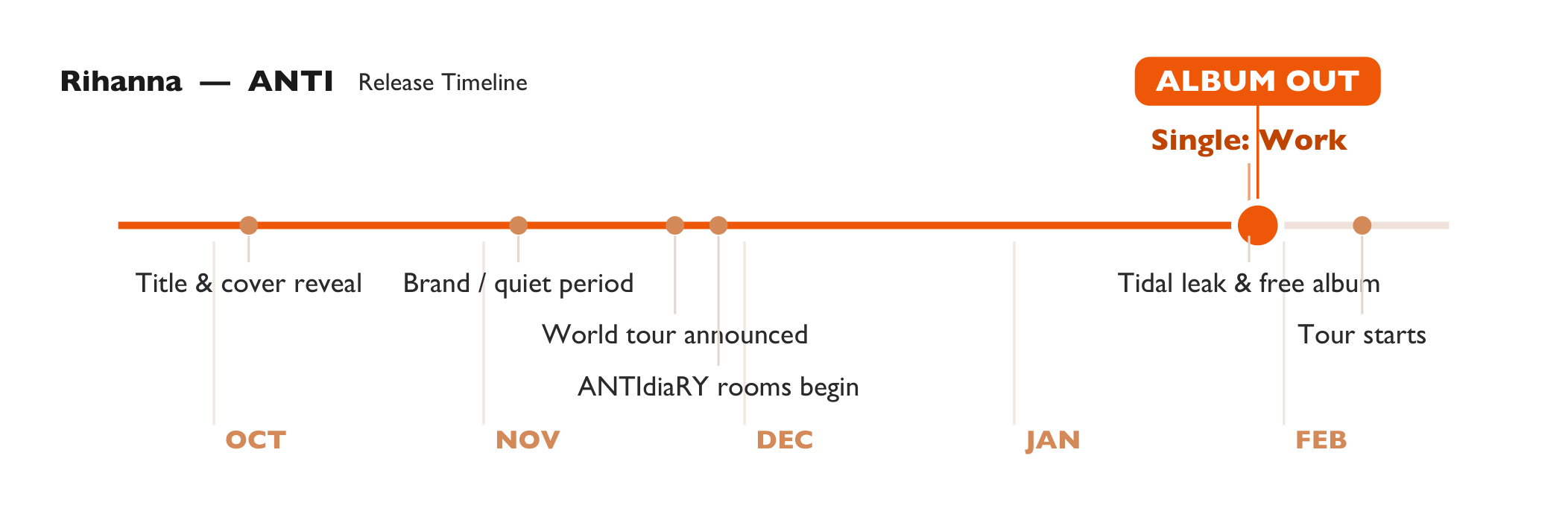
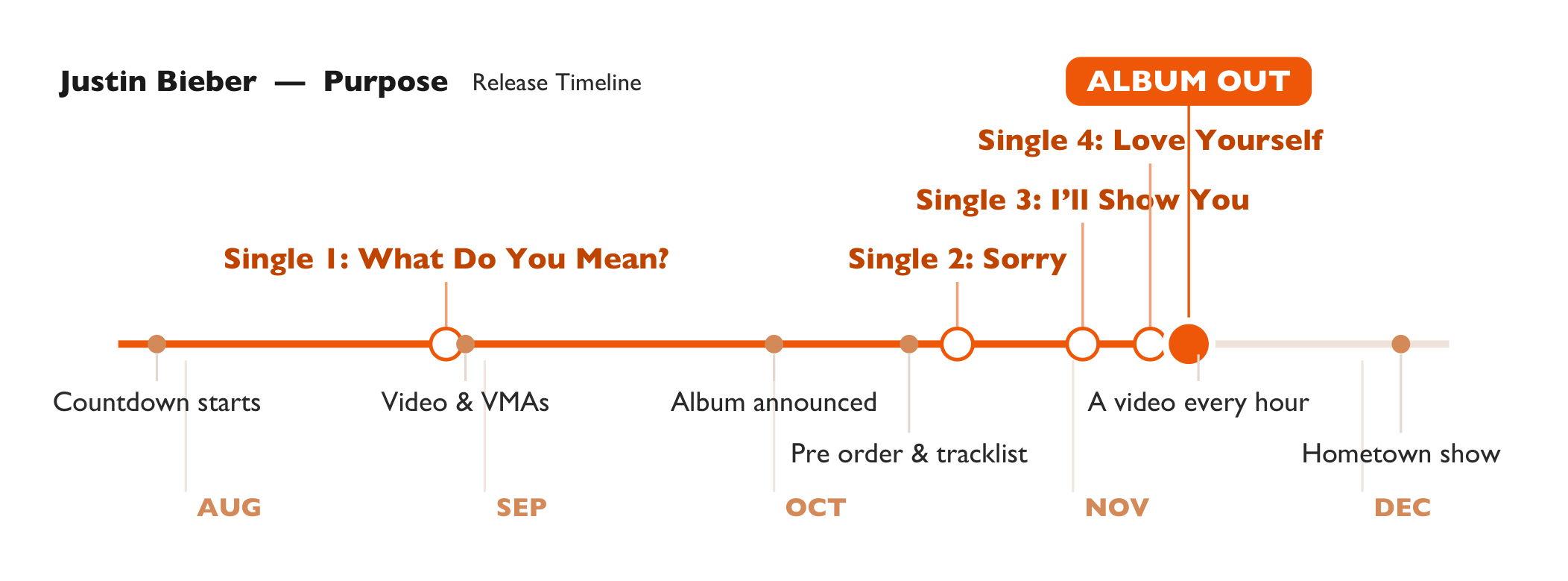
I put together this article as a summary of my interviews with campaign managers who have worked on releases by Justin Bieber and Rihanna, and I'd like to share what I've learned.
Before fans see an announcement from an artist, much of the work has already been done behind the scenes: placements, timing, content, press, playlist strategy, and what happens after release week. This article explores what a major label release campaign looks like and how independent artists can improve their own release strategies to maximize their chances of success.
Rule 1: A Campaign Starts Weeks Before Launch
Labels often organize their campaigns into phases:
- Setup and pre-launch
- Building momentum
- Impact week
- Post-launch momentum
This structure matters more than any individual Instagram post or playlist placement. Labels don't just start posting when a song comes out. They plan how to keep people interested before, during, and after the release. The practical lesson for artists and managers is this: if you begin planning just a few weeks before release, you're not giving yourself the best chance of success.
Social media and streaming platforms often use early engagement as one factor in determining whether content or music should be recommended to wider audiences. This is why it is important to encourage pre-saves and build an engaged fan base that can support your release from day one, helping generate the momentum needed to reach new listeners.
+Read more: "What Happens After the Streams Stop: How Independent Artists Should Measure a Campaign"
Rule 2: Not Every Channel Has the Same Purpose
Labels use different platforms to achieve different goals:
- Social content creates visibility and conversation.
- Press and media help build credibility.
- Playlist and DSP strategies support discovery and early consumption.
- Community and fan activation help turn interest into momentum and engagement.
The mistake many independent teams make is using every platform in the same way: posting everywhere in the hope of gaining as much exposure as possible.
A better approach is to give each channel a clear purpose and plan how it will be used at each stage of the release.
Rule 3: Timing Is a Crucial Part of a Release
A successful release plan is not just about what we say, but also about when we say it. That includes:
- When the first teaser goes out
- When the official announcement lands
- How content builds toward release week
- What gets saved for release day
- What continues after the first 72 hours
Independent artists often front-load everything in the week before a release. Labels sequence their announcements, revealing details over time so fans have space to engage, discuss, and build anticipation.
Rule 4: Impact Week Is Not Just Another Week of Posting
Impact week is where planning becomes visible. Content activity accelerates, messaging becomes clearer, and partnerships, media outreach, and fan engagement efforts are intensified. This approach works much better when weeks of anticipation and familiarity have already been established.
This is why impact week must be planned deliberately. Without preparation, release week can easily turn into another busy period of posting. A well-planned release week gives every activity a purpose. Instead of posting simply to stay active, each piece of content builds on what came before.
This also matters because release week is usually when the project receives the most attention. A clear plan helps the team capitalize on that attention rather than improvising, repeating the same messaging, or missing opportunities to build momentum.
+Read more: "How to Use Bandsintown Boost to Market Live Shows"
Rule 5: Campaigns Don't End on Release Day
This is where many independent releases lose momentum. After release, the strategy should still address several questions:
- What content is keeping the song visible?
- Which audience segments have yet to be reached?
- How can fans remain engaged?
Large-scale campaigns treat the post-release period as a distinct phase. They reserve media opportunities and content for later promotion and already have plans in place to create additional content after the release.
Key Takeaway
You do not need a major label budget to adopt a major label's campaign structure. You can still:
- Build a phased timeline instead of posting randomly.
- Give each channel a clear purpose.
- Sequence announcements instead of releasing everything at once.
- Organize content into distinct phases.
- Measure results each week, then evaluate and adjust.
Even a simple timeline can help you get more out of your next release.
Final Thoughts
A major label campaign involves much more than hoping a song goes viral. The work starts months earlier and continues well after release day. The teams behind artists like Justin Bieber and Rihanna carefully plan what promotional content to share, when to share it, and where to distribute it, both before and after the release date.
If you'd like to learn more about the music business, follow me on social media at @yalimusicbiz, where I share more insights and advice.
+Read more: "How to Avoid These 6 Release Mistakes"
Yali Harel has been involved in the music industry for over eight years, gaining experience across a range of sectors, including record labels, music publishing, touring and artist management. Throughout his career, Yali has worked across various music industry projects and initiatives, spoken at numerous music industry conferences, and continues to share his knowledge and industry insights through his YaliMusicBiz social media page.