

Some Backstreet Boys fans in Toronto are discovering that the seats they purchased may not offer the views they thought they were paying for. And while Live Nation has promised to make things right, the controversy raises a bigger question for the live music business:
When did seeing the stage become optional?
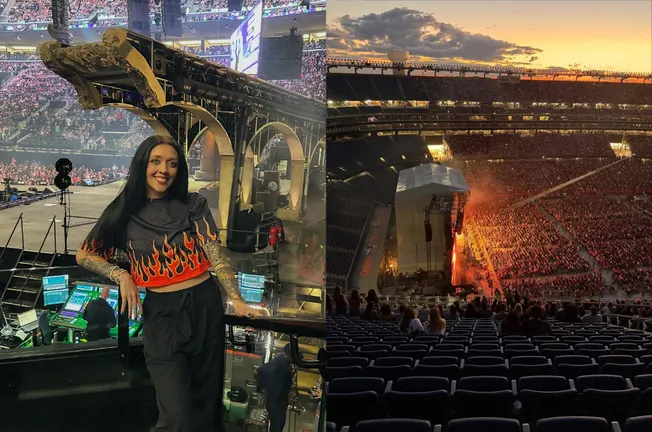
The problem emerged after presale tickets went on sale for the group's upcoming concerts at Rogers Centre in February and March 2027. Fans who had purchased seats without any obstructed-view warning subsequently noticed that updated seating maps identified some of those same sections as potentially having limited views.
As Billboard Canada reports, Live Nation says additional production details revealed potential sightline problems after the initial on-sales. The promoter has pledged to proactively relocate affected ticket holders to comparable full-view seats before the concerts.
But why did this happen? Apparently the stage setup had not yet been finalized from Backstreet Boys' production company.
Concerts increasingly go on sale before every detail of a production has been confirmed. Stages, video walls, lighting towers, sound systems, camera platforms and other equipment can all affect the experience from individual seats. A ticket that looks perfectly fine on a seating chart might offer a considerably different view once the production is installed.
So what exactly does a fan buy when they buy a ticket? A guaranteed view of the performance, or a particular location inside a building where the performance will happen? And if a production decision changes the value of that ticket after it's sold, who owns the sightline risk?
Taylor Swift and the $16.50 ticket nobody could see from
Ahead of Taylor Swift's Eras Tour's final three performances in Vancouver in December 2024, a batch of tickets went on sale for just C$16.50. They were explicitly designated as "no view" seats, positioned behind the stage where fans could see nearby video screens but not Swift herself.
On one level, the idea was rather generous. With demand for Eras Tour tickets reaching extraordinary levels, the inexpensive seats gave additional fans the opportunity to experience a historic concert without spending hundreds of dollars. Except that's not quite how things played out.
According to Billboard Canada, many of those tickets quickly appeared on resale platforms for hundreds or even thousands of dollars. Suddenly, an affordable opportunity to hear Taylor Swift perform had become an extraordinarily expensive opportunity to not see Taylor Swift perform.
Let that sink in: The original $16.50 tickets were clearly labeled, and their low price reflected their limitations. Swift's team wasn't charging thousands for seats behind the stage. Resellers were. But the episode raises a provocative question:
If someone is willing to pay $1,000 for a concert ticket without a view of the performer, does that automatically make it a fair transaction?
Concerts are clearly about more than watching somebody onstage. They're communal experiences. Fans want to sing with thousands of other people, feel the sound, participate in a cultural moment and share the experience with friends. Someone who knowingly purchases a listening-only ticket might have a wonderful evening.
In fact, there's a strong argument for making these tickets available. An affordable, clearly labeled seat behind the stage could give a fan access to a concert they otherwise couldn't attend; but there's also a difference between offering audiences an alternative way into a show and treating every available square foot of a venue as an opportunity for additional revenue.
People on TikTok quickly pointed out, however, that in effect the obstructions and bad angles were pretty well mitigated by giant, well-placed screens, and Taylor's propensity for spending a lot of time on her cat walk.
+Read more: "Backstage Pass: How Luke Combs' Massive 360° Stage Was Built for the Road"
What happens when fans don't know what they're buying?
It didn't end in 2024. In March 2026, Consumer Protection BC announced an agreement with StubHub Canada following complaints about resale tickets for Swift's Vancouver concerts. The agreement made certain fans eligible for refunds if they had purchased tickets in affected sections without being informed that their views would be obstructed or limited.
It also required StubHub to improve its disclosures concerning ticket prices, fees, conditions, and refund protections. That regulatory action still doesn't solve all the problems however, it's not necessarily about selling an obstructed-view ticket, it's about clearly communicating what a buyer will be receiving.
Even Ticketmaster recognizes multiple kinds of limited-view experiences, including "Obstructed View," "No Stage View," "Video View" and "Listening Only."
A seat marked "partial view" could mean a speaker blocks a small corner of the stage, or a massive video panel casting an LED light shadow all over you. Transparency helps people understand more what they're getting themselves into, and when the cost of a concert ticket is the cost of an airline flight ticket, that feels important. But it doesn't always communicate fairness.
Who "owns" the sightline risk?
This brings us back to the Backstreet Boys and an uncomfortable reality of modern concert production.
Touring is complicated. Stadium shows must adapt to different buildings, production specifications change, and promoters need to put tickets on sale well before every technical question has been resolved. Waiting until a stage is fully designed and every sightline is verified might be commercially impractical.
Sure, that's a legitimate argument, and one worth recognizing; but fans shouldn't have to bear the consequences when those production decisions change.
Consider a ticket buyer who spends $250 on a seat offering an unobstructed view. Months later, the promoter discovers that a lighting tower or video wall will partially block the stage from that location. The fan didn't make that production decision. The fan didn't design the stage or choose the equipment. Yet the product they purchased has materially changed.
What constitutes a comparable replacement seat anyway? Is a full-view seat farther from the stage comparable to one originally purchased much closer? What if a group of friends can no longer sit together? Should customers also have the option of a refund or a price adjustment?
And more broadly, should there be a standard policy across the industry for what happens when the promised view of a concert changes after purchase?
+Read more: "Checking In on America’s Fastest Growing Indie Venues"
What does a concert ticket actually promise?
The Backstreet Boys controversy may ultimately end with fans receiving better seats and enjoying the concerts they expected. If Live Nation delivers on its promise, that would be a welcome outcome.
But as ticket prices climb and productions grow more elaborate, the distance between buying admission to a concert and buying a particular experience is becoming increasingly difficult to ignore.

There's nothing inherently wrong with purchasing a ticket just to hear the music. Fans should be free to decide that the atmosphere, the sound and the shared experience are worth the price, even without a view of the stage.
But that decision should belong to the fan, not be made for them by an updated seating chart or an undisclosed production change. And certainly not by a secondary ticket seller.
When a ticket is sold before the final production is known, perhaps the risk of what happens next should remain with the people producing the show. The responsibility should fit the price, so to speak.
Seeing the stage doesn't have to be mandatory. But knowing whether you'll be able to see it should be.