

By Bruce Weinstein, Ph.D. of The Ethics Guy
Pop quiz! Which of the following are places where musicians can perform and be paid?
A) Busking
B) Clubs
C) Concerts and festivals
D) Weddings, private parties, and bar mitzvahs
E) All of the above
The correct answer is E. But are there any other places for musicians to share their gifts with the world and to be paid well too? Yes, there are, but the answer may not be obvious:
F) Conferences.
Hotels across the country host meetings every day. During the day, attendees go to educational sessions that include keynote speeches and breakout sessions. The people who plan the meetings also know that attendees also want to be entertained in the evening. That’s where your band comes in.
I know the conference world from the daytime side. For more than 25 years, I have traveled across the United States and around the world to give paid presentations at association and business meetings, most of which were held in hotels. The good news is that the people a professional speaker approaches to be hired are often the same people your band can approach to provide entertainment. The difference is simple: I speak during the day. You play at night.
Why should you care about this? First, conference work can offer immediate benefits. It may pay more than many familiar performance venues. The client often pays for transportation, hotel, and meals too. There are long-term benefits as well. A successful engagement can lead to repeat business, referrals, and opportunities with other organizations whose members saw you perform.
I will now explain:
- Who books the talent at conferences
- How to get these people to book your band
- When to get paid (spoiler alert: you will get paid in full before you set foot on stage)
Two Groups Meet in Hotels
Two groups meet in hotels and conference venues: nonprofit associations and businesses.
Nonprofit associations include professional societies and trade organizations at the national, state, and local levels. There is an association for nearly every profession and interest: accountants, physicians, mechanical contractors, human-resources professionals, and thousands of others. They have annual meetings, regional conferences, leadership retreats, and educational programs. They need speakers during the day, and many need entertainment at night.
Businesses also meet in hotels. Small, medium, and large companies hold sales meetings, training and professional development programs, and customer or client conferences. Some have larger entertainment budgets than non-profits do, and thus this can be a more challenging market to enter for bands that aren’t household names. A colleague of mine worked for a company that hired the Rolling Stones as the entertainment. That company wasn’t going to give a platform to a band few had heard of, no matter how good that unknown band might have been.
Therefore, for many bands nonprofit associations are the practical place to begin. Their budgets vary, of course, but they often need high-quality entertainment that is compelling, professional, and affordable, and not being a household name is not a disqualifier.
If you’re reluctant about pitching a nonprofit association, remember this: these groups are actively searching for good entertainment that will delight the people who attend their meetings. They need you, they want you, and the only thing preventing you from getting booked is that they don’t know about you. Yet.

+Read more: "How to Nail Your Next Supporting Act Set"
Think like a Meeting Planner
A meeting planner is responsible for creating an event that serves the interests of a professional organization. Attendees may spend a considerable amount of time and money attending a conference, and they understandably want to ensure a high return on their investment. Meeting planners are keen to avoid mistakes that will disappoint attendees and reflect poorly on the sponsoring organization and the meeting planners themselves.
Meeting planners want a band that will entertain their attendees and help make the event a success.
Before you contact an organization, do some research. Find out when and where it meets. Look at its conference theme, who its attendees are, and the musical acts it has previously hired. Many organizations post meeting programs, photos, and video clips on their websites and through social media. This information will help you tailor your message and demonstrate that you understand the organization. Never send a generic pitch to anyone. Period.
Suppose, for example, that you want to pitch your band, the Blues Chiropractors, to the National Association of Happy People. You do your due diligence and discover that for the past four years the NAHP’S annual conventions have featured pop, country, polka, and rock acts, but never a blues band. This knowledge gives you a way to position your group: a refreshing change of pace for the group’s next meeting.
Research does not guarantee a booking, but it instantly separates you from musicians who make no effort to understand the audience.
Make Your Pitch About the Meeting Planner, Not You
Let’s compare two possible pitches you could send to the Director of Meetings for the National Association of Happy People. Here’s the first pitch:
My band, The Blues Chiropractors, would be perfect for one of your meetings. We cure whatever ails you. My band is the number-one attraction in our town, and everyone who hears us immediately falls in love with our music. I would like to arrange a time at your convenience to tell you more about us.
Maybe every word is true, but the pitch is dominated by the least appealing words in the English language from the perspective of the reader: “my,” “we,” and “us.” And the call to action is completely self-serving. This pitch will not land.
Here’s a second possible pitch:
For your upcoming meeting in Boca Raton, why not book a hot band that will get members dancing the moment we start playing? May I send you a short demo reel?
The second version is shorter and more relevant. It is about the meeting, the members, and the result the planner wants. It also ends with a simple question. A question is a much more engaging way to communicate with a reader, isn’t it?
Your first outreach should seek to start a conversation, not close a deal. Show the meeting planner that you have done your homework. Make a clear connection between your band and the audience. Ask permission to send a short demo reel.
Your Demo Reel Will Make or Break Your Marketing Effort
A demo reel, sometimes called a sizzle reel or showreel, should do more than show that your group plays well. It should also demonstrate what your band will do for the meeting planner’s audience.
Of course, your video should include good footage of your ensemble: wide shots, medium shots, and close-ups that look and sound professional. When someone takes a solo, let viewers see the soloist. Meeting planners may not notice outstanding video and audio, but they will absolutely notice if either or both components are sorely lacking.
But a top-shelf demo reel shows not only the band. It also demonstrates that the audience is having a terrific time.
Show people dancing, smiling, singing along, laughing, clapping, and visibly enjoying themselves. Cut back and forth between the band and an engaged crowd. What subliminal message does crosscutting tell the meeting planner? It says, “We will engage your audience the way we’re engaging this one.”
Before you hire a videographer, be clear about what you need. Give them a shot list that includes all the shots I described above. If the videographer scoffs and responds, “I don’t need this list! I shoot bands all the time,” you say, “Thank you for your time.” Then you find a videographer who will welcome your shot list. A good videographer gives the client what the client wants and needs.
It bears repeating: your demo reel should answer the meeting planner’s unspoken question: “Will this band make my audience happy and make me look good for booking them?”

+Read more: "How to Choose the Right Indie Venue for Your Live Concert"
Persistence Pays Off
Direct outreach is a numbers game. Don’t expect a booking after pitching a dozen or even 300 non-profit associations. Meeting planners are inundated with pitches every day. Even if you write a great one, you probably won’t get an explicit rejection. You will most likely hear nothing.
But if you keep pitching, eventually you will get to “yes.”
Early in my speaking career, I sent pitches to every state pharmacy association in the country. Each went unanswered until the executive director of what was then called the Alaska Pharmaceutical Association contacted me. “Our keynote speaker has fallen ill,” she wrote.” Can you come to Anchorage in two days?” I could, and I did. And, is standard practice, the organization paid for my plane fare, hotel accommodations, and meals, on top of my fee.
Years later, I subscribed to an association directory and used it to identify state CPA societies. I spent a considerable amount of time researching each meeting: its theme, who had presented at earlier meetings, and what they were looking for. Again, most of the people I pitched did not respond. One who did has become my largest client.
Persistence pays off.
You Will Pay with Your Time or Your Money — Or Both
You can locate prospects through online research, or you can use a directory or database you pay for that consolidates association contacts and meeting information. In one scenario you invest your money, but with both you invest your time. A lot of it.
You should expect many nonresponses. Some prospects will already have booked their entertainment. Some will say no. Many will simply not reply. This is what investing in the business side of your musical career requires.
Note that a meeting planner might be interested in you for a future meeting. They may save your email and reach out in months or even years. It has happened to me, and it can happen to you too.
A Word of Advice: Get Paid Upfront
When you book a conference engagement directly, get paid upfront. Ignore this rule at your peril.
Years ago, I was hired to speak at a prestigious private school. Our signed contract clearly stated that I would be paid on the day of the program. When I checked in with them before the engagement, the client told me that the payment would be there. It was not. I delivered the presentation for the audience, but the organization did not pay me. It took two years and a trip to small-claims court to collect.
That experience changed my approach to payment. Since then, I require payment in full before I step onstage. Only once has a meeting planner of a non-profit organization told me, “We don’t pay presenters upfront.”
I responded, “Then you have to get another speaker.”
Long pause. I thought she’d hung up on me. Then: “Well, maybe we can make an exception.” Ask for what you want and deserve!
A smart way to ensure you get paid upfront is to give the client a choice. In my negotiations with a group that wants to book me, I tell the meeting planner, “You can pay half of my fee within two weeks of signing the contract and the balance two weeks before the engagement, or you can pay the full fee within two weeks and take a 10% discount.” Some organizations are required to take discounts that are offered to them, and some just want to exercise that option.
Use a written agreement to state your fee, the payment dates, cancellation terms, travel responsibilities, technical requirements, and any other expectations you have. Use an e-signature platform like DocuSign to make it simple for clients to execute the contract. (There’s a free version). Do not assume a warm conversation or a prestigious organization eliminates the need for clear terms.
Professional payment practices protect you and your band, reduce uncertainty for the client, and allow you to arrive at the gig focused on the performance.
Do have an attorney draft or review your contract before you send it. Mine has evolved over twenty-five years. It is now simple, jargon-free, and effective.

+Read more: "Backstage Pass: Sebastian Vidal of BookedKit Shares Booking Advice & Insights"
Consider Third-Party Representation
Direct marketing is not the only route to conference gigs. Management companies, talent agencies, and speakers bureaus serve as intermediaries between talent and clients.
A speakers bureau, for example, will market you, negotiate the agreement, handle logistics, and collect the payment. In exchange, it takes a commission. That commission can be substantial, but the bureau may also open doors to clients, especially businesses, that are difficult to reach on your own.
I’ve spoken to non-profit groups through my own marketing efforts as well as that of speakers bureaus, but all of the businesses I’ve spoken to have come through the bureaus that represent me.
To be attractive to a bureau, you need strong marketing materials: a compelling demo reel, high-resolution photographs, a concise biography, ecstatic and honest testimonials, and a clear explanation of the audiences and events you serve. A client list (the places where you’ve already played) helps to make this clear. The bureau must be able to envision how it will sell you.
The term of art you should know about and practice rigorously is “bureau-friendly.” Everything you send a bureau must have only their contact information on it and nothing of your own. A bureau understandably wants to ensure that their clients use the bureau for booking you.
You do not have to choose between direct outreach and representation. Pursue both.
Make it Happen!
Conferences need entertainment. The people who organize them need professional acts that understand audiences, make events more memorable, and reduce the planner’s risk.
The best part is that this market is already there. Hotels are hosting meetings today. Somewhere, a meeting planner is looking for your band. So what are you waiting for? Start pitching now!
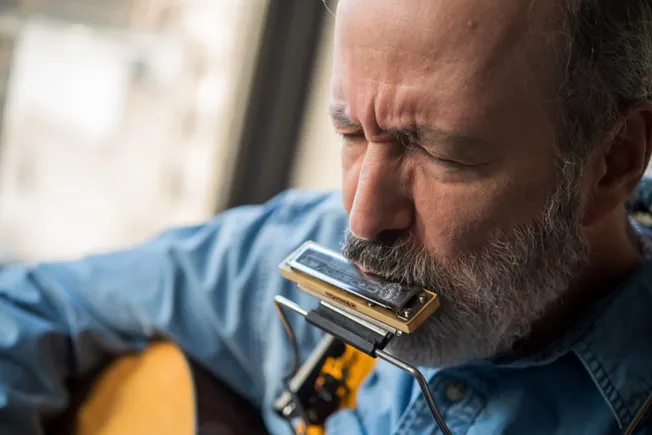
Forbes contributor Bruce Weinstein, Ph.D., is a professional speaker, author, and harmonica player who has spent more than 25 years presenting at conferences across the United States and internationally. He helps musicians pursue the conference-entertainment market and thereby share their musical gifts with a wider audience and be paid well too. Contact Bruce for a presentation of “How to Get the Well-Paying Gig” as a keynote, workshop, or virtual session.