



By Guillermo Pino Cruz of Not Another Record Label
For decades, the independent music industry has relied on the “DIY” (Do-It-Yourself) mindset as a core philosophy.
From the early punk rock scene and the grassroots upbringing of underground hip-hop, to jazz, metal, indie and jamband subcultures, this incredible, community-driven approach has been the cradle of thousands of artists and record labels to survive in an industry dominated by bigger players, while focusing on upholding artistic integrity.
I too am one of those record label founders. After running Escafismo Records, a label I founded in Argentina, relocated to Spain and proudly distributed music across more than 39 countries, I saw firsthand how being "DIY" could only get me so far. At some point, things started to crumble around a lack of infrastructure that it turns out, wasn't so hard to achieve.
The problem itself stems from our inherent desire to do everything ourselves as if operating this way somehow adds more value to our artistic product. Picture this typical scenario: label owners surrounded by stacks of vinyl records (I once had thousands in my tiny apartment in Barcelona), mailers, and packing tape, spending nights and weekends fulfilling orders.
I’m not going to lie, it was romantic, it was authentic, and it was real. It made me feel like I belonged to something bigger than myself, and for a long time, it worked.
But there was a point in life when the romanticism faded, and I realized that the independent music industry was facing a severe structural crisis. From my perspective, this crisis has been intensified by the arrival and eventual monopoly of major streaming platforms like Spotify and Apple Music. These platforms have completely rewritten the rules of music consumption, leaving small and mid-sized labels struggling to survive.
The problem is not a lack of great music or passionate fans. The problem is that independent labels are trying to fight a modern, hyper-competitive digital war using outdated manual weapons. To secure, protect, and preserve this music environment, independent labels must abandon this artisanal mindset and professionalize their infrastructure.

+Read more: "What Indie Artists Need to Understand About Music Publishing Royalties"
To survive in the modern market, independent labels must adopt the same advanced architecture used by major labels. This does not mean selling out or losing cultural integrity; rather, it means building robust systems for e-commerce, third-party logistics (3PL) to automate order fulfillment, digital distribution, and rights administration to secure uncollected royalties.
Let’s start with the most typical mistake we often commit at the moment of managing the physical supply chain. Most independent label owners still manage inventory manually, which eventually causes shipping delays, packaging errors, and damaged records. A single corner ding or a seam split on a limited-edition vinyl record usually triggers a different chain of events while we are trying to resolve the issue, and massive amounts of time are wasted. In certain cases, the label’s reputation can be affected.
Let’s be honest, we’re human, and sometimes miscommunications happen.
It took me a few years to realize that independent record labels can overcome these situations by simply transitioning to a specialized 3PL partner that basically stores and sends out orders for you. By outsourcing fulfillment to experts, an independent label is able to automate the whole physical supply chain. This is reflected in better shipping prices for your fans, reduced delivery times and minimize risks of media damage during transit.
More importantly, as a label owner you will have more time to scale operations rather than spending time packing orders in your apartment.
Another critical point that is commonly overlooked among independent labels is a minimal or complete inadequate knowledge of rights and royalty collection. While this requires technical knowledge and sometimes is too complex for a spreadsheet, diving into this world is no longer optional. The numbers speak for themselves: millions of dollars in digital royalties go completely uncollected by independent artists every year.
In its official data tracking, The MLC has identified millions of dollars in unmatched digital audio mechanical royalties due to creators. At the same time, leading music publisher Kobalt estimates that over 1 billion in global music publishing royalties go uncollected annually. After learning these facts, independent labels must prioritize proper rights administration immediately.
While major labels use sophisticated software to track every stream, and public performance globally, mainly because they have a larger catalog that justify that investment, it does not mean that independent labels don’t have access to collect royalties properly. They have to implement rights administration tools and register with collectives like ASCAP (American Society of Composers, Authors and Publishers) and The Mechanical Licensing Collective (The MLC).
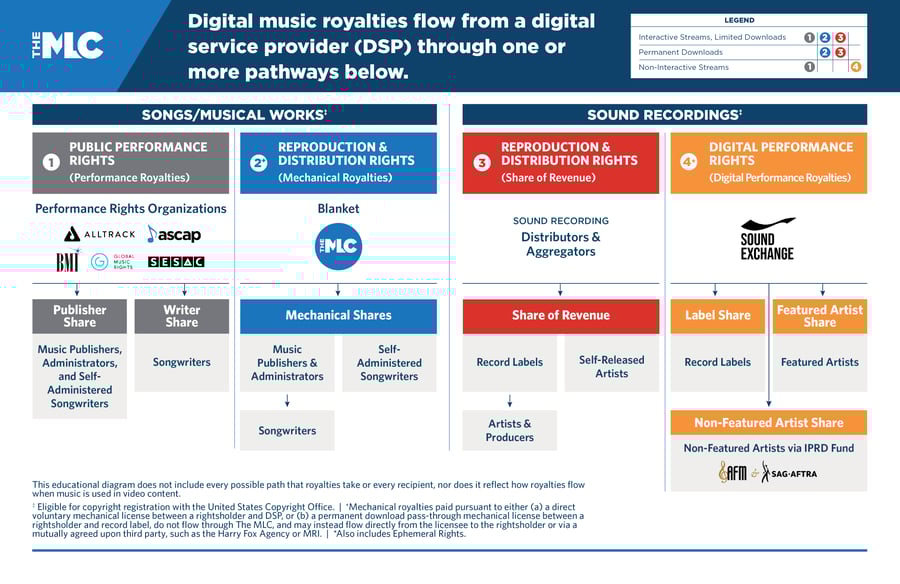
This implementation unlocks a different revenue stream that operates independently of physical media sales securing passive income for both artists and labels.
Skeptics within the independent music community often argue that introducing these “corporate strategies” of logistics and digital administrative optimization can cause a loss of authenticity and counter-cultural identity. They fear that professionalization equals sterilization. However, this is something with which I completely disagree.
This misconception is rooted in the belief that adopting fully professional infrastructure can compromise how their community perceives them. But the truth is that operational logistics and cultural identity are two very different things. Implementing these structures won’t dictate what kind of music a label signs or how the label interacts with its community.
In my experience, by eliminating the exhausting labor of packing orders and chaotic bookkeeping, label owners actually get more time and mental energy to focus on what matters most: discovering incredible artists, curating high-quality releases, and building genuine relationships with fans. Professional architecture doesn't destroy culture, it finances and protects it.
If you run a label, remember that out there, a band is waiting for you to give them a voice and bring them to the right ears at the right time. And as a label owner it is your duty to build systems as powerful as the music itself, ensuring the independent music industry moves into the future by building efficiency for the next generations of artists and fans.
+Read more: "Independence Isn’t Dead, It’s Just Evolving"