

The word “festival” can describe some very different live music experiences. And a lot of that depends on how and where the events take place in designated areas.
From distributed events across an entire city's indoor and outdoor venues to building a new city-style site in the middle of nowhere on a farm or rural ground, live music fans can get the chance to see their favorite bands and artists perform on a variety of different stages.
Let's take a closer look at what those distinctions actually entail.
1. The Destination Festival

The destination festival takes a large piece of land and temporarily transforms it into an entire entertainment ecosystem. Glastonbury occupies Worthy Farm and surrounding land, while Coachella transforms the Empire Polo Club in Indio, California. These sites become self-contained environments with stages, food, sanitation, security, art installations, backstage compounds, transportation systems and, in many cases, camping.
The defining feature is immersion. Attendees do not simply visit a venue for several concerts. They enter a temporary world, often remaining inside it for several days. The land itself becomes part of the festival’s mythology: Worthy Farm is inseparable from Glastonbury, just as the polo fields and desert landscape are inseparable from Coachella.
That scale also creates enormous logistical demands. Organizers must build much of the infrastructure that an established venue already possesses, then remove it when the festival ends. Glastonbury’s official description of its festival site includes stages, campsites, production facilities, parking, backstage areas and staff compounds — essentially everything required to operate a small city. The festival is taking a fallow year in 2026, read more about that here.
2. The Urban Festival Compound

The urban festival compound follows the familiar multi-stage format but places it within a city. Osheaga, which took place July 31 through August 2, built its 2026 festival site inside Montreal’s Parc Jean-Drapeau. Audiences moved between several outdoor stages while remaining within one controlled festival environment.
Pitchfork Music Festival followed a similar model during its long run in Chicago’s Union Park. Although Pitchfork announced that the Chicago edition would not return in 2025 after 19 years, its format remains a useful example: one park, multiple stages and a single festival grounds located inside a major city.
This model combines some of the immersion of a destination festival with the existing infrastructure of an urban area. Attendees can use public transit, stay in hotels and visit nearby restaurants rather than relying entirely on festival-built services.
Its central tension is the use of public space. A park that normally belongs to residents is temporarily enclosed, ticketed and transformed into a commercial event site. Organizers must therefore consider restoration, noise, neighbourhood access and the length of time that setup and teardown keep sections of the park unavailable.
+Read more: "How to Build a Greener Concert Industry"
3. The Unconventional Single-Site Festival
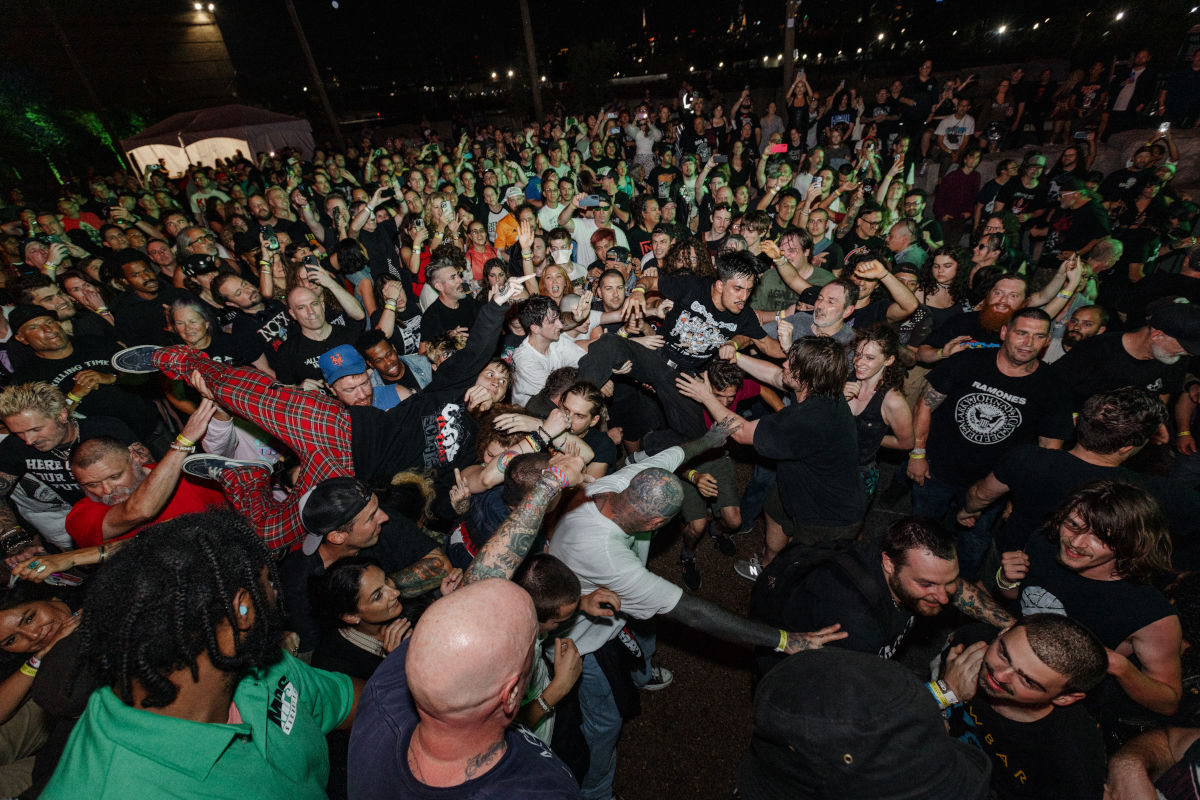
Some festivals still want one controlled site but are becoming more imaginative about what that site can be. CBGB Festival will return September 26 with Morrissey, Patti Smith, Interpol, the Sex Pistols featuring Frank Carter, Bikini Kill, Mannequin Pussy and more. Instead of occupying a conventional park or field, the event will take place at Under the K Bridge Park in Brooklyn’s Greenpoint neighbourhood.
Operationally, it remains a single-site festival: audiences arrive at one entrance and spend the event inside one contained area. What distinguishes it is the willingness to treat overlooked infrastructure as festival grounds.
Parking lots, waterfronts, industrial properties and spaces beneath highways can offer alternatives when conventional festival sites are unavailable or prohibitively expensive. They can also give an event a visual identity that a generic field cannot. The challenge is adapting those spaces for sound, accessibility, crowd movement and comfort.
4. The Distributed City Festival
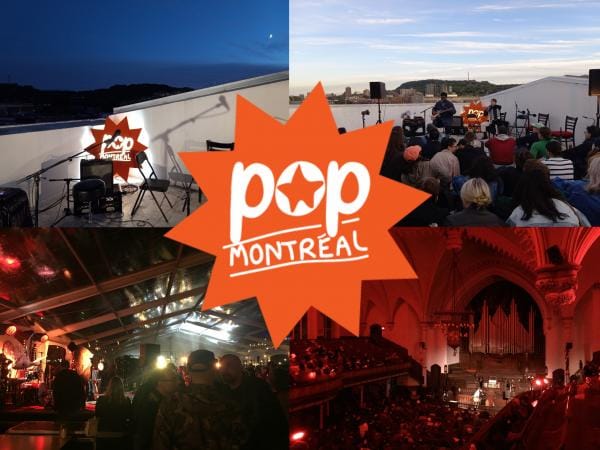
The distributed city festival does not construct one central site. It connects existing venues and public spaces through a shared program. Pitchfork Music Festival London will present its November 2–8 edition across rooms including the Roundhouse, ICA, KOKO, MOTH Club, Café OTO, EartH, and Village Underground. Instead of building stages, the festival uses venues that already have sound systems, bars, bathrooms, staff and distinct cultural identities.
And POP Montréal takes a similar approach. Its September 23–27 program moves through venues including Casa del Popolo, La Sala Rossa, Bar Le Ritz PDB, Théâtre Rialto and Le Ministère. The festival becomes a route through Montreal’s existing independent music ecosystem rather than a world constructed apart from it.
Belfast's Fleadh Cheoil na hÉireann stretched the model even further this past weekend. The eight-day celebration includes more than 180 competition categories alongside concerts, pub sessions and street performances. Belfast City Council expects more than 800,000 people to participate, making the city itself (not one venue) the gathering place.
Distributed festivals can reduce the need for temporary infrastructure while directing audiences toward local venues, restaurants and businesses. They can also create valuable opportunities for smaller artists by placing them in appropriately sized rooms instead of positioning every performance on a vast outdoor stage.
The tradeoff is fragmentation. Audiences must navigate travel times, overlapping schedules, separate capacities and potentially different ticketing systems. There is no single crowd experiencing the same environment together.
None of these four models is inherently better. Each creates a different relationship among the organizer, the artist, the audience and the surrounding community. A music festival, it turns out, is not defined simply by putting several artists on one poster. It is defined by how those artists, audiences, and spaces are brought together.
+Read more: "The Local Advantage: Could Festivals Win by Thinking Smaller?"