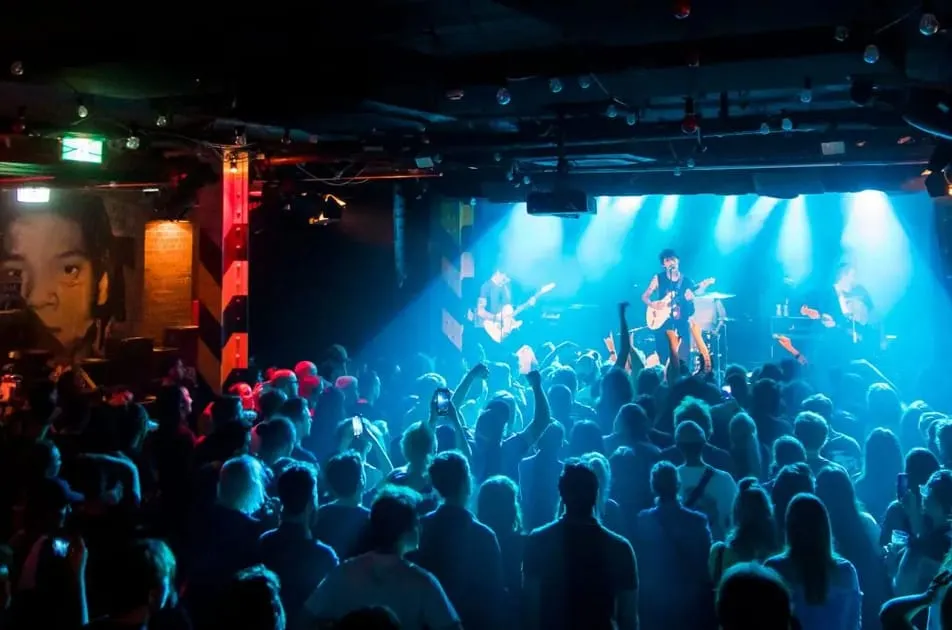


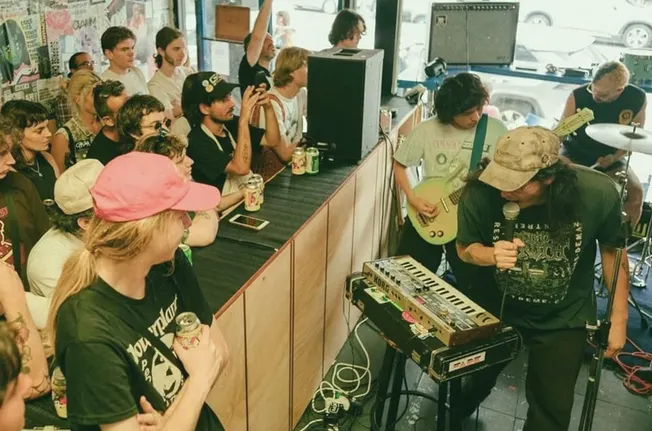
Live music needs somewhere in order to happen. There really can't exist any of the magic of a live performance without, um, a room.
I guess that room also needs some semblance of a stage, sound system, bathrooms, ventilation, and neighbors who will tolerate a bass drum after 10pm. But it also needs something that is becoming increasingly frought: a landlord willing to keep renting it to a music venue.
Right now, Australia's music scene is realizing that this isn't a given anymore.
On August 29, Sydney’s not-for-profit venue Lazy Thinking hosted its final show in Dulwich Hill. The organization had been operating on a month-to-month lease when its landlord informed the team that it would need to leave the property by the end of the year. Rather than spend four more months maintaining a space it was certain to lose, the venue closed early to concentrate on finding a new, hopefully more sustainable home.
As the venue put it, there was little sense in continuing to subsidize a building it already knew it would lose. That brutal realization also reflects the fact that...
Even If the Venue Succeeds, the Lease Can Still Fail.
Lazy Thinking wasn't just any old bar that occasionally put a band on in the corner, it had been developing a not-for-profit model supported partly through memberships, presenting non-commercial programming, and giving artists access to performance space. It was actively experimenting with how non-traditional venues can build community and turn a profit while doing it. But in the end, the building's owners still have the power to cut the cord.
As The Guardian reports, this is part of a much larger pattern.
Brisbane’s Bearded Lady closed after lease negotiations failed. Adelaide’s long-running The Jade will close when its lease is not renewed. Melbourne’s Gasometer ended operations after the building’s owners reportedly rejected offers from another operator to take over the business.
+Read more: "Tasmania Is Live Music's Most Confusing Frontier"
Other Australian venues have closed for different combinations of financial pressures, but the underlying vulnerability is remarkably consistent: venue operators invest years of labor into making a room culturally valuable while holding very little control over the property containing it.
They build the audience. They establish the reputation. They install the equipment. They manage the noise. They create the scene.
The landlord owns the appreciating asset.
But the timing of this trend couldn't be stranger. Only days earlier, the New South Wales government announced $3.8 million in Venue Upgrade Grants for 33 metropolitan and regional music rooms. This money will support genuinely useful improvements.
Cronulla’s Brass Monkey received $121,096 for its stage, speakers, backline, ventilation and soundproofing. The Lansdowne received $150,000 for solar panels and battery installation. Newcastle’s King Street Hotel received $500,000 for screens, lighting, and video equipment.
These are not frivolous investments. Many venues have spent the past several years using every available dollar simply to remain open. Better sound, accessibility, energy efficiency and ventilation can improve conditions for artists, workers and audiences while lowering long-term operating costs.
But regardless of grant financing, whoever controls the lease still controls the future of a cultural space.

+Read more: "Pro Guide: How to Maintain Your Venue's PA System Over Time"
How About If the Community Owns the Room?
This is not an abstract policy puzzle in Alice Springs. The Black Wreath has spent 15 years building a live venue, recording studio, rehearsal facility, record label and artist-development hub for Central Australia. Its operators say there is no comparable resource within 1,500 kilometers.
Now the property is being sold. Instead of waiting for another landlord, The Black Wreath is attempting to raise AU$1 million to purchase the building, place it in a trust and protect it for future generations. The campaign has already raised more than AU$690,000.
On September 12, more than 30 bands will perform simultaneously across Alice Springs, Sydney, Melbourne, Brisbane, Adelaide and Perth as part of Blacken Forever, a national effort to push the campaign across the finish line. It's an enormous amount of money for one independent community to raise, but there's hope.
The goal is not to transform promoters into property speculators. No venue manager really even wants that responsibility. The goal is to remove culturally important rooms from the most destructive and precarious aspects of real estate asset management.
Ownership does not necessarily need to belong to the venues either. In various models, buildings could be held by community land trusts, not-for-profits, or local governments acting as benevolent landlords. Longer cultural leases could protect music use. Governments could also help operators finance purchases rather than limiting support to equipment installed inside privately controlled properties.
Australia has become increasingly sophisticated about supporting what happens inside its music venues. It funds stages, soundproofing, lighting, and programming. It reforms noise rules and liquor licensing. And it recognizes venues as essential parts of the artist-development pipeline, but there are still mountains to climb.
Get all the latest Music Industry & Live Music News updated continuously from across the web under the Hypebot Industry News tab here.