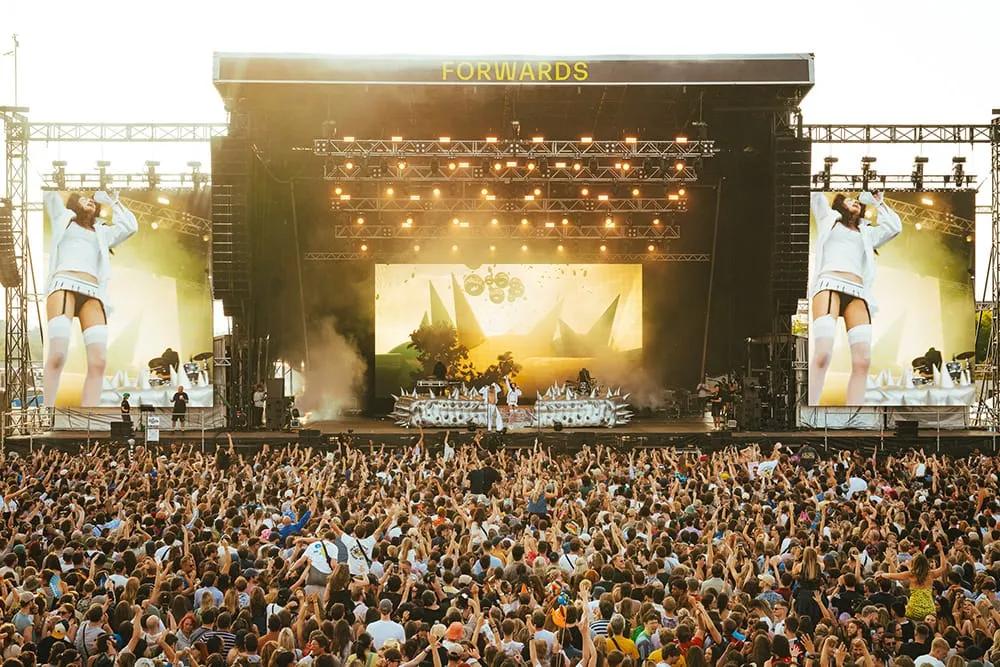


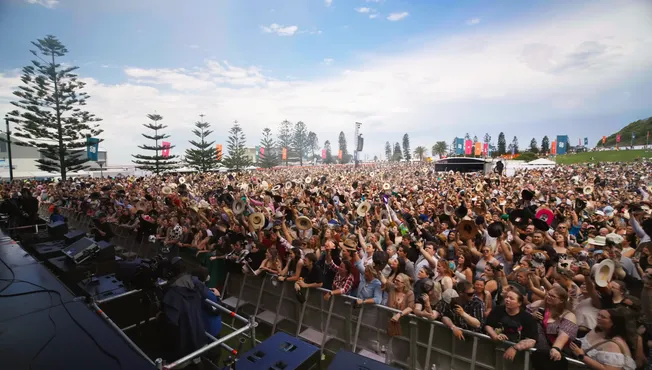
Australia’s festival business has rarely looked more precarious.
Byron Bay Bluesfest collapsed just three weeks before its 2026 edition, with its operating company entering liquidation. A subsequent report found that the company owed approximately $7 million to more than 900 creditors. The cancellation followed years of disruption for festivals including Splendour in the Grass and Groovin the Moo, with rising production, touring, insurance and logistics costs colliding with softer ticket sales.
But amid all that instability, one corner of Australia’s live music sector is making a surprising amount of noise...
Country music is booming.
According to research highlighted by Destination NSW, Australia’s country music industry generated an estimated $1.09 billion during the 2024–25 financial year, up 77% from 2019. Live performance revenue reached $560 million — an increase of 93% over the same period.
Country festivals, concerts and small venues are all participating in that growth. The research counted 137 dedicated country festivals attracting 684,000 attendees, while Live Nation reported a 4.5-fold year-over-year increase in the number of country shows it booked in Australia.
Those boots are not only stomping in regional towns, either. Country streams on Spotify Australia have risen 115% over three years, and 92% of the country streams recorded over the past two years came from listeners in metropolitan areas, according to ABC News.
Hence: country music has escaped the countryside.
A festival format with a clear identity
The momentum is now shaping Australia’s 2026 festival calendar.
Strummingbird will return as a three-city touring festival, visiting Ballarat on October 10, Newcastle on October 17 and the Sunshine Coast on October 18. Post Malone will headline alongside Bailey Zimmerman, Cooper Alan, Stella Lefty, Brad Cox, Cam, Kaitlin Butts and a substantial group of rising Australian acts.
The programming stretches from mainstream country-pop to Americana, roots music and country-rock, but the identity is unmistakable. There will even be line dancing.
+Read more: "Are Music Festivals the New Frontier of Digital Media?"
Many struggling festivals have attempted to attract the widest possible audience by assembling enormous, genre-spanning bills. Country festivals tend to do the opposite. They know who they are, whom they serve and what kind of experience their audience expects.
Fans do not simply purchase access to several artists. They buy into a recognizable community — with its own fashion, rituals, storytelling traditions, and increasingly intergenerational audience.
The country boom also overlaps neatly with gig-tripping. These events frequently take place outside major city centers, turning attendance into a road trip, camping holiday or regional tourism experience.
Few festivals embody that better than the Mundi Mundi Bash, which returns to the Mundi Mundi Plains near Broken Hill from August 20–22.
Its 2026 lineup is broader than country alone, bringing together The Teskey Brothers, Jon Stevens, John Butler, Boy & Bear, Jessica Mauboy, Troy Cassar-Daley, Fanny Lumsden, Tim Finn and other Australian favorites.
But the festival’s real headliner may be its location. Mundi Mundi is part concert, part campground and part outback expedition. Audiences are not being asked to travel hundreds of kilometers solely for a lineup. They are traveling to join a temporary community set up underneath the magical desert sky.
That gives the event something increasingly valuable: a reason to exist beyond the artists on its poster.
+Read more: "What the Heck Is 'Gig-Tripping?'"
Country is not completely immune
None of this means that adding cowboy hats can fix Australia’s festival economics. Ridin’ Hearts, another country-focused event that had been held in Sydney and Melbourne, is taking 2026 off while organizers prepare for a proposed 2027 return.
The Birdsville Big Red Bash was also cancelled for a second consecutive year after unprecedented rainfall and flooding made its remote Queensland site inaccessible. Ticket holders were offered refunds or transfers to the 2027 Bash or the 2026 Mundi Mundi event.
In fact, organizers said Mundi Mundi was already more than 90% sold when the transfer option was announced. Big Red Bash’s problem was not insufficient demand, but instead it was a reminder that weather, infrastructure, and remote-event logistics can still overwhelm a popular festival.
But there's another issue at the heart of this.
ABC’s reporting noted that fans eager to spend heavily on major American stars do not necessarily buy tickets to see emerging local country performers. A successful Post Malone festival appearance does not automatically create a sustainable touring circuit for every Australian songwriter with tattoos and an acoustic guitar.
Promoters will have to ensure that international headliners help build pathways for domestic artists rather than merely absorbing the new demand, like Warped Tour has done for over 30 years.
This lesson is bigger than the dang Australian sky.
The takeaway for Australia’s festival sector is not simply to book more country artists, nor is the context for this story stuck down under.
If anything, the lesson here is that while legacy music festivals are no longer immune to the same economic pressures plaguing the rest of the live music ecosystem, there's evidence to suggest that building large-scale events around already self-powering listening communities is still lucrative.
In other words, capturing an existing energy and offering a new cultural, communal outlet for what's fuelling it, is still a winning formula. Country festivals currently possess several advantages: a strong cultural identity, broad age appeal, a natural relationship with regional Australia and audiences willing to travel for an experience that extends beyond the stage.
That combination cannot erase production costs or control the weather. But it can create something many festivals are struggling to maintain: a clear emotional reason for fans to attend.
+Read more: "How to Build a Greener Concert Industry"